


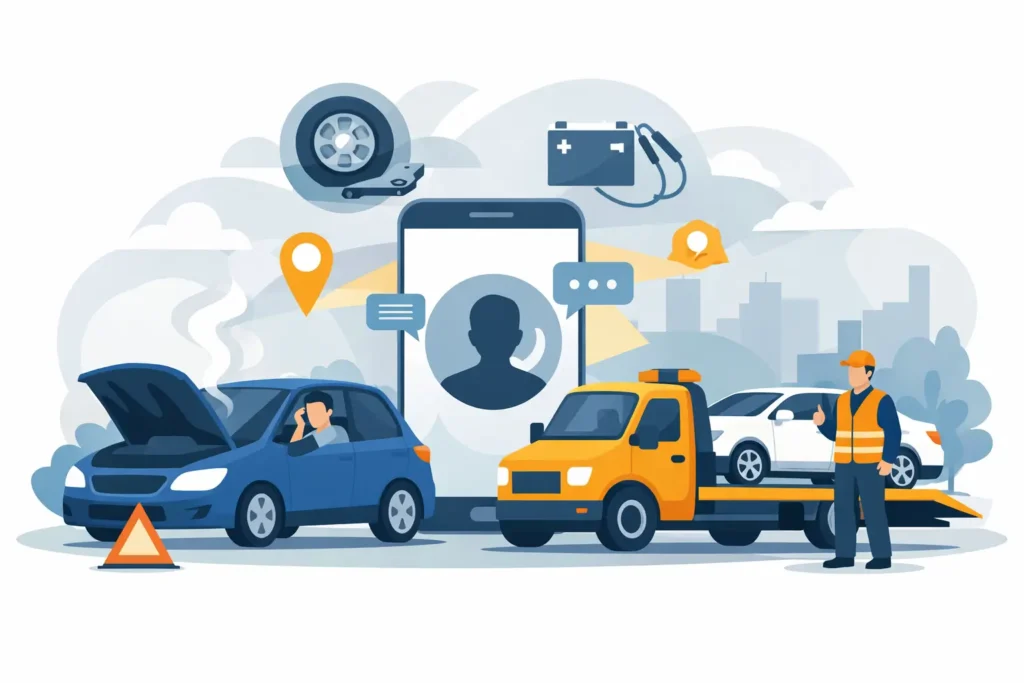
A warning light on the M4, a flat battery outside work or a vehicle that will not restart at home all create the same immediate problem: you need to know what does breakdown recovery include, and whether the help arriving can actually get you and your vehicle where you need to be. The answer depends on the fault, the vehicle and the recovery service you call, but good recovery is about far more than simply attaching a tow rope.
For drivers across Berkshire, South Oxfordshire and the busy M25, M4 and M3 corridors, the priority is straightforward: make the scene safe, assess the vehicle properly and arrange the quickest suitable solution. That may mean a roadside fix, a jump start, secure transport to a garage or specialist recovery after an accident.
What Does Breakdown Recovery Include?
Breakdown recovery usually starts with a trained recovery operator attending your location. They will confirm where you are, assess the condition of the vehicle and check whether a safe roadside repair is realistic. This initial assessment matters because a minor issue can sometimes be resolved there and then, while a mechanical failure, accident or unsafe vehicle needs transporting rather than risking further damage.
A professional service should include clear communication before arrival, safe loading or towing procedures, and transport for the vehicle to an agreed destination. Depending on the vehicle, this could be your home, a local garage, a dealership or another suitable location. If you are stranded on a motorway or a fast rural road, the operator will focus first on keeping the recovery safe and compliant with the conditions at the scene.
Recovery is not always a single fixed package. Distance, vehicle size, the type of damage and the destination can all affect what is required. Ask what is included before the vehicle is moved, especially if you need onward transport over a longer distance or have a commercial vehicle carrying equipment.
Roadside Assistance for Problems That Can Be Fixed Safely
Many call-outs do not need a full recovery journey. Roadside assistance covers faults where a qualified operator can get the vehicle moving again without compromising safety.
A flat battery is one of the most common examples. A jump start may be enough to get you on your way, although the operator may advise you to have the battery and charging system checked if the problem is likely to return. A puncture can sometimes be dealt with by fitting a usable spare wheel, provided the wheel, tyre and vehicle are safe to use.
Other roadside help may include checking simple causes of a non-start, helping with a vehicle that has run out of fuel, or making safe a minor issue where continued driving is appropriate. The key word is safe. If the engine is overheating, warning lights point to a serious fault, or the vehicle has steering, brake, tyre or suspension damage, a responsible operator will recommend recovery rather than a temporary roadside fix.
Safe Transport to a Garage, Home or Chosen Destination
When your vehicle cannot be repaired at the roadside, recovery normally includes loading it onto a suitable recovery vehicle or towing it using the correct equipment. The aim is to prevent additional damage while getting it off the road and to a place where repairs can be arranged.
The right method depends on the vehicle’s condition. A car with a straightforward mechanical fault may be moved using standard recovery equipment. A non-runner, a vehicle with axle damage or one involved in a collision may need a flatbed and specialist loading techniques. Dragging or incorrectly towing a damaged vehicle can worsen suspension, drivetrain or bodywork damage, which is why the equipment and experience behind the service matter.
You should be able to agree the destination before loading begins. If it is outside normal garage hours, home recovery may make more sense than leaving the vehicle somewhere unattended. If your usual garage is open and can accept the vehicle, direct transport there may reduce delays. For urgent call-outs, clear instructions about your preferred destination help keep everything moving.
Accident and Damage Recovery
Accident recovery is a different job from collecting a car with a flat battery. Even where the damage appears minor, there may be leaking fluids, damaged wheels, broken lights, loose panels or a vehicle positioned dangerously close to live traffic. The recovery operator needs to make the area safer before the vehicle can be loaded.
This type of service can include securing the vehicle, using specialist equipment to recover it without causing further harm and transporting it to a repairer, storage location or another agreed destination. If the car will not roll, has damaged axles or cannot be driven onto a recovery lorry, extra care and equipment are required.
Do not try to push a damaged vehicle along a hard shoulder, across a carriageway or out of a dangerous position yourself. Move to a safe place where possible, keep clear of traffic and call for professional help. Your safety comes before the vehicle.
Motorcycle, Van and Commercial Vehicle Recovery
Not every recovery provider is equipped for every vehicle. Motorcycles need secure handling and proper tie-down points to prevent damage in transit. Vans and light commercial vehicles are heavier, often longer and may carry tools, stock or business equipment that must be considered during loading.
For a business, breakdown recovery should also reduce downtime. A fast response, a realistic arrival estimate and transport to the right garage can make a real difference when a vehicle is needed for deliveries, appointments or site work. It is worth telling the recovery operator if your van is loaded, has a high roof, is modified or has a fault that affects its ability to roll or steer.
Ozzy’s Breakdown Recovery provides 24/7 assistance for cars, motorcycles, vans and specialist recovery needs, with dedicated equipment chosen for the condition of the vehicle rather than a one-size-fits-all approach.
Electric Vehicle Recovery Needs Extra Care
Electric vehicles can break down for many of the same reasons as petrol and diesel cars, including punctures, collision damage, flat 12-volt batteries and mechanical faults. However, EV recovery can involve additional considerations around the high-voltage system, vehicle-specific towing instructions and safe loading.
An EV should not be towed in a way that conflicts with the manufacturer’s guidance. In some cases, flatbed recovery is the safest option, particularly if the vehicle has suffered accident damage, will not select neutral or has a possible battery-related issue. Make the recovery provider aware that the vehicle is electric when you call, along with its make, model and any warning messages shown.
Running out of charge is not always a simple roadside charging job. The available solution depends on the vehicle, location and access to suitable charging equipment. Recovery to a working charge point or a safe destination may be the practical option.
What Is Not Always Included?
This is where drivers can be caught out. Breakdown recovery does not automatically mean every repair is completed, replacement parts are supplied, hotel costs are covered or passengers receive separate onward travel. Those benefits may be part of a membership policy, insurance product or specific service agreement, but they are not guaranteed by every recovery call-out.
Likewise, a recovery provider may be able to transport your vehicle but not carry every passenger if space, safety rules or the recovery vehicle’s capacity do not allow it. Storage, long-distance transport, difficult access, vehicle contents and specialist damage can also change the scope and price of the work.
The best approach is to explain the full situation when you call. Say where you are, what has happened, whether the vehicle can roll and steer, how many people are with you, and where you want the vehicle taken. If you are on a motorway, provide the road number, direction of travel, nearest junction, marker post or emergency telephone reference if you can do so safely.
When to Call for Recovery Straight Away
Call for professional recovery rather than attempting to continue your journey if the vehicle has been in a collision, has smoke or fluid leaks, will not steer or brake properly, has serious warning lights, is overheating, has wheel or axle damage, or is stranded in an unsafe location. The same applies if you are unsure whether driving it could make the fault worse.
A quick, accurate description helps send the right vehicle first time. That means less waiting, safer handling and a better chance of getting your car, motorcycle or van to the right place without further disruption.
When you are stopped at the roadside, you do not need a complicated answer or a lecture about engines. You need a calm voice, the right recovery vehicle and a safe plan. Keep yourself out of danger, share your location clearly and call for help as soon as you can.