 Open now · 24/7 ·


You usually choose a recovery company in a hurry, on your phone, at the side of a road. A few quick checks will tell you whether a firm is any good.
Read the reviews for detail
A star rating is a start, but it isn’t enough. What matters is what people say. Look for reviews that mention how long the truck took, whether the price matched the quote and how the driver handled the car. Lots of recent reviews with that sort of detail are a good sign.
Get the price before you book
A decent firm will give you the full price on the phone once it knows where you are, what you’re driving and where it’s going. Be wary of anyone who says they’ll work it out when they arrive.
Ask who is coming
Some companies are call centres that pass the job to whoever is free. That isn’t always bad, but you won’t know who turns up. So ask who will actually come out to you.
Check the insurance
The firm’s insurance should cover your car while it’s on the truck. Ask whether they have vehicle-in-transit cover.
Warning signs
- No price until the car is on the truck.
- Pressure to pay cash only.
- No business address, or only a mobile number and no name.
- A promise to be there in ten minutes from a firm that’s miles away.
Questions to ask on the phone
- What’s the full price, and how do I pay?
- How long will you really be?
- Who will come out to me?
- Does your insurance cover my car in transit?
- Will you take it to the garage I choose?
How we answer those
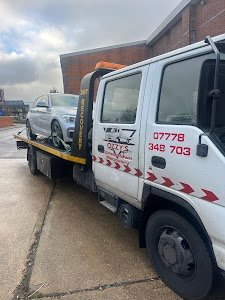
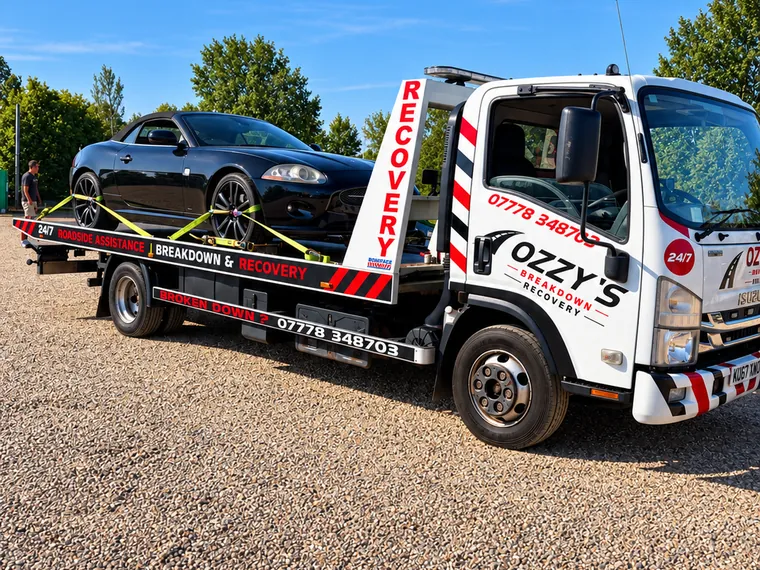
We’re based at Radstock Road in Reading and come out to you ourselves with our flatbed truck. You get one price before you book, and you can pay by bank transfer or card. We hold public liability and vehicle-in-transit cover. More than 270 customers rate us 5.0 on Google. Read more about us, or call 07778 348703.
Customers rate us 5.0 on Google, and you can also read our Google reviews before you call.
Why drivers choose Ozzy’s
Ozzy’s Breakdown Recovery is a local, fully insured 24/7 emergency vehicle recovery and rescue company covering Berkshire, South Oxfordshire, Hampshire and Surrey. Call 07778 348703 for a free quote – we’re usually with you in 30–45 minutes.
Fully insured
Public liability and vehicle in transit insurance. You are covered.
Free quote first
You know the price before we set off. No membership and no monthly fee.
30–45 minute response
Usually with you in 30–45 minutes, day or night, every day of the year.
Local emergency recovery near you
Emergency recovery and vehicle rescue near you, across Berkshire, South Oxfordshire, Hampshire and Surrey, day and night. Wherever you’ve broken down, call – we can help.
Any car, van or bike
A solution for every car, every light commercial vehicle and every van – up to 3.5 tonnes GVW.
Pay your way
Card payment link, Klarna pay in 3 or Clearpay pay in 4.
Every recovery service we offer – one call covers them all
Broken down? Don’t get stranded. Call 07778 348703 now, get your free quote and get moving – we’re usually with you in 30–45 minutes, day or night. We can take your vehicle anywhere in the UK.
- Emergency recovery – broken down and need help now? We come out day and night.
- Emergency towing – a tow truck when you need one, 24/7.
- Vehicle rescue – stuck, stranded or can’t move safely.
- Roadside recovery – we load your vehicle where it has stopped.
- Towing service – cars, vans and motorbikes on our flatbed tow truck.
- Breakdown recovery near me – send your location and we come to you.
- Tow truck near me – local towing, day and night.
- Breakdown recovery – car stopped at home, at work or at the roadside? Call-out from £75.
- Car towing and tow truck service – we move your car to a garage, your home or any address in the UK.
- Roadside assistance – help where you’ve stopped, day or night.
- Jump starts and flat battery call-outs – from £60.
- Car won’t start? We come to you, and take it to a garage if it still won’t go.
- Accident recovery – damaged cars loaded carefully with a winch and wheel skates. From £150.
- Motorcycle and motorbike recovery – strapped down properly on our truck. Call-out from £85.
- Van and light commercial vehicle recovery – up to 3.5 tonnes GVW. Call-out from £110.
- Electric vehicle (EV) recovery – carried on our flatbed with all four wheels off the road.
- Flatbed recovery and vehicle transport – for low, classic, sports and non-running cars.
- Flat tyre recovery – no spare? We take the car to a tyre shop you choose.
- Stuck, non-runner and winch-out recovery – won’t roll, locked wheels or stuck in mud.
- Campervan and motorhome recovery – call us for a price.
- Motorway recovery – M4, M3 and M25. From £150.
- 24 hour breakdown recovery – nights, weekends and bank holidays.
- Pay as you go breakdown cover – no membership. Pay only when you need us.
- Business and fleet recovery – for company cars and vans.
We cover Berkshire, South Oxfordshire, Hampshire and Surrey. Not sure what you need? Call 07778 348703 and tell us what’s happened – we can help. You can also see our starting prices.