

Ozzy's Breakdown Recovery

Category: Uncategorised

  • How to Handle Roadside Breakdown Safely

    How to Handle Roadside Breakdown Safely

    A warning light, a flat tyre or an engine that suddenly loses power can turn an ordinary journey into a stressful roadside breakdown in seconds. Knowing how to handle roadside breakdown situations calmly gives you the best chance of keeping yourself, your passengers and other road users safe while help is arranged.

    Your first job is not to diagnose the fault or get moving again. It is to get out of danger. Whether you are on a quiet Berkshire lane, outside Reading, or travelling on the M4, M25 or M3, put safety before the vehicle every time.

    How to handle roadside breakdown safely

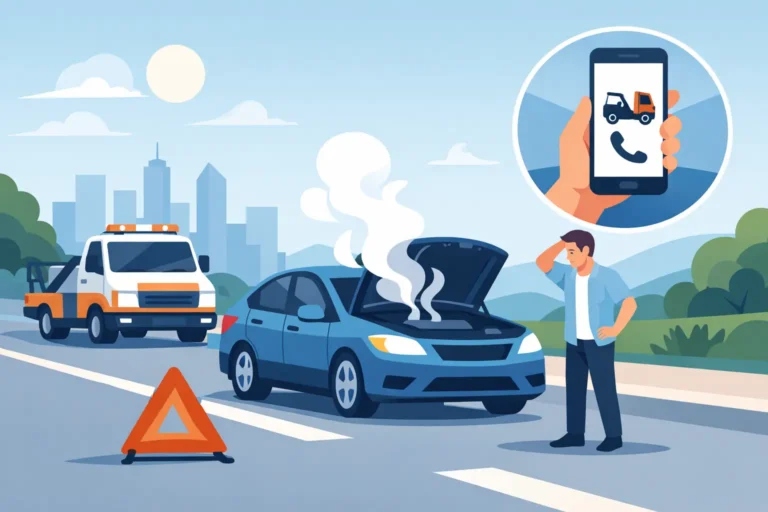
    As soon as you realise there is a problem, reduce speed smoothly and look for the safest place to stop. Avoid harsh braking or sudden steering, particularly if you have a tyre issue, warning light or loss of power. Switch on your hazard lights as soon as other drivers may need warning.

    On an ordinary road, pull over as far to the left as is safely possible. Choose a lay-by, car park, service station or wide verge where you can leave space between your vehicle and moving traffic. Avoid stopping on a bend, near a junction, at the brow of a hill or anywhere drivers will have little time to see you.

    Once stopped, apply the handbrake, select park or neutral as appropriate, and switch off the engine if it is safe to do so. At night or in poor weather, leave your sidelights on if needed to make the vehicle more visible. If you smell fuel, see smoke, or suspect a fire, move everyone well away from the vehicle and call 999 immediately.

    Do not put yourself at risk trying to fix the problem beside a live carriageway. A simple-looking issue can wait. Passing traffic cannot.

    If you break down on a motorway or smart motorway

    Motorway breakdowns need extra care because traffic is faster and drivers may have less time to react. If the vehicle is still moving, aim for the next motorway service area, exit or emergency area. Do not stop in a live lane unless the vehicle cannot be moved any further.

    If you reach the hard shoulder, pull as far left as possible, turn on your hazard lights and leave the vehicle by the left-hand doors if it is safe. Passengers should exit on the left too. Move behind the safety barrier and stand well away from the road, ideally upstream of the vehicle so you are not directly behind it if it is struck.

    On a smart motorway, use an emergency area whenever you can. These are marked with blue signs featuring an orange SOS symbol. If you are forced to stop in a live lane and cannot move, keep your seatbelt on, turn on hazard lights and call 999. Tell the operator that you are stopped in a live motorway lane. If it is safer to remain in the vehicle, stay inside with your seatbelt fastened until emergency services advise otherwise.

    Use the roadside emergency telephone where one is available, especially on a motorway. It helps the operator identify your precise location. If you call from a mobile, use motorway marker posts, the direction of travel, junction numbers, nearby signs or your phone’s map location to explain exactly where you are.

    Get passengers to a safe place

    Children, older passengers, pets and anyone with limited mobility need particular consideration. On a quiet road, it may be safest for everyone to wait away from the carriageway, somewhere visible but protected. On a motorway hard shoulder, get behind the barrier if it is safe to do so.

    The right choice depends on the road and the immediate danger. Do not cross a motorway, do not stand in front of or behind your vehicle, and do not let children wander near traffic. If you are stopped somewhere with no safe place to wait outside, such as a live lane, keep occupants restrained in the vehicle and call 999.

    If you have a high-visibility jacket, wear it before leaving the vehicle. It can help other drivers see you, but it does not make roadside repairs safe. Keep everyone together and make sure phones are charged where possible.

    Call for the right kind of recovery

    When you contact a recovery provider, clear information helps them send the right vehicle and equipment without delay. Give your exact location first, then explain what has happened and whether you are in immediate danger.

    A recovery team will usually need your vehicle registration, make and model, the nature of the fault, and whether the vehicle can roll and steer. Mention any special circumstances, such as a locked wheel, axle damage, accident damage, a flat battery, a puncture, or an electric vehicle with no charge. For motorcycles, vans and commercial vehicles, say so at the start – they may need different loading equipment or a suitable recovery vehicle.

    Also explain where you want the vehicle taken. That might be your home, a trusted garage, a dealership, a charging point or another safe location. If your vehicle is blocking access, in a dangerous position or carrying business equipment, say that clearly. The recovery operator can then prioritise the call properly.

    For drivers across Berkshire, South Oxfordshire and nearby motorway routes, Ozzy’s Breakdown Recovery provides 24/7 emergency assistance, with professional recovery for cars, vans, motorcycles, non-runners, accident-damaged vehicles and EVs. A clear call at the roadside helps get the right help heading your way quickly.

    What not to do at the roadside

    A breakdown can make people feel rushed, especially when they are late for work, collecting children or managing a delivery schedule. That is exactly when poor decisions happen. Do not accept help from an unmarked vehicle if you are unsure who they are, and do not get into a stranger’s vehicle unless directed by the emergency services or you are confident it is safe.

    Avoid opening the bonnet on a motorway or attempting to change a tyre beside fast-moving traffic. Even on a quieter road, a wheel change may be unsafe if the ground is uneven, visibility is poor or the vehicle is too close to traffic. Professional recovery is often the safer option, particularly for larger vans, electric vehicles and cars with damage that may not be obvious.

    Do not leave valuables on display if you need to step away from the vehicle. Take your phone, keys, driving licence, medicines and any essential items with you. If the vehicle must be left unattended, lock it if safe to do so and tell the recovery team where the keys are.

    Be ready before the next journey

    You cannot prevent every mechanical failure, but a few checks make breakdowns less likely and easier to manage. Check tyre condition and pressure regularly, keep enough fuel or battery charge for the journey, and pay attention to warning lights before they become urgent. For EV drivers, plan charging stops with a sensible buffer rather than relying on the final few miles of range.

    It also helps to keep your phone charged and carry a charging cable, warm layer, drinking water and a basic first-aid kit. A torch is useful in winter or on unlit rural roads. These items will not repair the vehicle, but they can make the wait safer and more comfortable.

    If your vehicle loses power, develops a fault or is involved in an accident, take a breath, make the safest move you can, and call for professional help. Your journey can be rearranged. Your safety cannot.

  • Van Breakdown Recovery Service When Time Matters

    Van Breakdown Recovery Service When Time Matters

    A van losing power on the M4, refusing to start outside a customer’s premises, or suffering tyre damage on a busy A-road can stop more than one journey. It can put jobs behind schedule, leave tools stranded and create a safety risk at the roadside. A dependable van breakdown recovery service gets you, your vehicle and your workday moving again with as little disruption as possible.

    For van drivers and light commercial fleets across Berkshire, South Oxfordshire, Hampshire, Surrey and the surrounding motorway network, the priority is straightforward: help needs to arrive quickly, the vehicle needs to be handled properly, and you need clear communication from the first call.

    When a van needs recovery rather than a quick fix

    Some faults can be resolved where you are. A flat battery may only need a jump start. A puncture may be manageable if you have a safe place to stop and a usable spare. But vans are often carrying loads, equipment or passengers, and roadside repairs are not always the safest or most practical answer.

    Recovery is usually the right call when the vehicle will not start, has lost drive, overheated, developed a serious warning light, or has been involved in a collision. It is also the sensible option if there is wheel, axle, suspension or body damage. Trying to nurse a damaged van to a garage can turn a repairable problem into a larger bill, especially if a tyre is rubbing, a wheel is misaligned or fluids are leaking.

    The location matters too. A breakdown on the M25, M4 or M3 needs a calm, safety-led response. Busy motorway corridors leave little room for improvisation. A professional recovery operator can assess the situation, arrange safe loading and transport the van to a garage, depot, home address or other agreed destination.

    What to do while you wait for van recovery

    Your first decision should be about safety, not the fault itself. Move the van away from live traffic if it can be done safely. On a motorway, use the hard shoulder, emergency area or a place of relative safety where possible. Switch on your hazard lights, keep passengers away from traffic and avoid standing between the vehicle and the carriageway.

    When you call for help, give the recovery team a clear location. A road name is useful, but motorway junction numbers, travel direction, nearby landmarks, postcode, or a what3words reference can make a real difference to response time. Let the operator know whether the van is loaded, whether it is a high-roof or long-wheelbase model, and if there is visible damage or a wheel that will not turn.

    You should also explain what happened before the breakdown. Did the engine cut out? Is there smoke, a warning message, a puncture, or a collision? These details help the right recovery vehicle and equipment arrive prepared. If the vehicle is carrying valuable tools, goods or sensitive equipment, say so at the start. Careful loading and secure transport matter just as much as getting there quickly.

    Van breakdown recovery service for working vehicles

    A van is rarely just transport. For a plumber, electrician, delivery driver, builder or mobile service business, it is part workshop, part storage space and often the reason the day’s work can happen at all. Every hour off the road can mean missed appointments, unhappy customers and lost income.

    That is why commercial recovery should be organised around downtime. A good service gives you a realistic arrival estimate, confirms where the van will be taken and keeps you informed if circumstances change. Fast attendance is valuable, but so is getting the vehicle to the right place. Taking a van to the nearest garage may not be ideal if your preferred repairer, fleet workshop or depot is elsewhere.

    There are trade-offs. A short tow can be suitable for a simple mechanical issue, while a fully loaded recovery vehicle is the safer choice for non-runners, accident damage or vans with axle problems. The right method depends on the vehicle’s condition, access at the scene, weight, load and destination. An experienced operator will not take shortcuts that risk further damage.

    The recovery equipment makes a difference

    Not every recovery job is the same. A small car and a loaded long-wheelbase van place very different demands on recovery equipment. The recovery vehicle needs the capacity to transport the van safely, while the operator needs the tools and experience to deal with difficult positions, damaged wheels and inaccessible locations.

    This is particularly important after an accident. A van with front-end damage, a broken axle or locked wheels may not roll onto standard equipment in the usual way. It needs specialist handling to avoid stressing damaged components or causing extra bodywork damage. The same is true of non-running vehicles that have been left on a driveway, in a car park or at a work site.

    Electric vans also require a more considered approach. They cannot always be treated like a conventional diesel van, especially if there is damage, an electrical fault or a depleted battery. EV-compatible recovery equipment and correct loading procedures protect the vehicle’s drivetrain and battery systems during transport.

    Local support across busy routes and work areas

    Breakdowns do not wait for a convenient time or location. They happen early before a first job, late after a delivery round, or in the middle of a weekend shift. A 24/7 local recovery service gives van owners a practical answer when a garage is closed or a fleet manager needs a vehicle moved outside normal hours.

    Ozzy’s Breakdown Recovery provides emergency van recovery and roadside assistance across Berkshire, South Oxfordshire and nearby areas, including key routes around Reading and the M25, M4 and M3. The focus is on getting to stranded drivers promptly, with typical response times of 30 to 45 minutes depending on traffic, location and current callout demand.

    Local knowledge helps when access is awkward or traffic is building. It also helps when you need a practical destination rather than a vague promise of transport. Whether the van is at a customer site, on a rural road, outside a depot or stopped close to a major junction, the recovery plan should fit the actual situation.

    Choosing the right recovery provider

    When your van is stranded, the cheapest quote is not always the best value. A low price means little if the provider cannot attend promptly, lacks suitable equipment or cannot safely recover a vehicle with damage. Ask whether they cover your location, operate around the clock and can transport your type of van.

    It is worth confirming the destination and likely costs before recovery begins. Be clear about whether you need roadside assistance, onward transport, accident recovery or a planned move to a garage. If the van is carrying tools or goods, make sure the provider understands that the vehicle must be secured and treated with care.

    For businesses, consistency matters. A reliable recovery partner can support one-off emergencies as well as regular fleet needs, reducing the pressure on drivers who may not know what to do when a warning light appears or a vehicle fails at the roadside.

    Fast help is about more than the arrival time

    A quick response brings immediate reassurance, but professional service continues through loading, transport and handover. You should know who is attending, what will happen to the van and where it is going. Clear, straightforward communication takes some of the pressure out of an already difficult situation.

    If your van cannot safely continue, do not risk a longer journey or attempt a repair beside fast-moving traffic. Get yourself to a safe place, keep the details of your location ready and call for professional recovery. The sooner the right help is on its way, the sooner you can protect your vehicle, your schedule and the work that depends on it.

  • How Long Does Vehicle Recovery Take in Practice?

    How Long Does Vehicle Recovery Take in Practice?

    A breakdown never happens at a convenient time. Whether you are stopped on the M4 near Reading, outside work in Berkshire, or on a quiet road in South Oxfordshire, the first question is usually: how long does vehicle recovery take? The honest answer is that it depends on your location, the condition of the vehicle and how safely it can be recovered. But a professional local recovery service should give you a clear arrival estimate, keep you updated and get you moving as quickly as conditions allow.

    For many standard breakdown callouts, a recovery vehicle can arrive within 30 to 60 minutes. At Ozzy’s Breakdown Recovery, we aim for a 30-45 minute response where traffic, weather and the nature of the incident allow. Once on scene, a simple issue may be resolved quickly. A vehicle that needs transporting, particularly after an accident or with axle damage, will naturally take longer.

    How Long Does Vehicle Recovery Take After a Breakdown?

    There are really three parts to recovery time: getting a recovery operator to you, assessing and securing the vehicle, then taking it to your chosen destination. It is worth separating these stages, because a quick arrival does not always mean the whole job will be finished in a few minutes.

    For a straightforward callout such as a flat battery, wrong fuel situation, minor roadside fault or a tyre-related issue, the assessment may take 10-20 minutes. If the problem can be dealt with safely at the roadside, you could be back on the road shortly afterwards.

    If your vehicle will not start, has a serious mechanical fault or cannot be driven safely, the operator will load or secure it for transport. This commonly takes around 20-45 minutes, depending on the vehicle and the space available. The final part is the journey to a garage, your home, a dealership or another agreed location. A local tow may be completed within an hour, while a longer onward journey will add to the total time.

    What Affects Vehicle Recovery Response Times?

    No reputable recovery company should promise an exact minute before it knows where you are and what has happened. Conditions on the road matter, especially around busy motorway corridors such as the M25, M4 and M3. The key factors are usually practical ones.

    Your exact location

    A car in a supermarket car park is generally easier and faster to reach than one on a motorway hard shoulder, a narrow country lane or a road closed after an incident. Clear location details save valuable time. If you are on a motorway, tell the operator the motorway number, direction of travel, nearest junction and any marker post details you can see safely.

    A recovery vehicle may also need to approach from a particular direction where there are central reservations, roadworks or traffic restrictions. On rural roads, access can be slower if the vehicle is blocked in, on soft ground or down a very narrow lane.

    Traffic, weather and time of day

    Peak-time traffic can slow both the recovery vehicle’s arrival and the onward journey. Heavy rain, snow, flooding, high winds and poor visibility can also make loading and towing slower because safety has to come first.

    A 24/7 service means help is available overnight, at weekends and on bank holidays. However, a busy period with several accidents or severe weather can mean longer waits than usual. A good recovery operator will be upfront about that rather than leave you guessing.

    The type and condition of your vehicle

    A standard car that rolls freely is often straightforward to load. A non-runner with locked wheels, a vehicle with suspension or axle damage, or a car involved in a collision can require specialist equipment and more careful handling. Motorcycles, vans, electric vehicles and light commercial vehicles may also need the right recovery set-up.

    This is not wasted time. Correct loading protects your vehicle, other road users and the recovery team. Trying to rush an unsafe lift can create further damage and delay the job even more.

    Whether the vehicle can be repaired at the roadside

    Sometimes recovery does not mean a tow. A flat battery may only need a jump start. A minor issue may be identified and resolved on site, saving the time involved in loading and transport.

    Other faults should not be patched up at the roadside. Engine warning lights, overheating, damaged tyres, accident damage, gearbox problems and EV faults can make continued driving unsafe. In those cases, taking the vehicle to a safe destination is the right call, even if it takes longer than a quick fix.

    How Long Does Loading and Towing Take?

    Once the recovery vehicle has arrived, most customers want to know whether they can be on their way immediately. For an uncomplicated car recovery from a safe, accessible place, loading may take 15-30 minutes. The vehicle needs to be checked, positioned correctly, secured and inspected before the recovery vehicle moves off.

    An accident recovery can take considerably longer. The vehicle may be damaged, leaking fluids, obstructing traffic or unable to roll. Police, highways officers or emergency services may be managing the scene, and their instructions must be followed. In some cases, the recovery operator cannot begin work until the area is safe and authorised for access.

    A van or commercial vehicle can also take longer than a private car, especially if it is loaded, has suffered a wheel or axle problem, or needs specialist transport. For businesses, that extra care matters. Proper recovery reduces the risk of additional damage and helps get the vehicle to a repairer or secure base in the right condition.

    Electric Vehicle Recovery Times

    Electric vehicle recovery follows the same basic process, but it is not always the same as recovering a petrol or diesel car. An EV with a flat drive battery may need a suitable recovery method rather than an improvised tow. Faults involving the charging system, battery warnings or accident damage require sensible handling by a team equipped for EV recovery.

    That may add some assessment time, but it is the safer option. Tell the recovery company that your vehicle is electric when you call, along with the make and model if possible. This helps ensure the correct equipment is sent from the start.

    What to Do While You Wait for Recovery

    The most useful thing you can do is make yourself and your passengers safe. The recovery team can work faster when they have accurate details and you are already in a safe position.

    • Move to a safe place away from live traffic where possible. On a motorway, follow official guidance and do not remain in the vehicle if it is unsafe to do so.
    • Switch on your hazard warning lights and use a warning triangle only where it is safe and appropriate.
    • Keep your phone charged, listen for calls from the recovery operator and have your location details ready.
    • Tell the operator about passengers, pets, accessibility needs, dangerous road conditions and any visible vehicle damage.

    Do not attempt repairs beside fast-moving traffic or try to push a vehicle from a dangerous position. A few minutes spent protecting yourself is more important than any delay to the journey.

    When Recovery May Take Longer Than Expected

    Most recovery delays have a clear reason. A collision on a major route, a vehicle in a hazardous location, extreme weather, road closures or a difficult loading position can all extend the job. There may also be a delay if the chosen garage is closed, full, or unable to accept the vehicle outside working hours.

    If you need recovery outside garage opening times, ask about taking the vehicle home, to a secure location or to a repairer that can receive it. Being clear about your destination at the beginning avoids last-minute changes and helps the operator plan the right route.

    For planned vehicle transport, giving advance notice usually makes timing more predictable. For emergency breakdowns, the priority is different: arrive safely, assess the situation properly and get the vehicle and its occupants out of trouble without cutting corners.

    If you are stranded now, focus on sharing your exact location and vehicle details when you call. The right recovery team will give you a realistic arrival estimate, handle your vehicle with care and keep the stress to a minimum while you wait.

  • 24 Hour Breakdown Recovery You Can Rely On

    24 Hour Breakdown Recovery You Can Rely On

    Your car never picks a good time to stop. It happens in the rain on the hard shoulder, outside a supermarket after a late shift, or halfway through a delivery when every minute matters. That is exactly why 24-hour breakdown recovery matters – not as a nice extra, but as the difference between being stranded for hours and getting moving again safely.

    Why 24-hour breakdown recovery matters

    When a vehicle fails, the problem is rarely just mechanical. You might be blocking traffic, stuck in an unsafe spot, missing work, trying to get children home, or facing lost time on a commercial route. Fast help changes the situation quickly. It reduces stress, cuts waiting around on exposed roads, and gets you clear of danger.

    That is especially true on busy routes through Berkshire, South Oxfordshire and the surrounding motorway network. A breakdown on the M4, M3 or near the M25 is not the same as a flat battery on a quiet residential street. Traffic speed, limited stopping areas and poor visibility can all make things more urgent. In those moments, you need a recovery service that answers straight away, gives you a clear arrival time and knows how to handle the job properly.

    Round-the-clock cover also matters because breakdowns do not follow business hours. Early starts, late finishes, night shifts and weekend travel are normal for many drivers. If your van will not start at 4am or your car fails at 11pm, waiting until morning is not realistic.

    What a good recovery service should actually do

    A dependable recovery provider does more than tow a vehicle from A to B. First, they should assess what has happened and decide whether the vehicle can be safely repaired at the roadside or needs transporting. A flat battery, minor electrical fault or simple starting issue may be sorted there and then. A collision, axle damage, steering problem or serious mechanical fault usually means full recovery is the safer option.

    Communication is just as important as equipment. When you are stuck, you do not want vague updates or long periods of silence. You want to know someone is on the way, how long they will be, and what happens next. Clear communication calms the situation and helps you make practical decisions, especially if passengers are involved or you have work commitments waiting.

    The right team should also have the proper vehicles and tools for different jobs. Recovering a motorcycle is not the same as loading a van. Electric vehicle recovery needs correct handling. Non-runners and accident-damaged vehicles need extra care. If a company treats every job the same, that is usually where delays and damage risk start.

    24-hour breakdown recovery for more than just cars

    Many drivers hear the phrase and assume it only applies to standard car breakdowns. In reality, a proper 24-hour breakdown recovery service should cover a much wider range of vehicles and situations.

    Private motorists often need help with dead batteries, punctures, warning lights, overheating, key issues or vehicles that simply refuse to start. Motorcyclists need secure transport that protects the bike during loading and transit. Van drivers and light commercial operators need quick action because a vehicle off the road often means missed jobs and lost income. Businesses with fleets need confidence that one breakdown will not disrupt the whole day.

    There is also a growing need for EV recovery. Electric vehicles come with different practical considerations, and not every operator is prepared for that. The same applies to specialist cases such as non-runners, accident recovery or vehicles with wheel and axle damage. Those are not jobs for guesswork. They need the right approach from the start.

    Speed matters, but so does handling

    Fast response is a major part of any recovery promise, and rightly so. When you are waiting at the roadside, every extra half hour feels longer than it should. But speed on its own is not enough. The job still has to be done safely and professionally.

    A rushed operator who turns up quickly but mishandles your vehicle is not saving you trouble. Proper loading, securing and transport matter just as much as arrival time. That is why experienced recovery teams stand out. They know how to assess the scene, position safely, protect the vehicle and get it moved without turning one problem into two.

    This is where local coverage makes a real difference. A company already working across Berkshire, Reading, South Oxfordshire, Hampshire, Surrey and the nearby motorway routes will usually respond more efficiently than someone travelling in from much farther away. Local knowledge helps with route planning, live traffic conditions and knowing how to reach awkward locations quickly.

    When roadside repair is enough and when recovery is the better choice

    Not every breakdown ends with a tow. Sometimes the quickest solution is a roadside fix. A jump start is the obvious example, but there are other cases where a trained operator can help you get moving without taking the vehicle away.

    That said, there are times when trying to continue your journey is the wrong call. If the vehicle has been in an accident, is making serious noises, has steering or braking issues, or has visible damage underneath, recovery is usually the safer option. The same goes for repeated warning lights, sudden loss of power or anything that makes the vehicle unpredictable.

    It depends on the fault, the location and the condition of the vehicle. A sensible recovery team will not push a roadside fix just to save time. They will tell you plainly what is safe and what is not. That honesty matters, especially when you are under pressure to get somewhere.

    What to expect when you call for help

    In an emergency, people want the process to be simple. That means giving your location, vehicle details, the issue if known, and whether you are in a particularly risky position. From there, the recovery team should confirm the callout, provide a realistic ETA and explain the next step.

    If you are on a motorway or fast road, safety comes first. Move to a safe place if possible, keep well away from traffic and follow current breakdown guidance. If the vehicle cannot be moved, make yourself visible and wait in the safest available area. Once help is on the way, staying contactable is useful in case the driver needs to confirm access or exact position.

    For business users, it helps if the service can also support planned onward transport when needed. Sometimes the job is not just picking up a broken-down vehicle – it is getting that vehicle to a garage, depot or another location with minimal disruption.

    Choosing a recovery service before you need one

    The worst time to compare providers is when you are already stranded. By then, you are likely to choose the first number you see. A better approach is to know who covers your area before anything goes wrong.

    Look for a service that is genuinely available 24/7, not one that only says so in theory. Response time matters, but so does whether they cover your type of vehicle and your usual routes. If you drive a van for work, own a motorcycle, use an EV or travel regularly on the M4, M3 or around the M25, those details are worth checking in advance.

    It is also worth paying attention to how a company speaks. Straight answers, clear service details and realistic promises usually point to an operator that understands roadside work properly. If the messaging feels vague, the service often is too.

    For drivers across Berkshire and the surrounding areas, that is why a local provider like Ozzy’s Breakdown Recovery is built around speed, availability and proper vehicle handling rather than empty claims. The aim is simple – get to you fast, recover the vehicle safely and take some pressure off a difficult moment.

    The real value of dependable recovery

    Most people do not think much about recovery until they need it. Then it becomes one of the few services where response, communication and trust all matter at once. You are handing over your vehicle in a stressful situation, often at the roadside, often at an awkward hour, and you need to feel confident that the job is in safe hands.

    That is why 24-hour breakdown recovery is not just about towing. It is about having a reliable answer when plans fall apart. Whether it is a dead battery on your drive, a van off the road before the working day starts or a breakdown on a busy route late at night, the right support makes a bad situation more manageable.

    If your vehicle stops, the best next step is the one that gets you safe, informed and moving towards a solution without delay.

  • Jump Start Roadside Assistance Fast

    Jump Start Roadside Assistance Fast

    A flat battery rarely gives you much warning. One turn of the key, a slow click, dim dashboard lights, and suddenly you are stuck at home, in a car park, at work, or on the hard shoulder wondering how quickly help can get to you. That is exactly when jump start roadside assistance matters – fast response, clear advice, and a professional who can get you moving again without adding more stress.

    When your vehicle will not start, the main priority is simple. You need someone to reach you quickly, check the battery safely, and make sure the problem really is a flat battery rather than a bigger electrical or charging fault. A proper roadside service does more than connect cables and hope for the best. It gives you a quick, safe assessment so you know whether your car can continue its journey or needs further recovery.

    When jump start roadside assistance is the right call

    A flat battery is one of the most common reasons drivers need roadside help. It often happens after leaving lights on, not using the car for a while, short journeys that never fully recharge the battery, or cold weather putting extra strain on an older unit. Vans, motorcycles, and light commercial vehicles can be affected just as easily as private cars.

    The trouble is that battery problems do not always feel urgent until they stop you completely. If you are parked outside your house, it may seem manageable. If you are on the M4, M25, M3, or on a busy local road in Berkshire or South Oxfordshire, it becomes a very different situation. In those moments, speed matters, but so does doing the job properly.

    A jump start is usually suitable when the battery has simply lost charge and the rest of the system is working as it should. It may not be the right fix if the battery is damaged, the alternator is not charging, there is a starter motor fault, or the vehicle has a more complex electrical issue. That is why roadside attendance should be practical, not guesswork.

    What to expect from a professional jump start service

    Good roadside assistance should lower the pressure from the first call. You want a clear answer, realistic arrival times, and confidence that the operator knows what they are doing. For most stranded drivers, that matters as much as the jump start itself.

    On arrival, the vehicle should be checked carefully before any attempt is made to boost it. Modern vehicles can be sensitive, and incorrect jump starting can cause expensive problems. That is especially true with newer cars packed with electronics, commercial vehicles with heavier electrical demands, and some hybrid or specialist setups where the battery issue may not be as straightforward as it first appears.

    A professional jump start service will normally confirm whether the battery is flat, use the right equipment, and get the engine running if the vehicle is suitable for a safe restart. In many cases, you should also be told if there are signs the battery may fail again soon. That matters because getting started once is useful, but not if you are going to be stranded again thirty minutes later.

    For drivers under pressure to get to work, collect children, finish deliveries, or keep a business vehicle on the road, that honest advice is worth a lot. Sometimes the right answer is a jump start and carry on. Sometimes it is a jump start followed by immediate battery replacement elsewhere. Sometimes the safer option is full recovery.

    Why a quick response matters

    Battery callouts often look simple on paper, but the real issue is where and when they happen. A flat battery in a supermarket car park late at night is inconvenient. A flat battery on a motorway route, in poor weather, or before an important appointment can ruin the entire day.

    That is why a local recovery operator with proper coverage makes a difference. Drivers across Reading, Berkshire, South Oxfordshire, Hampshire and Surrey usually want the same thing – someone nearby who can respond without delay and tell them exactly what happens next. Long hold times and vague promises are the last thing anybody needs when they are stranded.

    Fast attendance also helps prevent a minor issue becoming a safety problem. If your vehicle is stopped in an awkward position, partially blocking access, or stuck in an exposed roadside location, every extra minute feels longer. A dependable 24/7 service is not just about convenience. It is about getting you and your vehicle out of a vulnerable situation as quickly as possible.

    Common reasons batteries fail

    Most battery problems are ordinary, but they are still disruptive. Cold mornings are a major trigger because batteries lose performance in low temperatures just when engines need more power to start. Short trips are another common cause. If the car only does quick runs, the battery may never get the chance to recharge properly.

    Age is another factor. Many drivers do not think about the battery until it fails, and by then it is already at the end of its working life. There are also smaller causes that build up over time, such as interior lights left on, dash cams parked for long periods, faulty charging systems, or a vehicle sitting unused for days or weeks.

    For fleet operators and van drivers, downtime can cost money immediately. For private motorists, it usually means missed plans and a lot of frustration. Either way, the fix needs to be prompt and practical.

    Jump starts for cars, vans and motorcycles

    Not every jump start callout is the same. Cars are the most common, but vans and motorcycles need support too, and each can come with different access and battery setup issues. Commercial vehicles can place heavier demands on equipment. Motorcycles may need more careful handling and an experienced approach.

    That is why it helps to call a roadside team used to dealing with more than standard hatchbacks. A service handling everything from everyday battery callouts to non-runners, accident recovery and specialist transport is usually better prepared when the situation is not completely straightforward.

    There is also the question of electric and hybrid vehicles. These need a different level of care, and a flat battery issue may involve systems that should not be approached like a conventional petrol or diesel car. In those cases, experience matters. The wrong handling can create more problems than it solves.

    What to do while you wait for roadside assistance

    First, stay safe. If the vehicle is in a live traffic area or an unsafe position, move yourself to a safer place if possible and follow standard roadside safety advice. If you are on a motorway or major road, your location and safety come before anything else.

    Once help is on the way, keep your mobile phone available and give clear details about where you are, what the vehicle is doing, and whether there are any warning lights or electrical signs before the non-start. That helps the attending operator prepare for the job properly.

    It is usually best not to accept an improvised jump start from an untrained passer-by, especially with modern vehicles. While many people mean well, a rushed attempt with the wrong kit can damage electrical systems or mask a bigger fault. When you are already dealing with a breakdown, you do not need a second problem on top of it.

    Choosing the right jump start roadside assistance

    The right service is not just the cheapest number you find when stressed. It should be available 24/7, clear about response times, and able to deal with more than the most basic battery issue. If the jump start works, great. If it does not, you should not be left starting the search all over again for recovery.

    That is where a full roadside and recovery operation has the advantage. If the battery problem turns out to be something more serious, the next step is already covered. For drivers across local towns and motorway corridors, that joined-up approach saves time and avoids extra hassle.

    Ozzy’s Breakdown Recovery is built around exactly that kind of response – quick attendance, practical roadside support, and recovery if the vehicle cannot continue safely. For stranded drivers, that means one call instead of several.

    A flat battery can feel like a small problem until it stops your day in its tracks. The best help is the kind that arrives quickly, treats the situation seriously, and gets you moving with as little disruption as possible.

  • Motorway Recovery Response Times Explained

    Motorway Recovery Response Times Explained

    A breakdown on the motorway feels different from one on a local road. Traffic is moving fast, there is less room to wait safely, and every minute can feel longer than it is. That is why motorway recovery response times matter so much. Drivers do not just want help at some point – they want to know how quickly it can realistically arrive, what might delay it, and what happens in the meantime.

    If you are stranded on the M4, M25, M3 or another busy route, response time is not a simple promise pulled from thin air. It depends on where you are, the condition of the vehicle, traffic levels, lane access, and whether the job is a roadside fix or a full recovery. A good recovery company will tell you what is realistic, keep you updated, and get moving without wasting time.

    What affects motorway recovery response times?

    The biggest factor is location. A vehicle stopped near a motorway services area or a standard hard shoulder is often easier to reach than one in a live lane, a smart motorway refuge area, or a restricted section with traffic management in place. Recovery operators may need to approach from a specific direction or work within motorway safety procedures, which can add time.

    Traffic conditions play a major part too. A 30 to 45 minute response can be realistic in many cases, especially when a local operator already covers that corridor and has a vehicle nearby. But rush hour queues, roadworks, collisions ahead, or lane closures can turn a short drive into a much longer one. Night-time can sometimes be faster because roads are clearer, although fewer safe access points and reduced visibility can create other delays.

    Vehicle type also matters. A standard car with a flat battery is not the same job as a long-wheelbase van with axle damage or an electric vehicle that needs the correct handling equipment. The more specialist the recovery, the more important it is that the right vehicle and tools are dispatched first time. Sending the wrong lorry quickly is not a fast service if it means waiting again.

    Then there is the difference between roadside assistance and recovery. Some callouts can be resolved on the spot with a jump start, wheel change or minor fix. Others need towing or transport. In practical terms, motorway recovery response times are often quoted as the time for the operator to reach you, not the time for the whole incident to be finished. Recovery, loading and onward transport can add another stage depending on the fault.

    Why quoted times are not always the same as arrival times

    Many drivers hear a target response window and treat it as a guarantee. That is understandable, especially when you are under stress. But there is a difference between an estimated time and a fixed arrival time.

    A reliable recovery company should give you a clear estimate based on live conditions, not just a best-case answer. If the operator says 30 to 45 minutes, that should reflect current traffic, distance and job type. It should not mean 30 minutes in perfect conditions and silence if the wait runs longer. Good communication matters nearly as much as speed when you are stuck on the motorway.

    There is also a trade-off between speed and suitability. If a company promises the fastest possible attendance but turns up without the right kit for a motorcycle, van, EV or non-runner, you lose more time overall. On busy routes, proper dispatch matters. The quickest useful response is better than the quickest incomplete one.

    Motorway recovery response times on busy routes

    Not all motorways behave the same way. The M25 can be heavily affected by congestion and incidents spreading quickly across junctions. The M4 combines long commuter stretches with airport traffic and commercial use. The M3 regularly sees busy flows around peak times and holiday travel. On these corridors, response times can change quickly even within the same hour.

    That is why local coverage matters. A recovery business already operating across Berkshire, South Oxfordshire and nearby motorway routes has a practical advantage over a provider sending help from farther out. Familiarity with junction layouts, service areas, diversion routes and known bottlenecks helps reduce wasted time. It also helps when a driver is not entirely sure where they are, which is common in stressful situations.

    For fleet operators and van drivers, this can be even more important. Downtime costs money, missed drops create knock-on problems, and waiting on the hard shoulder with tools or stock in the back is never ideal. Fast response matters, but so does a team that understands urgent commercial recovery and treats it as such.

    What you can do to avoid unnecessary delays

    When you call for help, the most useful thing you can provide is your exact location. That means motorway number, direction of travel, nearest junction, and any marker post or emergency area reference you can see. If you are near a slip road, bridge, services or a clear landmark, mention that too.

    Be clear about the vehicle and the fault. Say whether it is a car, motorcycle, van, electric vehicle or something with visible damage. If the wheel is broken, steering is affected, or the car cannot be rolled freely, say so early. This helps the recovery operator send the right vehicle first time.

    Tell them whether you are in a hard shoulder, emergency area or live lane position. Safety comes first, and some motorway situations may require coordination before recovery can begin. The clearer the information, the less chance of delay at dispatch stage.

    Keep your mobile phone available and answer updates. If traffic conditions change and your ETA needs revising, you are better off knowing than guessing. A no-nonsense service should keep you informed rather than leaving you wondering whether anyone is actually on the way.

    When a fast response is realistic and when it is not

    In many cases, a well-placed local operator can reach motorway callouts within 30 to 45 minutes. That is a sensible target when the job is within the main coverage area, traffic is manageable, and no specialist constraints slow access down. For drivers on major routes around Reading, Berkshire and surrounding areas, that kind of response can be the difference between a stressful delay and a controlled recovery.

    But there are times when it will take longer, and honest companies should say so. A serious incident nearby, police-managed traffic, dangerous weather, multiple callouts at once, or a difficult recovery situation can all affect timing. The question is not whether delays ever happen. The question is whether the company is upfront, properly equipped and still moving as quickly as conditions allow.

    That is where a service-first operator stands out. Ozzy’s Breakdown Recovery focuses on 24/7 attendance, practical response windows and the ability to handle more than the basic callout. That includes cars, motorcycles, vans, commercial vehicles, EVs and more awkward recovery scenarios where a standard tow is not enough. For the customer, that means less passing around, fewer wasted calls and a better chance of getting the right help without delay.

    Why speed matters, but trust matters more

    A motorway breakdown puts people under pressure. You may be late for work, stuck with family in the car, trying to protect business deliveries, or simply worried about being in an exposed location. Fast attendance matters because it reduces risk and gets the problem moving towards a solution.

    Still, speed on its own is not the whole service. You need clear communication, professional handling and confidence that the vehicle will be recovered safely. A rushed operator who is hard to reach, vague on timing or careless with loading does not make the situation better. The best recovery services combine urgency with competence.

    That is what most drivers are really looking for when they ask about motorway recovery response times. Not a sales line, but a realistic answer backed by action. If help can be there fast, you want it dispatched immediately. If conditions mean a longer wait, you want an honest ETA and proper updates.

    When you are stranded on a motorway, certainty is hard to come by. The right recovery service makes it easier by being direct, available and ready to act. In that moment, the most reassuring thing is not hearing the perfect promise – it is knowing the right team is already on the way.

  • Breakdown Recovery Service When You Need It

    Breakdown Recovery Service When You Need It

    A breakdown never waits for a convenient moment. It happens on the school run, on the way to work, late at night on the motorway, or halfway through a delivery when time matters most. That is exactly when a breakdown recovery service stops being a nice extra and becomes the quickest way to get yourself, your passengers and your vehicle to safety.

    When your car will not start, your van loses power, or your motorcycle is stranded at the roadside, the first priority is not guessing what has gone wrong. It is getting proper help from a team that can respond quickly, assess the situation calmly and recover the vehicle without wasting time. For drivers across Berkshire, South Oxfordshire and the surrounding routes, that speed and clarity can make a stressful situation much easier to handle.

    What a breakdown recovery service should actually do

    A proper breakdown recovery service does more than tow vehicles from A to B. It should give you a clear response, arrive with the right equipment and deal with the problem safely. In some cases, the issue can be sorted at the roadside with a jump start or a quick assessment. In others, the vehicle needs full recovery to your home, a garage or another secure location.

    That difference matters. If a company only offers basic towing, it may not be suitable for more technical recoveries such as axle damage, non-runners or electric vehicles. If it only handles private cars, van drivers and commercial operators are left looking elsewhere. The best service is the one that covers everyday breakdowns and the more awkward jobs that need experience and specialist kit.

    For motorists, that means less back and forth on the phone. For businesses, it means less downtime. For anyone stuck on the hard shoulder or in a live lane situation, it means getting help from people who understand urgency and know how to work safely under pressure.

    Fast response matters more than promises

    When you are stranded, every minute feels longer than it is. That is why response time is one of the first things people look for in a breakdown recovery service. A fast answer on the phone is useful, but what really matters is how quickly someone can get to you and what happens once they arrive.

    Local knowledge makes a difference here. A recovery operator covering Berkshire, Reading, South Oxfordshire, Hampshire, Surrey and major routes like the M25, M4 and M3 can often move more efficiently than a national chain routing jobs through a distant call centre. They know the common hold-ups, the safer access points and the quickest routes to reach motorists in trouble.

    That does not mean every callout will take the same amount of time. Traffic, weather, road closures and your exact location all play a part. But a service built around genuine 24/7 emergency response should be honest about likely arrival times and keep you updated rather than leaving you waiting with no information.

    The jobs a recovery team should be ready for

    Most people think of breakdown recovery as a tow after engine trouble, but roadside callouts are often more varied than that. Flat batteries, starter motor issues, warning lights, punctures, accident damage and sudden loss of power are all common reasons drivers need help.

    Then there are the more specialised jobs. A non-runner that has been sitting on a driveway needs a different approach from a vehicle stranded in lane one. A van carrying tools or stock may need careful planning to reduce disruption. A motorcycle has to be loaded and secured correctly to avoid further damage. An electric vehicle cannot always be treated in the same way as a petrol or diesel model, so recovery methods need to match the vehicle.

    This is where experience shows. A professional team should ask the right questions when you call, not just your postcode and registration. They should want to know what the vehicle is, what has happened, whether it is safe where it is and whether there are passengers with you. Good recovery starts before the vehicle is even loaded.

    Breakdown recovery service for cars, vans and motorcycles

    Different drivers need different things, and a reliable breakdown recovery service should reflect that.

    Private motorists usually want speed, reassurance and fair pricing. If your family car has failed outside the supermarket or on the way home, you want a quick answer and a simple plan. You do not want vague promises or technical jargon. You want to know when help will arrive and where your car can be taken.

    Van drivers and commercial vehicle operators usually have a second concern – lost working time. If a van is off the road, the impact often goes beyond one journey. Missed jobs, delayed deliveries and wasted labour can all add up quickly. In those cases, dependable recovery is not just about convenience. It protects the day’s schedule and helps the business get moving again.

    Motorcyclists need a service that understands secure handling. Bikes cannot simply be treated like small cars. They need the right loading methods, proper strapping and careful transport. That is a basic standard, not an extra.

    Why professional handling matters after an accident

    Not every recovery call starts with a mechanical fault. After a collision, even a minor one, the vehicle may no longer be safe to drive. Wheels can be misaligned, steering can be affected, bodywork may foul the tyres, or hidden damage may make a short drive a bad idea.

    In those moments, recovery is about safety first. The right operator can move the vehicle without causing additional damage and help take some pressure off a difficult situation. That matters even more if the car has suspension problems, axle damage or cannot roll freely.

    There is also a practical side to accident recovery. A professional team should know how to position the vehicle, secure it properly and transport it to a garage, body shop or another location without unnecessary delay. For the driver, that means one less thing to manage in an already stressful moment.

    What to expect when you call

    If you need a breakdown recovery service, the process should be straightforward. You call, explain where you are and what has happened, and get a clear idea of the next step. The best operators keep it simple because simple is what people need in an emergency.

    You should expect to be asked for your location, vehicle type, registration and the nature of the fault or damage. If you are on a motorway or a fast road, your exact position is especially important. If the vehicle is in a dangerous place, say that immediately so the recovery team can prioritise accordingly.

    You should also expect clear communication about where the vehicle can be taken. Sometimes that will be your preferred garage. Sometimes it will be your home or a secure storage point. It depends on the fault, the time of day and what is realistically open or available. A good service will talk you through those options plainly.

    Choosing a local service instead of taking chances

    When you are under pressure, it is tempting to ring the first number you find and hope for the best. But reliability matters. A trusted local operator can often offer quicker attendance, clearer communication and better knowledge of the roads they cover.

    That is particularly useful on busy corridors such as the M4, M3 and M25, where delays build quickly and stranded vehicles need prompt attention. It is also valuable in towns, villages and rural areas where exact access can be less obvious to someone working from a remote dispatch system.

    A local service-led business like Ozzy’s Breakdown Recovery is built around that reality. The job is not to overcomplicate things. It is to answer fast, arrive prepared and get your vehicle moved safely with as little disruption as possible.

    When the cheapest option is not the best option

    Price always matters, especially if the breakdown has caught you off guard. But the lowest quote is not always the best choice if it comes with long waits, poor communication or a team that is not equipped for your vehicle.

    There is a trade-off. A very basic service may be fine for a simple local tow in daylight hours. It may be a bad fit for a motorway breakdown at night, a loaded van, an EV, or a vehicle with more serious damage. In those cases, paying for proper equipment and experienced handling can save time, stress and further expense.

    The better question is whether the service is fair for what you are getting – speed, 24/7 availability, safe recovery, clear updates and the confidence that the vehicle is in capable hands.

    If you ever find yourself stuck at the roadside, focus on getting help that is quick, local and properly equipped for the job. The right recovery service does not just move a vehicle. It gets a bad day back under control.

  • Car Recovery Reading When You Need Fast Help

    Car Recovery Reading When You Need Fast Help

    A breakdown in Reading rarely happens at a convenient time. It happens before work, on the school run, late at night, or halfway along a busy route when you have somewhere to be. When that happens, you do not need a long explanation. You need car recovery Reading drivers can rely on – fast arrival, clear communication, and a professional team that gets you and your vehicle to safety.

    Why fast car recovery in Reading matters

    Reading is not a quiet backwater where you can leave a car for a few hours and sort it out later. The roads stay busy, the surrounding routes fill up quickly, and even a minor problem can turn into a stressful situation if you are stuck in the wrong place. A flat battery in a supermarket car park is one thing. Breaking down on a dual carriageway or near a motorway junction is very different.

    That is why speed matters, but so does control. A good recovery service does more than turn up quickly. It assesses the situation properly, keeps you informed, and makes sure the vehicle is handled safely from the roadside to the destination. If your car is damaged, will not start, or is not safe to drive, the right response is recovery rather than guesswork.

    For local drivers around Reading, quick access to help also means less disruption. You might need to get home, get to work, protect a delivery schedule, or avoid being stranded with family in the car. In those moments, reliability matters more than promises.

    What car recovery Reading drivers usually need

    Not every callout is the same, and that is exactly why choosing a service with proper recovery capability matters. Some problems can be resolved at the roadside. Others need transport to a garage, your home, or another safe location.

    The most common jobs include non-starts, flat batteries, engine faults, clutch or gearbox failure, punctures that cannot be sorted safely where the vehicle is parked, and accident damage. There are also the awkward cases – lowered vehicles, axle damage, electric vehicles, motorcycles, and vans carrying tools or stock. These are not jobs for a one-size-fits-all approach.

    A proper recovery operator should be able to tell the difference between a quick roadside fix and a situation where loading and transport is the safer option. That saves time, avoids further damage, and gives you a clearer plan from the start.

    Breakdown recovery versus roadside assistance

    Drivers often use these terms interchangeably, but there is a practical difference. Roadside assistance is about getting the vehicle moving again if that can be done safely on the spot. Recovery comes in when the vehicle cannot be repaired there and then, or when driving it any further would be a risk.

    If the issue is a dead battery, a jump start may be enough. If the car has overheated, lost drive, been involved in a collision, or has suffered mechanical failure, recovery is usually the better route. The key point is not the label. It is getting the right help first time.

    Where breakdowns happen around Reading

    Reading covers more than town-centre traffic. Drivers in the area move between residential roads, retail parks, industrial estates, country lanes, and major motorway links. That mix creates very different recovery scenarios.

    A vehicle broken down in a tight residential street needs careful access and safe loading. A motorway or A-road callout needs a calm, fast response with a clear focus on roadside safety. Business users may be stuck at a depot or on route to a customer. Families may be parked on the side of the road with children in the back. The location changes the urgency, the vehicle position, and the recovery method.

    This is why local knowledge matters. A team used to working around Reading and the surrounding Berkshire routes can often respond more efficiently than a service trying to cover too much ground without a real local base.

    Choosing a car recovery service in Reading

    When you are stranded, it is tempting to call the first number you find. That is understandable, but there are still a few things worth checking if you can.

    First, look for true 24/7 availability. Plenty of services say they operate around the clock, but not all have the staffing or equipment to respond consistently at unsociable hours. If you are calling in the evening, early morning, or over a weekend, you need to know someone is actually ready to come out.

    Second, ask about the type of vehicle and the fault. A standard car with a flat battery is different from a van with suspension damage or an EV that cannot be moved conventionally. A capable recovery service should ask the right questions and send the right vehicle.

    Third, ask about likely arrival time and destination options. Clear communication matters when you are under pressure. You need to know when help is coming and where your vehicle can be taken.

    Finally, professionalism counts. Safe loading, proper equipment, and respectful handling make a real difference, especially after an accident or when the vehicle is valuable to your work.

    Car recovery Reading for private drivers and business users

    Private motorists and commercial drivers both need fast help, but the job is not always the same.

    For private car owners, the biggest concern is usually stress and inconvenience. You want someone to answer the phone, turn up promptly, and get the car moved without making a bad situation worse. If you are travelling with children, elderly passengers, or late at night, reassurance matters almost as much as speed.

    For van drivers and businesses, downtime costs money. A broken-down commercial vehicle can mean missed jobs, delayed deliveries, and lost earnings. In those cases, the recovery service needs to think beyond transport alone. Quick attendance, safe loading, and an efficient drop-off plan help get that vehicle repaired and back into service faster.

    That is also why many businesses prefer working with a recovery company that understands light commercial vehicles rather than treating every callout as if it were a standard hatchback.

    When recovery is the safer choice

    Some drivers try to nurse a vehicle home or to a garage. Sometimes that works. Sometimes it turns a manageable repair into a much bigger bill.

    If the steering feels wrong, warning lights are stacking up, there is smoke, the car has lost power suddenly, or there has been any kind of collision impact, recovery is usually the sensible decision. The same goes for major puncture damage, suspected transmission problems, or anything involving the underside or axle.

    There is always a judgement call in borderline cases, and that depends on the fault, the road, and the condition of the vehicle. But if you are asking yourself whether it is safe to keep driving, that is often your answer.

    What to do while waiting for recovery

    The priority is simple – keep yourself safe. If you can move the vehicle to a safer position without causing more risk, do so. If not, switch on your hazard lights and follow normal roadside safety steps for your location.

    Once help is on the way, keep your phone available and stay alert for updates. If you are on a fast road, avoid standing in a dangerous position near traffic. If you are somewhere less exposed, stay with the vehicle unless the location itself is unsafe.

    It also helps to have a few basic details ready when you call: your location, vehicle registration, the nature of the fault, and whether the car is drivable at all. That gives the recovery operator a better chance of sending the correct equipment first time.

    Professional recovery gives you one less thing to worry about

    The best recovery service does not add friction to an already bad day. It gives you a straightforward plan. Someone answers. Someone arrives. The vehicle is handled properly. You know where it is going and what happens next.

    That is the standard drivers should expect from a local operator. In an area like Reading, with heavy traffic, busy motorway links, and a constant mix of personal and commercial journeys, there is no value in vague promises. Fast response, proper equipment, and experienced handling are what matter.

    Ozzy’s Breakdown Recovery is built around exactly that kind of response – local, 24/7, and ready for everything from everyday breakdowns to more difficult recovery jobs.

    If your vehicle lets you down in Reading, the main thing is not to waste time hoping the problem will sort itself out. Get the right help quickly, stay safe where you are, and let a professional recovery team take the pressure off.

  • How Long Does Car Recovery Take?

    How Long Does Car Recovery Take?

    If you are stranded on the hard shoulder, stuck on a side road in Reading, or facing a non-starter before work, one question matters more than any other – how long does car recovery take? The honest answer is that it can be anything from under an hour to several hours door to door, depending on where you are, what has gone wrong, and how straightforward the recovery is.

    What most drivers really want to know is not just when a recovery lorry will arrive, but when the whole problem will be off their hands. That means looking at two separate timings: response time and total recovery time. They are not the same, and knowing the difference helps set realistic expectations when you need help fast.

    How long does car recovery take in real terms?

    In practical terms, a local roadside callout is often the quickest type of job. If your vehicle is in Berkshire, South Oxfordshire, or along busy routes such as the M4, M3, or M25 corridor, a professional recovery operator may be able to reach you in around 30 to 45 minutes in normal conditions. That is a response estimate, though, not the full timeline.

    Once the recovery vehicle arrives, there is still the assessment, loading, securing the vehicle properly, and transport to your chosen destination. If the job is simple and local, the full process might be completed within 60 to 90 minutes. If the vehicle is badly damaged, difficult to access, or needs specialist equipment, it can take longer.

    That is why there is no one-size-fits-all answer. A flat battery in a supermarket car park is very different from axle damage after a collision on a motorway slip road.

    The biggest factors that affect recovery time

    The first factor is location. A vehicle broken down in a town centre, residential road, or accessible lay-by is generally quicker to reach and load than one stopped on a live carriageway, rural lane, underground car park, or tight multi-storey. Access matters just as much as distance.

    Traffic is another major factor. Even if a recovery driver is based nearby, heavy congestion on the M25 or delays around major junctions can add time. Rush hour, roadworks, lane closures, and weather all affect how quickly help can get to you.

    Vehicle condition also changes the timeline. A car that rolls freely can usually be loaded faster than a non-runner with seized brakes, steering damage, missing wheels, or accident damage. Electric vehicles can also require the correct handling method depending on the fault, especially if the car cannot be shifted into neutral or moved safely in the usual way.

    Then there is destination. If you only need moving a short distance to a local garage, total time is lower. If the vehicle needs transporting across counties, to a specialist repair centre, or back home after an incident, the journey itself adds to the job length.

    Finally, demand affects availability. Bad weather, commuter hours, and high-volume breakdown periods can lead to longer waits simply because more drivers need help at the same time.

    Response time versus total job time

    This is where many misunderstandings happen. Drivers are often told an estimated arrival time, then assume that is the full recovery time. In reality, the job clock keeps running after the lorry arrives.

    A typical recovery visit includes reaching you, checking the vehicle and surrounding conditions, deciding whether roadside assistance is possible, positioning the recovery vehicle safely, loading your vehicle, securing it correctly, and then transporting it to the agreed destination. Every one of those stages can be quick or slow depending on the circumstances.

    For example, a straightforward jump start might be sorted on the spot within minutes. A broken suspension component on a narrow road may take much longer because the operator has to work carefully and safely before loading. Good recovery work is not rushed. Speed matters, but safe handling matters more.

    What happens on motorways and A-roads?

    Breakdowns on major routes often feel more urgent, and they are. Safety procedures can affect how long things take. On a motorway or fast A-road, the first priority is making the area safe and getting you out of danger. That can sometimes mean working with traffic management, following police or highways instructions, or recovering the vehicle from a less convenient position.

    So while motorway coverage can mean fast attendance, the actual pickup may still take time. A car tucked safely into a refuge area is usually simpler than one stopped in a live lane or against a barrier after a collision. The more complex the roadside risk, the more carefully the recovery has to be handled.

    For drivers, that can feel frustrating, but it is the right approach. Fast and reliable recovery means getting to you quickly and moving your vehicle without creating a bigger problem.

    When recovery is quicker than expected

    Some jobs are much faster than people fear. If your car has suffered a simple fault, is parked somewhere accessible, and only needs to be taken a short distance, the whole process can move quickly. This is common with flat batteries, starter motor issues, warning light problems, minor mechanical failure, or vehicles that simply will not restart after stopping.

    If the recovery company already has the right vehicle nearby and the route is clear, the experience can be surprisingly straightforward. You call, get an ETA, the operator arrives, loads the car, and takes it straight to a garage or your home address. In these cases, the stress often lasts longer than the recovery itself.

    When recovery takes longer than expected

    Longer jobs usually involve complications rather than distance alone. Accident damage is one of the biggest reasons for delay, especially when wheels are misaligned, bodywork is rubbing, or parts of the vehicle are hanging loose. These cases need extra care to avoid making the damage worse.

    Specialist recoveries also take more time. Vans, commercial vehicles, motorcycles, and EVs may need different equipment or loading methods. A non-runner with transmission issues is not handled the same way as a car with a puncture. If a vehicle is in a ditch, trapped in a tight parking bay, or stuck with no access from the front or rear, loading becomes more technical.

    There are also practical delays outside anyone’s control. A garage may be closed, your preferred destination may change, or the exact location may be difficult to find. Even a small detail, such as a dead phone battery or unclear pin drop, can slow things down.

    What you can do to speed things up

    You cannot control traffic, but you can help the recovery process move faster. Give your exact location as clearly as possible. A road name helps, but landmarks, motorway markers, junction numbers, and postcode details are often better. If you are on a motorway, say which side you are on and the nearest junction or emergency marker post.

    Be clear about what has happened to the vehicle. If it has been in an accident, will not roll, has damaged wheels, or is an electric vehicle, say so straight away. That helps ensure the right recovery vehicle and equipment are sent first time.

    Have your destination ready as well. If you know whether the car is going home, to work, or to a garage, it avoids delays later. And if you can safely send photos of the vehicle position or damage when asked, that can save time on arrival.

    Most of all, answer your phone. Recovery drivers often call when they are close, especially in busy areas or awkward pickup spots.

    Why the quickest option is not always the best one

    When you are stuck, every minute feels longer. But a recovery company that promises impossible arrival times or rushes the loading process is not doing you any favours. Proper recovery is about safe lifting, correct securing, and making sure your vehicle reaches its destination without added damage.

    That matters even more with modern vehicles. Low-clearance cars, automatics, EVs, and damaged vans all need the right approach. A professional team will usually give you a realistic ETA rather than an optimistic one they cannot keep.

    That is also why local coverage makes a real difference. A company operating across Berkshire, South Oxfordshire, and nearby motorway routes can often respond faster because it already knows the roads, common pinch points, and the quickest safe route to reach you.

    Ozzy’s Breakdown Recovery works in exactly that kind of local, urgent-response environment, where speed matters but clear communication and proper handling matter just as much.

    So, how long should you expect to wait?

    If your breakdown is local, accessible, and straightforward, you may see help within 30 to 45 minutes and have the vehicle moved not long after. If the recovery is more complex, on a major road, or involves accident damage or specialist handling, allow longer. A realistic expectation for the full job is often somewhere between one and three hours, though unusual cases can go beyond that.

    The key is not to focus on a single number. Think in stages: arrival, assessment, loading, and transport. That gives you a more honest picture of what recovery actually involves.

    When your car stops, time matters. But what matters more is getting the right help, from the right team, with the right equipment, so the problem is dealt with properly and you can get on with your day.

  • Axle Damage Recovery Done Safely and Fast

    Axle Damage Recovery Done Safely and Fast

    One hard knock from a pothole, kerb, debris strike or collision can leave your vehicle sitting at the wrong angle, refusing to move, or making it obvious that something underneath is badly wrong. When that happens, axle damage recovery is not a job for guesswork. A vehicle with axle damage can become more unstable with every metre it rolls, which is why the safest next step is usually professional recovery rather than trying to limp it home.

    What axle damage actually means on the roadside

    Drivers often use the word axle to describe any serious wheel or suspension problem, and in an emergency that is understandable. What matters most is this: if the wheel position looks wrong, the car will not track properly, or there is visible damage underneath, the vehicle may no longer be safe to drive or even to tow in the usual way.

    True axle damage can involve a bent rear beam, damage to the axle assembly itself, broken mountings, failed wheel bearings, suspension damage around the axle line, or impact damage that affects how the wheel sits and turns. On vans and light commercial vehicles, the risks can be higher because of load weight. On motorways and fast A-roads, even a small movement from the wrong component can turn into a dangerous situation very quickly.

    That is why axle damage recovery is really about two things – keeping you safe at the roadside and preventing further harm to the vehicle during transport.

    Signs you may need axle damage recovery

    Sometimes the damage is obvious. Sometimes it starts with a noise, a pull through the steering wheel, or a tyre sitting at an odd angle after impact. If you have hit something and notice scraping, grinding, wheel misalignment, or the vehicle feels as though it is dragging, stop as soon as it is safe to do so.

    Other warning signs include a collapsed corner, fluid loss near the wheel area, a wheel rubbing against the bodywork, or a vehicle that will move but feels unstable. In those cases, trying to drive further can worsen the original damage. A bent or broken component can shift more under load, and what might have been repairable can become a much larger workshop job.

    For drivers on routes such as the M4, M25 or M3, the pressure to get moving again is understandable. But with axle-related damage, speed is not the same as safety. Getting the vehicle off the live road properly matters more than forcing it to travel under its own power.

    Why driving it further can make things worse

    A lot depends on the type and extent of the damage. A minor impact that only affects alignment is very different from a fractured suspension arm or a displaced axle component. The problem is that roadside conditions rarely allow a clear inspection. What looks like a manageable issue can in fact be structural enough to make driving unsafe.

    When a damaged wheel assembly continues to roll, the load is transferred unevenly. Tyres can scrub rapidly, wheel hubs can suffer extra strain, and damaged suspension parts can move in ways they were never designed to. On heavier vehicles, this can also affect braking stability. If the vehicle has been involved in an accident, there may be hidden damage that is not visible until it is lifted.

    This is where a proper recovery operator earns their keep. The job is not just to move the vehicle. It is to move it in a way that avoids dragging a damaged corner, stressing broken parts, or creating a second incident on the roadside.

    How professional axle damage recovery works

    The right recovery method depends on the vehicle, the location and the damage. In many cases, a standard tow is not suitable because the affected wheel or axle line cannot safely rotate or support weight. The vehicle may need to be lifted clear, winched carefully, or loaded with specialist equipment that keeps the damaged section protected.

    A professional recovery team will first assess whether the vehicle can roll at all, whether any wheel is seized or collapsed, and whether loading needs skates, dollies or a full lift. This is especially important for low vehicles, vans, and non-runners with accident damage. The aim is simple: get the vehicle onto the recovery lorry without adding impact, strain or scrape damage during the process.

    Good axle damage recovery also includes clear communication. If you are stranded at the roadside, you need to know what is happening, how long help will take, and what type of transport is being sent. In a stressful situation, that clarity matters just as much as the equipment.

    What to do if you suspect axle damage

    If you think the axle or surrounding running gear has been damaged, pull over as safely as possible and switch on your hazard lights. If you are on a motorway or a high-speed road, put your safety first. Exit the vehicle only if it is safe to do so and follow standard roadside safety guidance.

    Do not keep testing the vehicle to see if it will drive normally. One short attempt to move may be enough to tell you there is a serious issue. After that, it is usually better to stop. If the wheel is leaning, the tyre is fouling the arch, or the car is making harsh metallic noises, leave it where it is and arrange recovery.

    When you call for help, give a clear description of what happened. Mention any collision, kerb strike or pothole impact. Say whether the vehicle can move, whether a wheel is locked, and whether there is visible damage. The more accurate the information, the easier it is to send the right recovery vehicle first time.

    Axle damage recovery for cars, vans and motorcycles

    Not every axle-related callout looks the same. A family car with rear beam damage needs different handling from a loaded van with front suspension collapse. Commercial vehicles often need more careful weight management during loading, particularly if tools, stock or equipment are still onboard. Keeping downtime low is a priority, but so is preventing further damage that could put the vehicle out of action for even longer.

    Motorcycles are slightly different, but the same principle applies. If the wheel line, forks, swingarm or rear assembly has been compromised, pushing on is a risk. Specialist transport is the safer option.

    Electric vehicles add another layer. Recovery must take account of manufacturer guidance, lifting points and safe transport procedures. If an EV has suffered impact damage around the wheel or underside, the recovery process needs to be handled properly from the start.

    Why local response matters

    When you are stuck with possible axle damage, waiting around is not just inconvenient. It can leave you exposed on a dangerous stretch of road or stranded somewhere awkward with a vehicle that cannot be moved safely without the right kit. That is why local coverage and a genuine 24/7 response matter.

    For drivers across Berkshire, South Oxfordshire and the surrounding motorway corridors, a recovery company that already works these roads can often reach you faster and with a clearer idea of the access issues involved. Fast attendance helps reduce stress, but it also reduces the temptation to take risks by trying to nurse a damaged vehicle along.

    Ozzy’s Breakdown Recovery handles specialist recoveries including non-runners and axle-damaged vehicles, with the equipment and approach needed to move them safely rather than simply quickly.

    Choosing the right help in an emergency

    If you need axle damage recovery, look for a service that understands more than basic towing. Ask whether they handle damaged vehicles regularly, whether they can recover non-runners, and whether they cover your type of vehicle. A cheap option is not always the right one if it means the wrong loading method or unnecessary extra damage.

    It also helps to choose a provider that communicates clearly. In a breakdown or accident situation, you want straightforward answers about response time, transport method and destination. Whether the vehicle is going home, to a garage or to a bodyshop, the process should feel controlled from the first call.

    Axle damage is one of those problems where doing less is often the smart move. Stop safely, avoid forcing the vehicle onwards, and get proper recovery arranged. A careful lift and transport now can save you from a much larger repair bill later – and more importantly, it helps keep you safe when the road has already gone wrong.