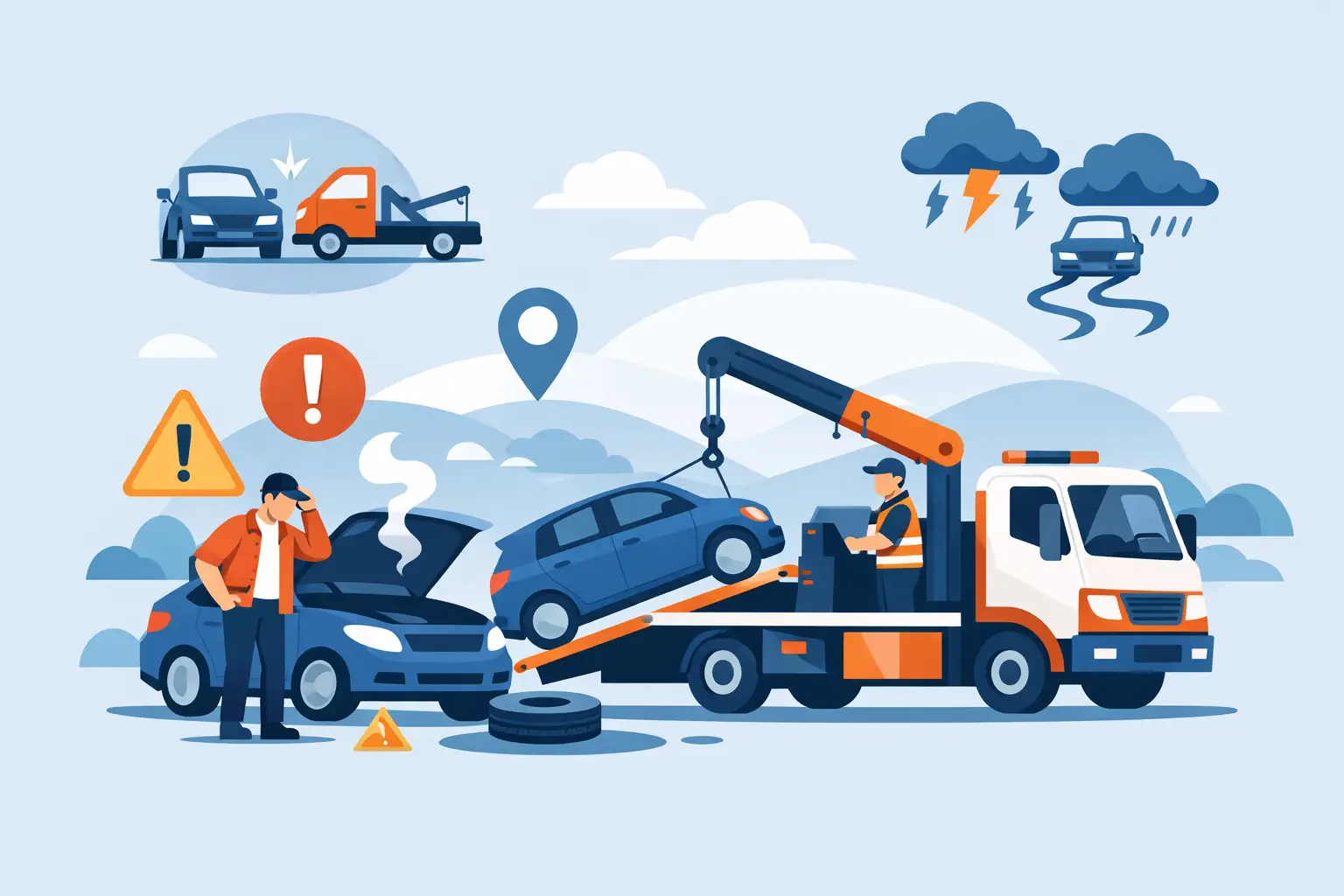
A breakdown rarely happens at a convenient time. You might be on the school run, heading to work, travelling along the M4 or M25, or carrying tools between jobs in a van. Knowing the signs you need vehicle recovery can stop a stressful roadside problem becoming a dangerous situation or an expensive repair.
Not every fault means your vehicle needs to be towed immediately. A loose fuel cap or a minor warning light may allow you to drive carefully to a garage. But if the vehicle is unsafe, will not run properly, or is stranded in a risky location, recovery is the sensible call. The priority is always to get you, your passengers and your vehicle somewhere safe.
1. Your Vehicle Will Not Start or Keeps Cutting Out
A car that will not start could be caused by a flat battery, a faulty starter motor, an immobiliser issue or a more serious electrical fault. If you are at home or in a safe car park, a jump start may be enough to get you moving. If the engine still will not turn over, starts and immediately dies, or you are stuck at the roadside, recovery avoids repeated attempts that can make the problem worse.
The same applies when an engine cuts out while driving. Pull over safely where possible, switch on your hazard warning lights and do not keep trying to restart it in live traffic. A vehicle that stalls without warning can be unpredictable, particularly on fast roads and busy junctions.
2. You Have Warning Lights Alongside Loss of Power
A dashboard warning light does not always mean you need a recovery vehicle. The difference is how the vehicle feels and whether the warning is red, flashing or accompanied by another problem.
If the engine management light appears but the car drives normally, you may be able to arrange a garage inspection soon. However, loss of power, rough running, smoke, overheating, unusual smells or a flashing engine warning light are clear reasons to stop. Driving on can damage the engine, catalytic converter or other expensive components.
Red oil pressure, coolant temperature, brake system and battery warnings deserve immediate attention. If the temperature gauge is climbing, steam is coming from under the bonnet, or the oil warning light remains on, switch off the engine once you are safely stopped. Do not open a hot radiator cap or attempt a roadside repair unless you are trained and the vehicle is fully cool.
3. You Have a Flat Tyre That Cannot Be Safely Changed
A puncture can be a quick fix when you have a usable spare wheel, the correct equipment and a safe place to stop. It becomes a recovery job when the tyre has shredded, the wheel is damaged, you have no spare, or the vehicle is on a motorway hard shoulder or narrow roadside.
Modern vehicles do not always carry a spare tyre. Some have a repair kit that will not work on a large split, sidewall damage or a tyre that has come off the rim. Run-flat tyres can also be driven only for a limited distance and at reduced speed, depending on the manufacturer guidance.
Do not put yourself at risk changing a wheel close to moving traffic. Recovery can take the vehicle to a tyre centre, home or garage without you having to work beside passing vehicles.
4. The Vehicle Has Been in an Accident
After any collision, safety comes before assessing bodywork. Even a low-speed impact can leave hidden damage to steering, suspension, brakes, wheel alignment or fluid lines. A car may look driveable but pull sharply, have a loose bumper, leak fluid or have damage underneath that makes continuing unsafe.
If airbags have deployed, a wheel is sitting at an angle, glass is broken, fluids are leaking or panels are rubbing against a tyre, do not drive the vehicle. Move away from traffic if it is safe to do so, use hazard lights and contact the emergency services where necessary.
Professional accident recovery is especially important after a more serious impact. The vehicle needs to be loaded and secured correctly, not simply dragged or driven when damaged components could fail. This matters for cars, motorcycles, vans and electric vehicles alike.
5. You Can Hear or Feel Something Seriously Wrong
Drivers often know when their vehicle does not feel right. Loud knocking from the engine, grinding when braking, a heavy vibration through the steering wheel, a burning smell or a sudden change in handling should never be ignored.
Some noises are minor, but the risk depends on when they occur. A squeal during braking may indicate worn brake parts. A clunk after hitting a pothole could point to suspension or steering damage. A vibration that grows with speed may be a tyre, wheel or drivetrain issue. If you cannot confidently control the vehicle, stop and arrange recovery rather than hoping it will get better.
This is particularly relevant for vans carrying equipment or goods. Extra weight can make a tyre, suspension or brake issue more difficult to manage, and a small fault can quickly put a working day on hold.
6. You Are Stuck, Damaged or Unable to Move
Sometimes the vehicle itself is not suffering a mechanical breakdown, but it still cannot be driven safely. You may be stuck in mud, snow, floodwater, a ditch, a tight access road or a car park with a damaged axle. You may also have clipped a kerb and broken a wheel, suspension arm or sump.
Avoid aggressive acceleration and repeated wheelspin. It can dig the vehicle in further, overheat the clutch or cause additional tyre and drivetrain damage. Floodwater brings extra risks, especially if water has entered the engine or electrical systems. A vehicle that has taken in water should not be restarted until it has been assessed.
Specialist recovery equipment allows a non-runner or damaged vehicle to be lifted and transported with care. This is not a situation for improvised towing with a rope, which can be unsafe and can cause further damage.
7. Your EV Has Run Out of Charge or Has a Fault
Electric vehicle recovery needs the right approach. Running out of charge is one reason to call, but it is not the only one. Warning messages, charging faults, battery system alerts, damaged underbody protection or accident damage may all mean the EV should not be driven.
Do not assume any recovery method is suitable for an electric vehicle. EVs are heavier than many comparable petrol or diesel cars, and their high-voltage systems require careful handling. The recovery provider should use appropriate equipment and secure the vehicle properly for transport.
If your EV is showing a serious fault or has been involved in a collision, keep clear of any smoke, heat or unusual odours and follow emergency-service advice if required. Recovery should take the vehicle to a suitable destination for inspection rather than attempting to continue your journey.
When Roadside Assistance May Be Enough
It depends on the fault and where you are stopped. A flat battery, an empty fuel tank, a locked vehicle or a minor issue may be resolved at the roadside. This is often the quickest outcome, provided it is safe and the vehicle can be checked before you set off.
Recovery is the better option when the repair cannot be completed safely at the roadside, the fault could return without warning, or the vehicle has damage that makes driving a risk. A good recovery team will assess the situation clearly and tell you the practical next step rather than pushing you into unnecessary transport.
What to Do While You Wait for Recovery
First, get yourself out of danger. If you are on a motorway or fast road, move behind a safety barrier where possible and keep well away from traffic. Switch on hazard warning lights, wear a high-visibility jacket if you have one, and keep passengers away from the vehicle and carriageway.
Have your location ready, including the road name, junction number, travel direction and any nearby landmark. Let the recovery operator know the vehicle type, fault, damage, whether it is a non-runner, and where you need the vehicle taken. Clear information helps the correct recovery vehicle arrive prepared.
Do not accept help from unverified individuals at the roadside, and do not attempt to tow a damaged car, van or motorcycle with unsuitable equipment. The short-term shortcut is rarely worth the safety risk.
For drivers across Berkshire, South Oxfordshire and surrounding motorway routes, Ozzy’s Breakdown Recovery provides 24/7 emergency assistance for breakdowns, accidents, non-runners, motorcycles, vans and EVs. When you are unsure whether it is safe to carry on, the safest choice is to stop, get professional advice and arrange help before a manageable fault becomes a bigger problem.
Leave a Reply