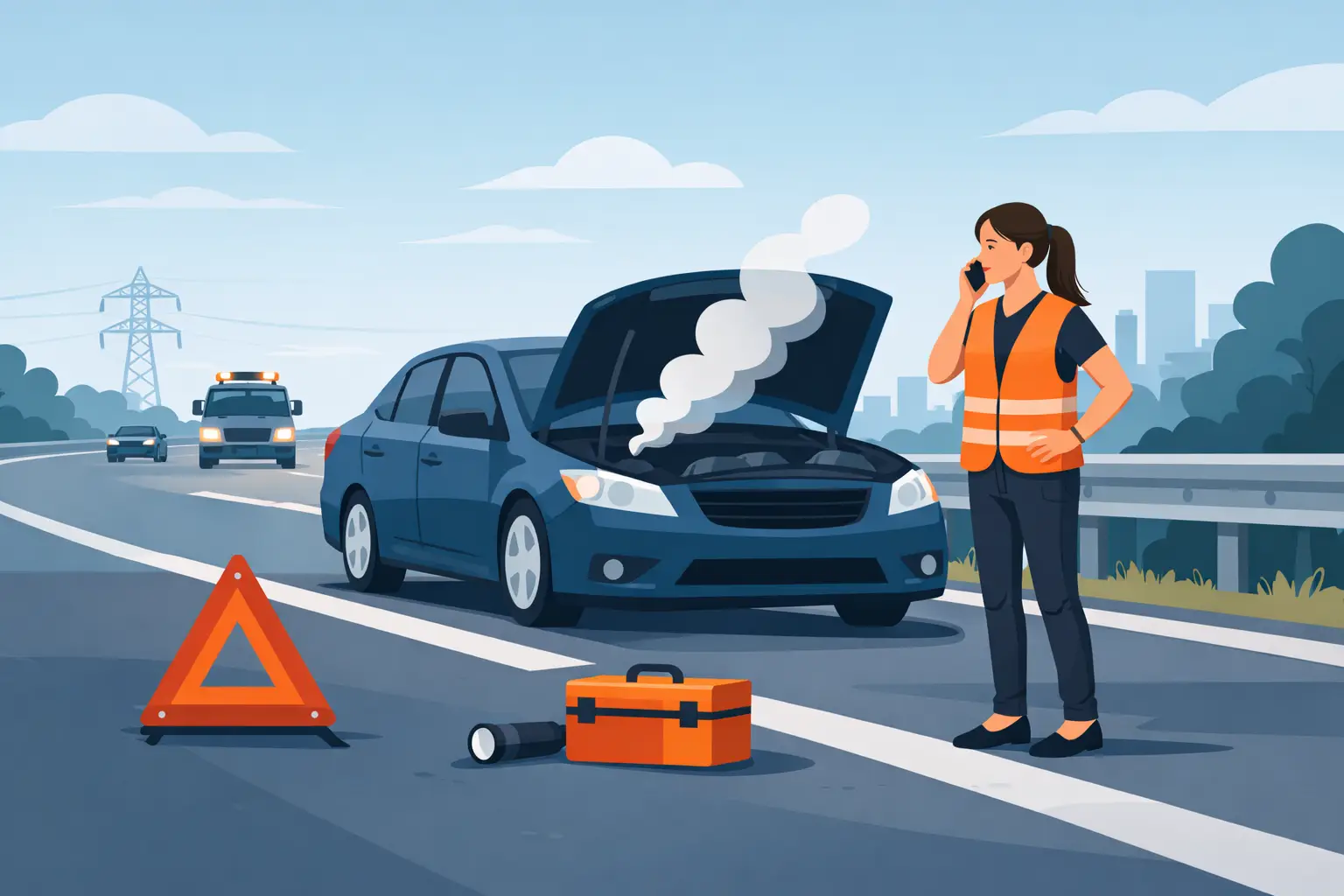
A breakdown can turn dangerous in seconds when you are stopped beside fast-moving traffic. Whether you are on a quiet Berkshire lane, the M4, M25 or M3, knowing how to stay safe roadside starts with one priority: protect the people in the vehicle before worrying about the vehicle itself.
Stay calm, make the right immediate decisions and get professional help moving. A flat battery or tyre problem is inconvenient. Being exposed to passing traffic is the real risk.
How to stay safe roadside: your first few minutes
As soon as you notice a problem, try to move off the carriageway safely. Do not brake sharply or force your way across traffic. Indicate early, reduce speed steadily and aim for a lay-by, service area, side road, car park or another place away from moving vehicles.
If the vehicle is still driveable for a short distance, getting to a safer stopping point is usually better than pulling up at the first sign of trouble. That said, do not keep driving if there is smoke, a burning smell, serious steering problems, a tyre failure, a warning that indicates overheating, or anything that makes the vehicle unsafe to control.
Once stopped, put on your hazard warning lights. Apply the handbrake, select park or neutral as appropriate, and switch on sidelights if visibility is poor or it is dark. If you can do so without putting yourself in danger, turn the front wheels towards the kerb when parked on a road.
Do not stand beside the vehicle to inspect the fault. A quick look may feel useful, but it rarely solves an urgent problem and keeps you close to traffic for longer. If you suspect a fuel leak, see smoke or smell burning, move everyone well away from the vehicle and call the emergency services.
Make your vehicle easier to see
Hazard lights are the first warning to other drivers, but they are not a complete safety measure. At night, in heavy rain, fog or on a bend, your vehicle can still be difficult to spot until another driver is very close.
Use sidelights where appropriate and keep your hazard lights on. If you carry a high-visibility jacket, put it on only when it is safe to do so. Do not search through a packed boot while standing in a live lane or on a narrow hard shoulder.
A warning triangle can help on some quiet roads, but never place one on a motorway. Walking along or across a motorway to position a triangle creates a far greater danger than it prevents. On any road where traffic is fast or space is limited, stay focused on getting yourself to a safe position and arranging recovery.
Get people out of danger, not into it
Where you wait depends on where the vehicle has stopped. On a normal road with a pavement or verge, leave the vehicle only if you can do so safely and move away from the traffic side. Take passengers with you, especially children, rather than leaving them in a vulnerable vehicle.
Stand well back from the road, ideally behind a barrier, hedge or embankment if one is available. Never wait directly in front of or behind the vehicle. If another driver hits it, those are the most dangerous places to be.
There are exceptions. On a narrow country road, a busy dual carriageway or a road with no safe refuge, getting out may put you in more danger. Keep seatbelts fastened, hazards on, doors locked where sensible, and contact a recovery provider or the emergency services. Tell them clearly if you are stopped in a live traffic lane, around a blind bend, or in a location where drivers have little warning.
If passengers need to leave, use the doors furthest from traffic where possible. Never let children wander around the roadside, and do not ask anyone to direct traffic. Other motorists may mean well, but walking into the carriageway is not a safe solution.
Motorway and smart motorway breakdowns
Motorways need a different response because traffic is faster and drivers may have less time to react. If your vehicle shows signs of trouble, leave at the next junction or pull into a service area if it is safe to do so. Do not wait for the fault to become a complete breakdown.
If you need to stop, aim for an emergency area, hard shoulder or other signed refuge. Stop as far left as possible, put hazards on and, if it is safe, leave by the left-hand doors and wait behind the barrier, well away from the vehicle.
A smart motorway is especially serious if you are stranded in a live lane. Put on hazard lights immediately and call 999. Do not try to cross lanes, attempt roadside repairs or walk to an emergency area through traffic. Follow the instructions from the emergency operator, who can arrange traffic protection and support.
If you cannot safely leave the vehicle, stay belted in and keep your hazard lights on while help is arranged. The safest choice can depend on traffic, weather, your exact position and whether there is a barrier or refuge nearby. There is no value in taking a risky action simply because it seems like the standard response.
Call for recovery with the right details
Once everyone is as safe as possible, arrange help. A recovery team can reach you faster when they have clear information from the start. Give your location, direction of travel, vehicle registration, make and model, the fault if known, and whether the vehicle is blocking traffic.
Use road signs, junction numbers, nearby landmarks, service station names or your mobile phone’s map location to pinpoint where you are. On a motorway, state the motorway, carriageway direction and the nearest marker post, junction or emergency area. Saying only that you are “near Reading” can delay the response when you are actually on a major route several miles away.
Also explain whether you have passengers, children, pets or a medical concern. Tell the recovery operator if the vehicle is an EV, van, motorcycle, non-runner, or has axle or wheel damage. These details affect the type of recovery vehicle and equipment needed, helping the team arrive prepared rather than creating another delay at the roadside.
For drivers across Berkshire, South Oxfordshire and nearby motorway routes, Ozzy’s Breakdown Recovery provides 24/7 assistance for breakdowns, accidents, jump starts and specialist vehicle recovery. If the situation is unsafe or you are in a live motorway lane, call 999 first.
What to do while you wait for help
Keep your mobile phone charged if possible, but do not drain the battery making repeated calls or scrolling for answers. Preserve power for the recovery team, emergency services and family members who may need to contact you. If you are safely away from the vehicle, stay together and keep an eye on children and pets.
Avoid accepting help from an unsolicited recovery vehicle unless you are certain it has been sent by your provider or you have independently agreed the service. Ask for the driver’s name, company and vehicle details if you are unsure. A professional operator will understand that you are being careful.
Do not let frustration tempt you into changing a wheel, jump-starting a battery or looking under the bonnet in an exposed location. Those jobs can wait until the vehicle is in a safe place or a trained recovery technician is present. The trade-off is a little more waiting time for a much lower risk of injury.
Once the recovery vehicle arrives
A proper recovery team will first assess the scene, traffic risk and condition of your vehicle. Follow the technician’s instructions, particularly where they ask you to stand or when they are loading the vehicle. Recovery work involves moving equipment, winches and passing traffic, so give the operator room to work.
Before leaving, confirm where you and the vehicle are going. That might be home, a local garage, a dealership or another safe destination. For an EV, damaged vehicle or commercial van, the right transport method matters just as much as the destination. Rushing a vehicle onto unsuitable equipment can create further damage.
Keep your keys, documents, medication and valuables with you unless the recovery operator asks for something specific. Take a quick photo of the vehicle’s condition if it has been involved in an accident, provided you can do so from a safe position.
The vehicle can be repaired or recovered. Your safety cannot be replaced. Make the safe call early, get clear of traffic where possible and let trained help take over.
Leave a Reply