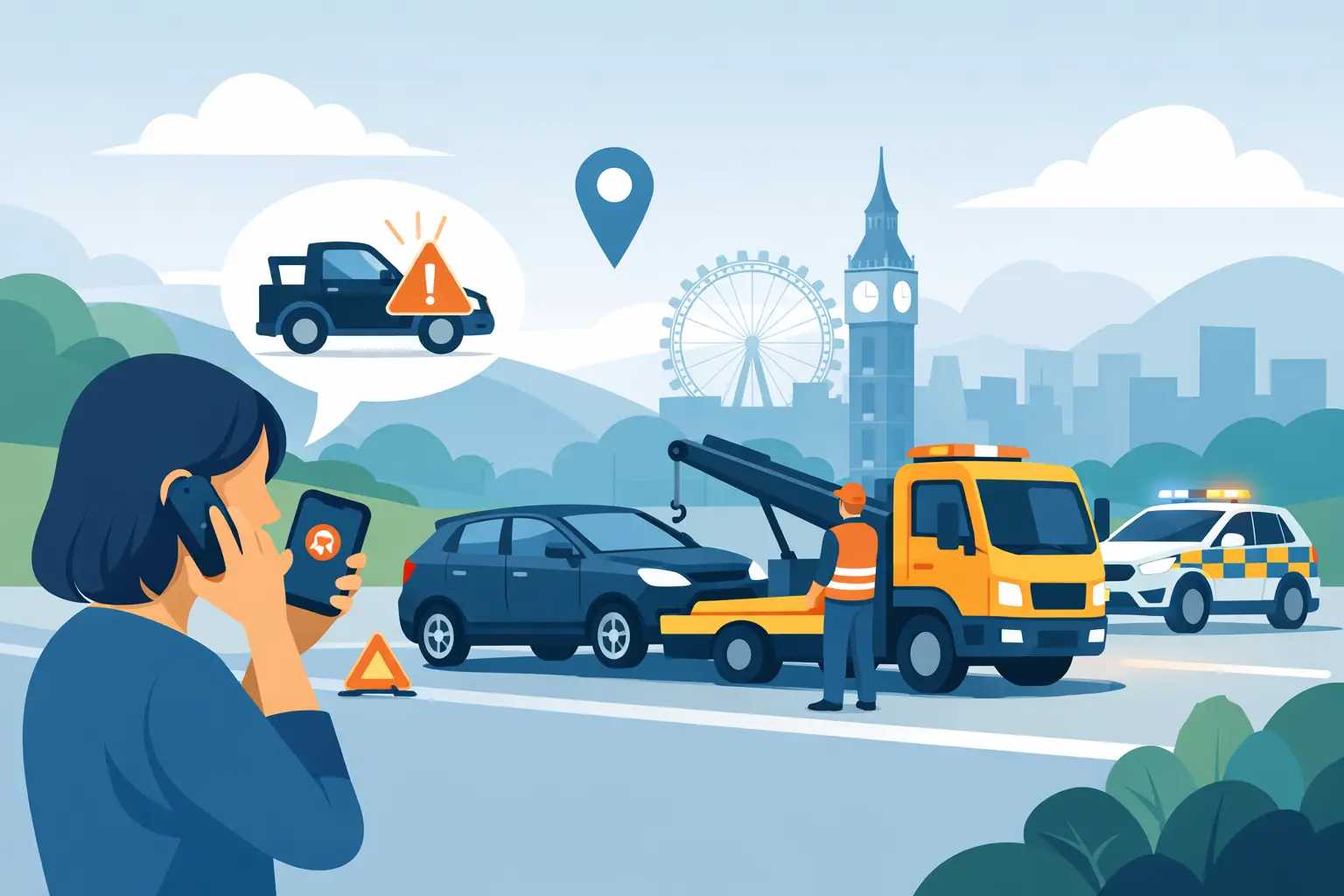
A breakdown on the M4 outside Reading, a flat battery in a supermarket car park, or accident damage on a country road can turn stressful very quickly. Knowing how to request emergency towing before you are stuck at the roadside helps you get the right recovery vehicle moving towards you without delay.
The priority is always safety first, then clear information. A professional recovery team can deal with cars, motorcycles, vans, electric vehicles and non-runners, but they need an accurate picture of where you are and what has happened. A calm, well-prepared call usually means a faster, safer recovery.
How to Request Emergency Towing Without Delay
If your vehicle cannot be driven safely, call a 24/7 recovery provider as soon as you are in a safe position. Tell the operator you need emergency towing, rather than only saying that you have broken down. This makes clear that the vehicle needs transporting, not simply roadside assistance.
Start with your location. Give the road name, nearest town, postcode if you have one, or a recognisable landmark such as a fuel station, roundabout, bridge or junction. On a motorway, say the motorway number, the direction of travel, the junction you have passed or are approaching, and any marker post reference. These details are far more useful than saying you are “somewhere near Reading”.
Next, explain the vehicle. The registration, make, model, colour and vehicle type help the recovery operator send suitable equipment. A motorcycle, long-wheelbase van, electric vehicle or car with axle damage may need a different recovery method from a standard car tow. Be clear if the vehicle will not start, has locked wheels, has a puncture, has been in a collision, or cannot be moved from its current position.
Finally, say where the vehicle needs to go. It may be your home, a local garage, a dealer, a secure storage location or another address. If you are unsure, ask for advice before the recovery vehicle arrives. The right destination can save you the cost and inconvenience of arranging a second move later.
Get Yourself Safe Before Making the Call
Do not put yourself at risk trying to diagnose the problem at the roadside. If you can safely move the vehicle off the carriageway into a lay-by, car park or side road, do so. Switch on your hazard warning lights and keep clear of moving traffic.
On a motorway or dual carriageway, safety guidance is different. If the vehicle stops on the hard shoulder or in an emergency refuge area, leave it by the left-hand door when safe and wait behind the safety barrier, well away from traffic. If you are on a live lane and cannot get out safely, stay belted in, switch on hazards and contact the emergency services. Use an emergency roadside phone where available, as it gives the control centre your exact location.
Do not place a warning triangle on a motorway. It is not worth exposing yourself to fast-moving traffic. Keep children and passengers away from the carriageway, and never stand directly in front of or behind a stranded vehicle.
If there has been an accident, anyone is injured, there is fuel leaking, smoke, fire, or the vehicle is creating an immediate danger, call 999 first. Recovery should follow once the scene is safe and any emergency response is under way.
The Information a Recovery Team Needs
You do not need technical knowledge to arrange towing. You simply need to describe what you can see. Have your mobile phone charged where possible and keep your registration and location details to hand.
During the call, expect to be asked about the vehicle’s condition, whether it is accessible, and whether the steering, brakes and wheels are intact. These are not unnecessary questions. They allow the operator to choose the correct recovery vehicle and loading equipment, reducing delays when the team reaches you.
It also helps to mention practical access issues. For example, tell the operator if your car is in a multi-storey car park, underground bay, narrow lane, gated estate or soft verge. Height restrictions, tight turns and limited access can affect the best way to recover the vehicle.
If you are travelling with pets, children, luggage or work equipment, say so. A reliable recovery service will explain what can be accommodated and what arrangements may be needed for passengers. Do not assume every recovery vehicle has spare seating for everyone.
Tell the Operator What Has Happened
A simple description is enough: “The engine cut out and will not restart”, “I have hit a kerb and the front wheel is pointing outwards”, or “The EV has no charge and cannot select drive”. Avoid guessing at the fault if you are not sure. The condition of the vehicle matters more than a diagnosis.
Accident-damaged vehicles need particular care. If a wheel is bent, an axle is damaged, airbags have deployed or fluid is leaking, the vehicle should not be driven or pulled in a way that causes further damage. Ask for proper recovery transport rather than trying to get a friend to tow it with a rope. It is safer, and it protects the vehicle from avoidable damage.
Electric vehicles should also be identified during the first call. EVs have specific handling requirements, especially after a collision, warning light fault or battery issue. A suitable recovery provider will use the appropriate equipment and transport method rather than treating the vehicle like any ordinary non-runner.
For vans and commercial vehicles, explain whether you are carrying tools, stock or equipment. Downtime costs money, so be direct about your destination and any deadline. A properly planned recovery gets the vehicle and its contents where they need to be with less disruption to your working day.
Confirm the Towing Plan and Cost
Before recovery is dispatched, confirm the collection point, destination and the type of assistance being arranged. Ask whether the quoted price covers loading, transport and the required distance, and whether there may be additional charges for difficult access, accident damage, out-of-hours work or a changed destination.
The cheapest option is not always the best option when you are stranded. An inexperienced operator or unsuitable vehicle can lead to long waits, further damage or a recovery that cannot be completed on arrival. Look for a service that communicates clearly, operates around the clock and has equipment for the type of vehicle you own.
Keep your phone nearby after the call. The recovery driver may need to confirm your exact position, particularly on rural roads or motorway routes. If your location changes because you have moved to a safer place, tell the operator immediately.
While You Wait for Emergency Towing
Once help is arranged, stay in the safest available place and avoid repeated attempts to start or move a damaged vehicle. If you have a breakdown, low battery or overheating issue, forcing the vehicle onwards can turn a manageable recovery into a larger repair.
Use the waiting time to gather valuables, medication, identification and anything you will need after the vehicle is collected. If you are heading to a garage, check its opening hours and whether it can accept the vehicle. If it is closed, home recovery or secure storage may be the more sensible option.
When the recovery driver arrives, confirm your name, vehicle registration and destination before loading begins. Point out any damage from an accident and remove personal belongings where practical. A professional team will assess the vehicle, secure it correctly and explain the next step before leaving.
Choose Local Help That Can Handle the Job
A local 24/7 recovery service can make a major difference when you are stopped in Berkshire, South Oxfordshire or on busy routes such as the M25, M4 and M3. Ozzy’s Breakdown Recovery provides emergency vehicle transport for cars, motorcycles, vans, EVs and damaged non-runners, with a focus on quick communication and safe handling.
The best time to work out who to call is before an emergency happens. Save a trusted recovery number in your phone, keep your vehicle details accessible, and remember that your safety matters more than getting the vehicle moving immediately. When a breakdown does happen, a clear call and the right recovery team will get you off the roadside and back in control.
Leave a Reply