


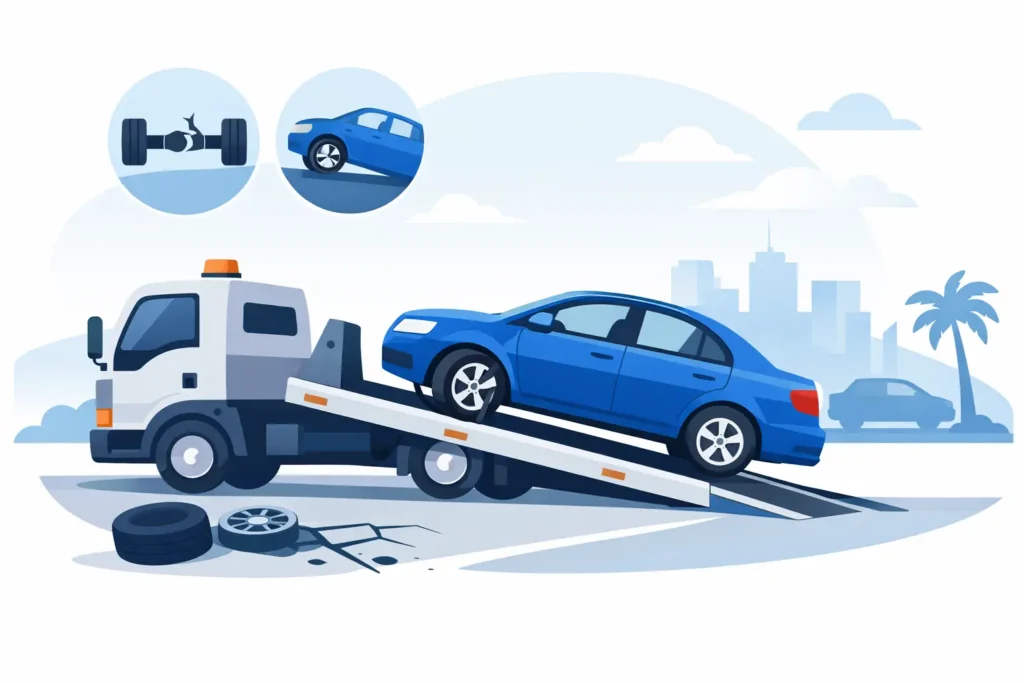
A damaged axle can turn a short journey into an immediate roadside problem. If a wheel is sitting at the wrong angle, the vehicle is pulling sharply, making loud grinding noises, or simply will not move, axle damage vehicle transport is the safe answer. Trying to drive it, even a few metres to get home or reach a garage, can cause further damage and put you and other road users at risk.
For drivers across Berkshire, South Oxfordshire and the surrounding M4, M25 and M3 routes, the priority is simple: get the vehicle recovered properly, without making an already difficult situation worse. Ozzy’s Breakdown Recovery provides 24/7 emergency recovery for cars, vans, motorcycles and EVs, with the right equipment and a professional approach from collection to drop-off.
Do not drive with suspected axle damage
An axle does far more than hold the wheels in place. It supports vehicle weight, transfers power on driven wheels and helps keep the vehicle stable under braking and cornering. When it is bent, broken or otherwise compromised, the vehicle may no longer track straight or respond predictably.
The signs are not always dramatic. You may have hit a deep pothole, a kerb or debris on the road and noticed a sudden vibration afterwards. In more serious cases, following a collision or a wheel impact, the tyre may rub against the bodywork, a wheel may point inwards or outwards, or the vehicle may be unable to roll at all.
If you suspect axle trouble, stop in a safe place as soon as you can. Do not attempt to straighten components, force the vehicle forward, or let somebody tow it with a rope. A damaged wheel, suspension arm, hub or driveshaft can create additional problems when the vehicle is pulled incorrectly.
What to do while you wait for recovery
Your safety comes first, particularly on a live motorway or busy A-road. Move yourself and passengers away from traffic where it is safe to do so, and do not stand between your vehicle and passing traffic. If you cannot safely exit the vehicle, follow the relevant motorway safety guidance and contact emergency services where necessary.
Before calling for help, take a quick look from a safe distance. You do not need to diagnose the fault, but the following details help a recovery operator send the right vehicle and equipment:
- Your exact location, direction of travel and a nearby landmark, junction or postcode
- Whether the vehicle can roll, steer and select neutral
- Which wheel or axle appears affected, if you can see it safely
- The vehicle make, model, registration and whether it is a car, van, motorcycle or EV
A clear description saves time. For example, saying that the front-left wheel is folded under the car is more useful than saying the car has had a bump. If you are on the M4, M25 or M3, tell the recovery team the carriageway direction and nearest junction. That helps them reach you without losing time searching the wrong side of the motorway.
Why axle damage needs specialist transport
Not every breakdown can be handled in the same way. A car with a flat battery may only need a jump start. A vehicle with axle or suspension damage often needs a carefully planned load onto a recovery vehicle.
The correct method depends on the vehicle’s condition. If the wheels roll freely and the steering is intact, loading may be straightforward. If a wheel is locked, bent, detached, or pointing at an angle, the recovery team may need skates, dollies, winching equipment or a low-angle loading approach to move it without dragging the damaged corner.
This matters because dragging a vehicle with a damaged axle can damage tyres, wheels, brakes, bodywork and underneath components. It can also make a repair bill higher than it needs to be. Safe axle damage vehicle transport is about protecting the vehicle as well as getting it off the road quickly.
A trained recovery operator will assess the position before loading. They will consider ground clearance, wheel condition, where the damage sits, whether the handbrake is stuck, and whether the vehicle can safely be placed in neutral. This is particularly relevant for automatic cars, electric vehicles and modern four-wheel-drive systems, which may have specific transport requirements.
Recovery after a collision, pothole strike or kerb impact
Axle damage is often linked to a sudden incident. A collision can bend suspension and steering components even when the bodywork damage looks minor. A sharp pothole strike may crack an alloy wheel, damage a tyre and affect wheel alignment. Clipping a kerb can cause damage that is not obvious until the vehicle starts pulling to one side.
Do not rely on appearance alone. A wheel that looks largely normal may still have damage behind it. If the steering wheel is off-centre, the car feels unstable, there is a harsh vibration, or a warning light appears after an impact, arrange recovery rather than taking chances on the road.
For accident recovery, it also helps to take photographs if it is safe to do so and exchange details as required. Once the immediate situation is under control, your vehicle can be transported to a garage, bodyshop, home address or another agreed destination. The best destination depends on the damage, your insurer’s requirements and whether you already have a trusted repairer.
Cars, vans, motorcycles and electric vehicles
Axle and wheel damage can affect almost any vehicle, but the recovery plan is not identical for all of them. A small hatchback with front suspension damage needs different handling from a loaded work van with rear axle trouble. Weight, wheelbase, payload and access all affect the equipment needed.
For commercial drivers, fast recovery also means less lost time. A van out of action can disrupt deliveries, appointments and the working day. Giving accurate details about the load, vehicle height and any access restrictions allows the recovery team to prepare properly and avoid unnecessary delays.
Motorcycles need their own secure transport arrangements. A damaged wheel or fork should never be treated as a standard tow job. The bike must be stabilised and secured correctly to prevent further damage during transport.
Electric vehicles require care too. EV recovery is not just about getting the vehicle onto a lorry. The operator must account for the vehicle’s weight, jacking points, drive system and manufacturer guidance. Where impact damage is involved, it is sensible to tell the recovery team if there are signs of battery damage, smoke, heat or warning messages. Keep well clear and contact emergency services immediately if there is any concern about fire.
Fast help without cutting corners
When your vehicle is stranded, it is understandable to want the quickest possible solution. But speed should never mean rushing the loading process or using unsuitable equipment. The right recovery team should give you a realistic arrival estimate, confirm your location, explain what they need to know and keep you updated if conditions on the road affect the journey.
At the roadside, a professional operator will secure the scene as far as possible, assess whether the vehicle can be moved safely and load it with care. Once it is on board, it should be properly secured for transport rather than simply pulled into place and hurried away.
Response times can depend on traffic, weather, the time of day and your location, especially around major motorway corridors. However, a local 24/7 recovery service is usually far better placed to respond quickly than a provider travelling from outside the area. That local knowledge matters when a breakdown happens late at night, during rush hour or on an unfamiliar stretch of road.
Arrange safe recovery now
If you are dealing with a damaged axle, bent wheel, collision damage or a vehicle that will not safely roll, do not risk driving it further. Call for professional recovery, explain what has happened and let the team arrange the safest way to transport it.
A calm, properly handled recovery can prevent more damage, get you out of danger sooner and give you one less thing to worry about while the repair is being arranged.