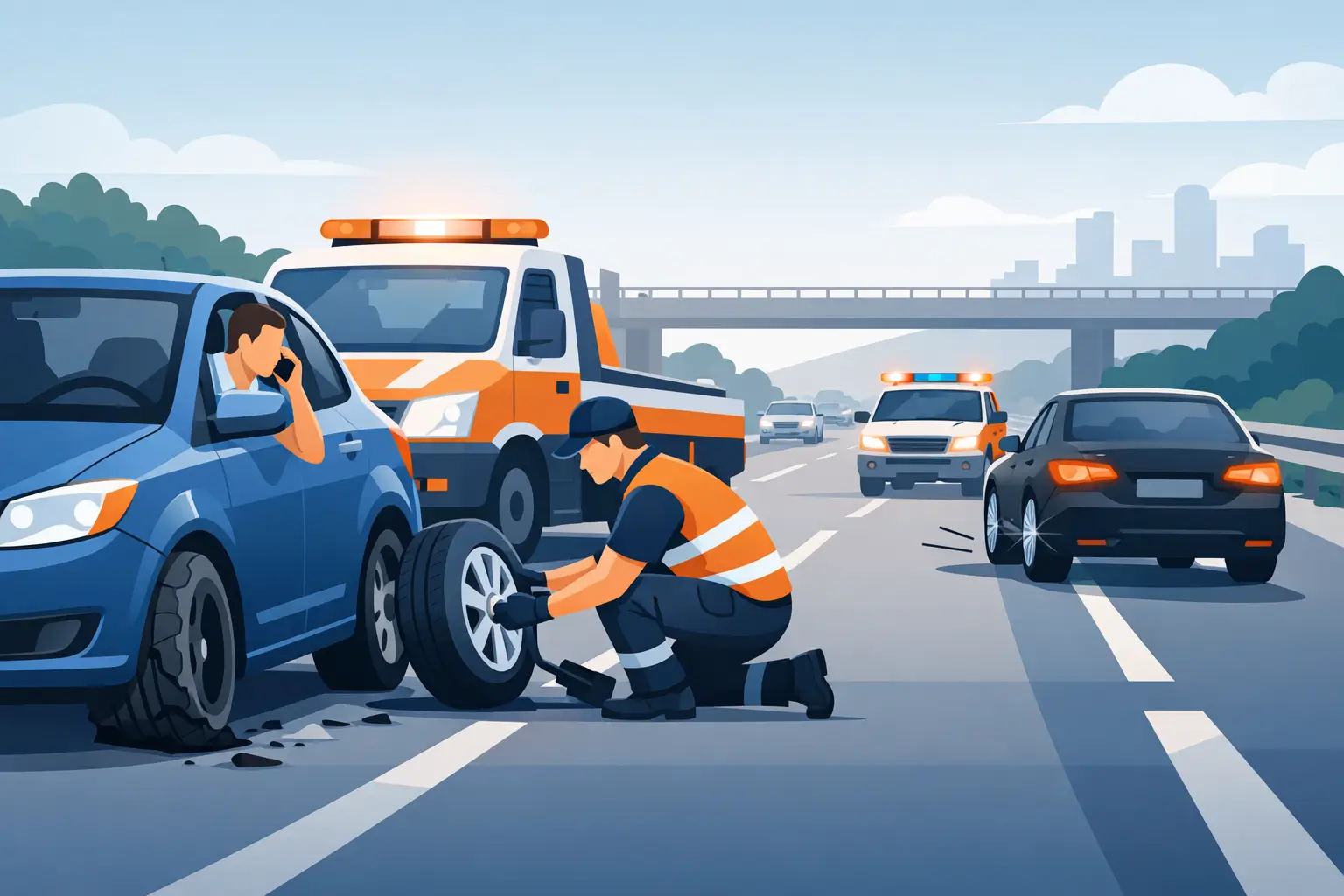
A tyre blowout at motorway speed is not a normal puncture. The car may pull sharply, the steering can feel heavy, and drivers around you may have little warning that you are losing control. If you need motorway blowout recovery on the M4, M25, M3 or nearby routes, the first priority is not the tyre – it is getting yourself and your passengers out of danger.
Stay calm, reduce speed gradually and get to the safest available place. Once you are safe, a professional recovery vehicle can take care of the damaged wheel, vehicle transport and onward journey without putting you at further risk.
What to do when a tyre blows out on the motorway
A loud bang, sudden vibration or a vehicle pulling hard to one side can all signal a blowout. Keep both hands firmly on the steering wheel and resist the urge to brake hard. Sudden braking can make a damaged tyre less predictable, particularly if you are towing, carrying a heavy load or driving a van.
Ease off the accelerator and allow the vehicle to slow down under control. Keep your direction steady, use your indicators when it is safe to do so, and move towards the left-hand side. Aim for an emergency area, motorway service area or exit where possible. Do not try to inspect the tyre while you are still exposed to fast-moving traffic.
If you can reach a safe place away from live traffic, switch on your hazard warning lights. On a conventional motorway hard shoulder, leave the vehicle from the left-hand side if it is safe, move behind the barrier and keep well away from the carriageway. Take passengers with you, but do not put anyone at risk trying to retrieve luggage or belongings.
Smart motorways need extra care. If you are stopped in a live lane and cannot reach an emergency refuge area, keep your seat belt on, switch on hazard lights and call 999 straight away. Do not attempt to leave the vehicle or change the tyre next to live traffic unless emergency services tell you it is safe to do so.
Why motorway blowout recovery is safer than changing a wheel
A spare wheel may appear to be the quickest answer, but a motorway is rarely the place to fit one. Traffic can pass at high speed, visibility may be poor, and a jack or loose wheel can create another hazard. Even on a hard shoulder, you are still close to moving vehicles.
Recovery is often the safer option, especially when the tyre has shredded, the wheel rim is damaged or the vehicle has suffered suspension, brake-line or bodywork damage. Driving on a deflated tyre, even for a short distance, can damage the rim and make a straightforward tyre issue into a more expensive repair.
Modern vehicles also vary. Some do not carry a spare wheel, while run-flat tyres have limits on how far and how fast they can be driven after pressure loss. Electric vehicles can be particularly heavy and must be recovered using the right equipment and loading method. A professional assessment prevents guesswork at the roadside.
Getting the right help quickly
When you call for recovery, give the operator the clearest location you can. A motorway number alone is not enough. State the direction of travel, the nearest junction, marker post, emergency refuge area number or visible landmark. If you are on the M4, M25 or M3, even a small detail such as the junction you passed can help recovery reach you faster.
Also explain what happened. Say whether the tyre has burst completely, whether the vehicle is in a live lane, hard shoulder or refuge area, and whether there are passengers, children, pets or any immediate medical concerns. If the vehicle is a van, motorcycle, EV or loaded commercial vehicle, mention that too so the correct recovery equipment can be sent.
Ozzy’s Breakdown Recovery provides 24/7 emergency assistance across Berkshire, South Oxfordshire and surrounding motorway corridors. A trained recovery team can assess the situation, load your vehicle securely and move it to a tyre centre, garage, home address or another suitable destination. For urgent incidents, call rather than waiting to arrange help online.
What recovery from a motorway blowout involves
Once the recovery operative arrives, they will first focus on safe positioning. This may mean working with traffic officers or following motorway control instructions before loading begins. The vehicle is checked for obvious tyre, wheel and underbody damage, then secured to the recovery vehicle using the appropriate method.
The destination depends on the condition of your vehicle and the time of day. If the tyre can be replaced promptly, transport to a trusted tyre fitter may be the most practical choice. If garages are closed, the vehicle can be taken home or to a safe holding location, allowing you to arrange repairs without the pressure of being stranded at the roadside.
For vans and light commercial vehicles, downtime matters. A blown tyre can delay deliveries, appointments and staff. The right recovery service should give clear updates, use suitable equipment and avoid unnecessary delays, so you can make an informed decision about repairs and onward transport.
Do not make these common mistakes
The pressure to get moving again can lead to risky choices. Do not continue driving on a shredded tyre to reach the next junction unless instructed by emergency services. It can destroy the wheel, affect vehicle handling and leave debris behind.
Do not stand between your vehicle and passing traffic, and do not ask passengers to wait on the verge near the carriageway. Keep everyone behind a barrier where one is available. Avoid placing a warning triangle on a motorway too – walking back along the carriageway creates more danger than it prevents.
It is also wise not to accept a quick visual judgement that the vehicle is fine simply because a replacement wheel can be fitted. After a high-speed blowout, check for bent rims, damaged wheel arches, loose trim and steering vibration. If the vehicle does not feel normal after repair, do not drive it until it has been properly inspected.
Reducing the risk before your next motorway journey
Blowouts are not always preventable, but tyre checks make a real difference. Check pressures when tyres are cold, including the spare where fitted, and follow the vehicle manufacturer’s pressure guidance for passengers or heavier loads. Look for cuts, bulges, embedded objects and uneven wear before a long journey.
Pay attention to tyre age as well as tread depth. A tyre can have legal tread remaining but still be weakened by age, cracking or repeated kerb damage. Vans, work vehicles and cars used for regular motorway miles should have their tyres checked more frequently, particularly before carrying tools, stock or holiday luggage.
If a blowout happens, your job is simple: keep control, get to the safest place you can and get professional help. A fast response and careful recovery can turn a frightening motorway stop into a safe, manageable next step.
Leave a Reply