


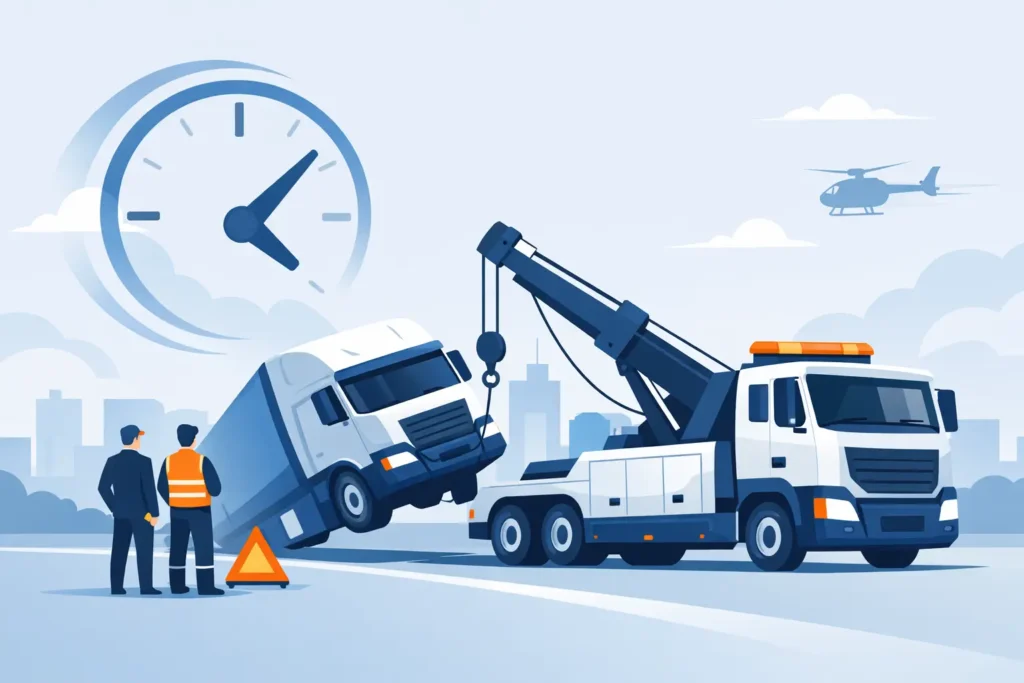
A broken-down van at the side of the M4 is not just an inconvenience. It is missed jobs, delayed deliveries, unhappy customers, and a driver stuck waiting for answers. That is why commercial vehicle recovery needs to be fast, clear, and handled by a team that knows how to move quickly without cutting corners.
For tradespeople, couriers, service engineers, and businesses running light commercial fleets, downtime costs money straight away. Every hour off the road affects schedules, staff time, and customer commitments. In that situation, you do not need vague promises. You need to know who is coming, how soon they can get there, and whether your vehicle will be recovered properly.
What commercial vehicle recovery actually covers
Commercial vehicle recovery is the safe roadside assistance, towing, and transport of working vehicles that cannot continue their journey. In most cases, that means vans, light commercial vehicles, and fleet vehicles that have broken down, been involved in an accident, suffered a flat battery, or developed a fault that makes driving unsafe.
Sometimes the problem is simple. A flat battery, a puncture, or a warning light that turns into limp mode may be solved at the roadside. Other times, recovery is the only sensible option. If the vehicle has axle damage, steering issues, gearbox failure, accident damage, or an electrical fault that cannot be diagnosed safely on the hard shoulder, it needs loading and transporting by the right recovery vehicle.
That difference matters. A proper recovery service does not just tow first and ask questions later. It assesses the condition of the vehicle, the location, the safety risk, and the best way to move it without causing more damage.
Why speed matters in commercial vehicle recovery
When a private car breaks down, the priority is getting the driver home or to a garage. When a working van breaks down, there is a wider knock-on effect. Appointments are missed. Goods stay in the back. Drivers lose time. Office staff start rearranging jobs. Customers ring asking where their delivery or engineer has got to.
That is why response time matters so much in commercial vehicle recovery. A quick answer on the phone is useful, but it is only part of the picture. What really counts is getting a trained recovery operator to the vehicle fast, with the right equipment and a clear plan.
There is also the safety side. A stranded commercial vehicle on a motorway or busy A-road creates risk for the driver and for other road users. The sooner the situation is made safe and the vehicle is moved, the better. Fast recovery is not only about convenience. It is about reducing exposure to danger and getting control of the situation before it gets worse.
The problems that call for recovery, not guesswork
Not every breakdown needs a full recovery, but many do. Vans and other commercial vehicles are often carrying tools, stock, parcels, or equipment, which adds weight and complexity. A fault that might seem manageable on a private car can be more serious on a loaded vehicle.
Common callouts include engine failure, clutch problems, battery issues, overheating, punctures, accident damage, and vehicles that simply will not restart after stopping. There are also more awkward situations, such as a non-runner on a driveway, a van that has suffered suspension or axle damage, or a vehicle that needs moving between sites, garages, or depots.
In these cases, trying to force the vehicle onward usually makes things worse. A short attempt to limp to the next junction can turn a repairable fault into a bigger garage bill. Recovery gives you a controlled way to move the vehicle without adding unnecessary damage or risk.
What a reliable recovery service should give you
The best commercial recovery services keep things straightforward. When you call, you should get a clear response, realistic arrival guidance, and confidence that the operator understands what type of vehicle they are dealing with.
That matters because commercial vehicles are not all the same. Vehicle size, weight, load condition, wheel damage, and access all affect how recovery should be carried out. A van with front-end accident damage needs different handling from a non-starting fleet vehicle in a car park. The right service should have dedicated recovery vehicles and proper loading equipment, not just a one-size-fits-all approach.
Communication matters as much as equipment. If you are managing a business vehicle breakdown, you need updates you can rely on. You need to know whether the issue can be solved roadside, whether the van is being recovered, and where it is going next. Clear communication reduces stress and helps you make practical decisions quickly.
Commercial vehicle recovery on motorways and busy routes
Breakdowns on the M25, M4, M3 and other high-traffic routes come with extra pressure. Drivers are exposed to fast-moving traffic, and even a minor issue can become a serious disruption very quickly. On these roads, recovery needs to be organised with urgency and care.
The first priority is always safety. The second is getting the vehicle off the live carriageway or verge and into a safer position if possible. After that, the focus shifts to whether the problem can be resolved at the roadside or whether transport is needed.
Motorway recoveries are rarely the place for trial and error. A service that knows the local network, understands the pressure of these callouts, and can respond quickly across Berkshire, South Oxfordshire and surrounding routes makes a real difference. For businesses covering these corridors every day, that local reach is not a bonus. It is part of what keeps operations moving.
Fleet support is about more than one broken-down van
If you run more than one vehicle, the stakes are higher. One breakdown can be managed. Repeated delays across several vehicles start affecting reputation, staffing, and customer retention. That is why businesses often look for a recovery provider that can handle regular callouts professionally rather than treating each incident as a one-off favour.
Good fleet-focused recovery means consistency. Drivers know who to call. Managers know what information they will get. Vehicles are handled properly, and downtime is kept as short as possible. It also means understanding that businesses need practical solutions, whether that is roadside assistance, transport to a repairer, or planned movement of a non-running vehicle.
There is no single answer for every fleet. A sole trader with one van needs speed and affordability. A company with several vehicles may care more about dependable coverage and response standards. It depends on how the vehicles are used, where they travel, and how costly delays are to the business.
Choosing the right commercial vehicle recovery provider
Price matters, but it should not be the only thing you look at when your van is stranded. A cheaper quote is no use if the operator arrives too late, lacks the right vehicle, or cannot recover the van safely. Commercial recovery is one of those services where reliability often saves more money than the lowest callout fee.
Look for a provider that offers 24/7 availability, clear coverage, proper recovery equipment, and experience with vans and light commercial vehicles. If your work takes you across Berkshire, Reading, South Oxfordshire, Hampshire, Surrey or the surrounding motorway network, local knowledge is a real advantage. The faster a recovery team can reach you, the faster you can start fixing the rest of the day.
It also helps to choose a service that can deal with more complex situations. Not every breakdown is a simple tow. Some involve accident damage, non-runners, awkward access, or newer vehicle types that need more careful handling. A provider with a wider capability is better placed to solve the problem in one visit.
This is where a dependable local operator such as Ozzy’s Breakdown Recovery fits naturally. For drivers and businesses needing urgent support, the value is simple – 24/7 response, professional handling, and the confidence that help is already working its way to you.
When to call for help straight away
If the vehicle has lost power, suffered visible damage, developed steering or braking issues, or is stopped in a dangerous location, do not gamble on getting it moving again. Call for recovery. The same applies if warning lights are escalating, the vehicle is overheating badly, or it will not restart after a breakdown.
For commercial drivers, there is always temptation to push on and finish the route. Usually that comes from wanting to keep customers happy or avoid losing time. In practice, pressing on with a fault often creates more delay, higher repair costs, and a greater chance of being stranded somewhere even worse.
The better option is to act early. Get the vehicle assessed, make the scene safe, and let a professional recovery team take over. A fast decision at the roadside often saves the rest of the day from unravelling.
If your van or fleet vehicle is off the road, the right help should feel simple – quick answer, quick arrival, safe recovery, and a clear next step so you can get back to business.