


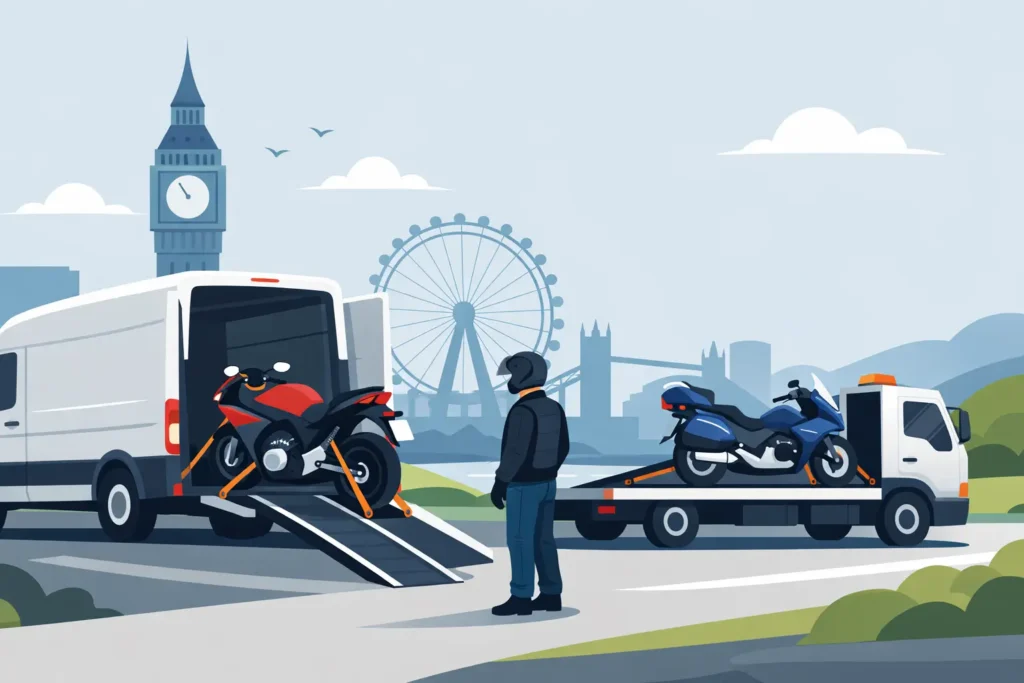
A stranded motorcycle is more vulnerable than a stranded car. It can be difficult to see at the roadside, unstable on loose ground and easily damaged by the wrong recovery method. This safe motorcycle transport guide explains what to do when your bike cannot be ridden, how proper transport should be carried out and when to call for professional help.
Whether you have broken down near Reading, suffered an accident on the M4 or need to move a non-running bike from South Oxfordshire, the priority is the same: keep yourself safe first, then make sure the motorcycle is secured and transported without creating further damage.
Start with roadside safety, not the bike
If your motorcycle stops on a live road, do not focus on diagnosing the fault while traffic passes close by. Get yourself out of danger where possible. On a motorway or dual carriageway, move behind a safety barrier if it is safe to do so, keep well away from moving traffic and contact a recovery provider straight away.
Do not attempt to push a bike along the hard shoulder, down a slip road or across a busy junction. Even a relatively light motorcycle becomes hard to control when it has a flat tyre, locked wheel, crash damage or a mechanical fault. Poor visibility, rain and fast-moving traffic make this especially risky.
If you have stopped somewhere quieter, such as a residential road, car park or lay-by, park as far from traffic as possible. Switch on hazard lights if your bike has them, use your phone torch or high-visibility clothing where available, and avoid standing on the traffic side of the motorcycle.
A recovery operator will need clear information. Be ready to provide your location, registration, make and model, the nature of the issue and whether the bike can roll freely. Mention anything that affects loading, including a snapped chain, bent forks, flat tyres, damaged handlebars, a locked steering head or a sidecar. Accurate details help ensure the right vehicle and equipment are sent first time.
Why motorcycle transport needs the right equipment
Motorcycles are not simply smaller cars. Their weight is concentrated differently, their bodywork and controls are exposed, and a careless strap position can damage paintwork, crack fairings or put pressure on fragile parts. A bike that appears secure can also shift during braking or cornering if it has not been tied down correctly.
The safest option is a purpose-equipped recovery vehicle with a suitable loading ramp, wheel restraint and rated tie-down points. The motorcycle should remain upright throughout loading and transport, with its wheels positioned securely and suspension compressed only enough to prevent movement.
Professional recovery is particularly worthwhile after an accident. Damage is not always obvious at the roadside. A wheel may be out of line, a brake disc may be rubbing, or leaking fluids may make the bike unsafe to move. Trying to ride it away can turn a recoverable repair into a larger repair bill.
At Ozzy’s Breakdown Recovery, motorcycle recovery is handled with dedicated equipment and a careful approach to securing each machine. For urgent call-outs across Berkshire, South Oxfordshire and surrounding motorway routes, a quick, clear request gives the recovery team the best chance of getting to you without delay.
Safe motorcycle transport guide: how a bike should be secured
The exact method depends on the motorcycle, its condition and the recovery vehicle, but safe loading follows a few non-negotiable principles.
First, the loading ramp must be stable, appropriately rated and placed on level ground wherever possible. The handler should control the bike throughout the ascent, rather than relying on momentum. A wet ramp, muddy verge or steep angle requires extra care and may mean repositioning the recovery vehicle before loading begins.
Once on the vehicle, the front wheel should be held in a proper chock or restraint. This prevents it from turning or rolling sideways. Tie-down straps should be rated for the load, in good condition and attached to strong, suitable parts of the motorcycle. Soft loops can protect handlebars or frame areas from direct strap contact.
Straps should never be casually hooked around brake lines, exhausts, indicators, mirrors, luggage racks or delicate fairing brackets. These components are not designed to carry the forces created during transport. On some sports bikes and heavily faired machines, the safest attachment points can be less obvious, which is another reason experienced recovery matters.
The bike should be checked from more than one angle before the vehicle moves. The tyres must be stable, straps should be tensioned evenly, and no part of the motorcycle should be able to contact the bed, another vehicle or loose equipment. The operator should recheck the load after the first part of the journey, especially after travelling over uneven roads.
Do not use a rope, improvised trailer or mate’s van
It can be tempting to find the quickest-looking solution, particularly if you are close to home. But towing a motorcycle with a rope is dangerous and should not be attempted. The rider of the disabled bike has little room to react, braking distances are unpredictable, and one sudden stop can cause a collision.
A standard van is not automatically suitable either. Without a secure ramp, wheel chock, suitable anchor points and the knowledge to use them, loading can lead to a dropped bike or interior damage. A loose motorcycle inside a van is a serious hazard to everyone on the road.
A small trailer can be suitable if it is designed for motorcycles, correctly maintained and properly hitched. However, the driver still needs to account for trailer weight, lighting, braking, insurance and legal requirements. For an unplanned breakdown or accident, calling a recovery service is usually safer and faster than trying to arrange transport yourself.
Prepare your bike for collection where it is safe to do so
You do not need to carry out repairs before recovery. In fact, attempting repairs at the roadside can put you at greater risk. There are, however, a few simple things you can do while waiting if conditions are safe.
Take photos of any accident damage before the bike is moved, particularly if another vehicle was involved. Remove loose personal items such as a tank bag, sat-nav, helmet-mounted camera or luggage that could fall off in transit. Keep your keys, documents and valuables with you unless the recovery operator asks for the key to be left with the bike.
Tell the operator about modifications or special features. Low handlebars, a wide screen, panniers, a lowered suspension setup and a steering lock issue can all change how the bike is loaded. If your motorcycle is electric, mention this when booking. Electric motorcycles need appropriate handling, particularly if the battery housing has been damaged in an impact.
If the bike is on a centre stand, do not assume it can stay there during transport. The recovery team will decide the correct position and restraint method. Their job is to protect the motorcycle, not merely get it onto the vehicle.
Choosing the right destination after a breakdown
Where your bike goes matters almost as much as how it gets there. A straightforward puncture or dead battery may only need recovery to your home, a nearby garage or a tyre specialist. A collision, fluid leak or suspected frame damage should usually go to a trusted repairer or a secure location where it can be inspected properly.
Before collection, confirm the destination address, opening hours and whether the garage can accept the motorcycle. There is little benefit in arriving outside a closed workshop with no safe place to leave the bike. If you are unsure, recovery to home may be the better short-term choice.
For business riders, couriers and commuters, quick communication is valuable. Tell the recovery provider if you have a delivery deadline, need to reach work or require onward transport. They may not be able to remove every inconvenience, but clear information allows the job to be planned realistically.
When an urgent recovery call is the sensible choice
Call for immediate motorcycle recovery when the bike is unsafe to ride, cannot be securely moved, is stranded near fast traffic or has been involved in a collision. The same applies if you suspect damaged brakes, tyres, wheels, steering, fuel lines or electrical components.
You should also call if you are alone, on an unfamiliar road, travelling at night or feeling pressured to get moving before you are ready. There is no prize for solving a roadside problem with improvised equipment. A professional recovery vehicle, secure loading and calm handling can prevent a stressful breakdown becoming a dangerous one.
The next time your ride stops unexpectedly, give yourself space from traffic, share clear details and let the right equipment do the heavy work. Your motorcycle can be repaired or transported – your safety at the roadside cannot be replaced.