


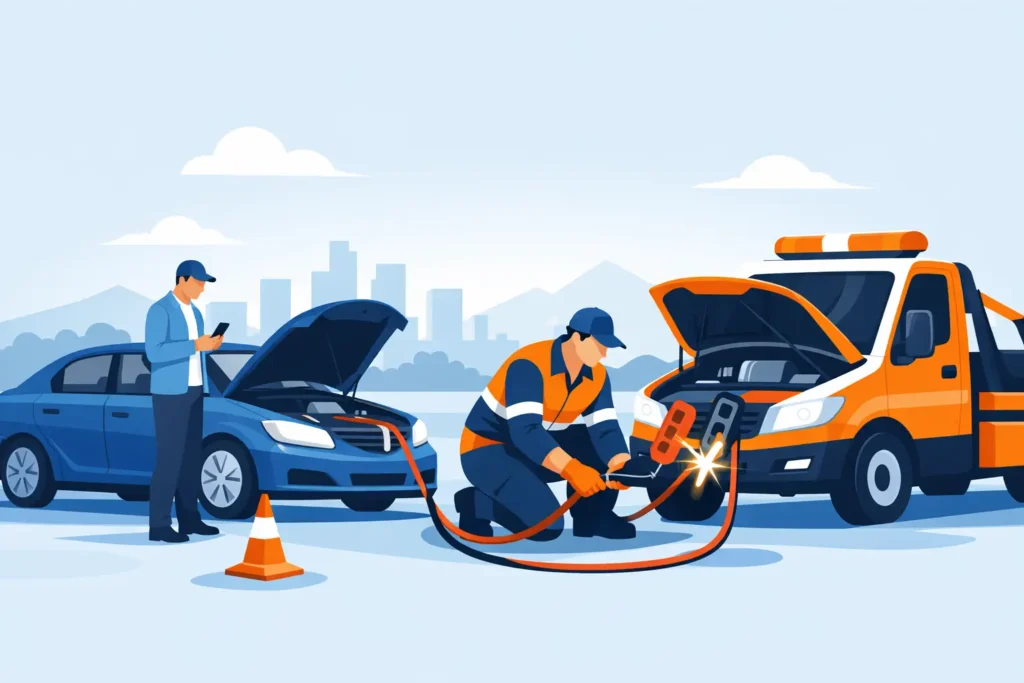
A flat battery rarely gives you much warning. One turn of the key, a slow click, dim dashboard lights, and suddenly you are stuck at home, in a car park, at work, or on the hard shoulder wondering how quickly help can get to you. That is exactly when jump start roadside assistance matters – fast response, clear advice, and a professional who can get you moving again without adding more stress.
When your vehicle will not start, the main priority is simple. You need someone to reach you quickly, check the battery safely, and make sure the problem really is a flat battery rather than a bigger electrical or charging fault. A proper roadside service does more than connect cables and hope for the best. It gives you a quick, safe assessment so you know whether your car can continue its journey or needs further recovery.
When jump start roadside assistance is the right call
A flat battery is one of the most common reasons drivers need roadside help. It often happens after leaving lights on, not using the car for a while, short journeys that never fully recharge the battery, or cold weather putting extra strain on an older unit. Vans, motorcycles, and light commercial vehicles can be affected just as easily as private cars.
The trouble is that battery problems do not always feel urgent until they stop you completely. If you are parked outside your house, it may seem manageable. If you are on the M4, M25, M3, or on a busy local road in Berkshire or South Oxfordshire, it becomes a very different situation. In those moments, speed matters, but so does doing the job properly.
A jump start is usually suitable when the battery has simply lost charge and the rest of the system is working as it should. It may not be the right fix if the battery is damaged, the alternator is not charging, there is a starter motor fault, or the vehicle has a more complex electrical issue. That is why roadside attendance should be practical, not guesswork.
What to expect from a professional jump start service
Good roadside assistance should lower the pressure from the first call. You want a clear answer, realistic arrival times, and confidence that the operator knows what they are doing. For most stranded drivers, that matters as much as the jump start itself.
On arrival, the vehicle should be checked carefully before any attempt is made to boost it. Modern vehicles can be sensitive, and incorrect jump starting can cause expensive problems. That is especially true with newer cars packed with electronics, commercial vehicles with heavier electrical demands, and some hybrid or specialist setups where the battery issue may not be as straightforward as it first appears.
A professional jump start service will normally confirm whether the battery is flat, use the right equipment, and get the engine running if the vehicle is suitable for a safe restart. In many cases, you should also be told if there are signs the battery may fail again soon. That matters because getting started once is useful, but not if you are going to be stranded again thirty minutes later.
For drivers under pressure to get to work, collect children, finish deliveries, or keep a business vehicle on the road, that honest advice is worth a lot. Sometimes the right answer is a jump start and carry on. Sometimes it is a jump start followed by immediate battery replacement elsewhere. Sometimes the safer option is full recovery.
Why a quick response matters
Battery callouts often look simple on paper, but the real issue is where and when they happen. A flat battery in a supermarket car park late at night is inconvenient. A flat battery on a motorway route, in poor weather, or before an important appointment can ruin the entire day.
That is why a local recovery operator with proper coverage makes a difference. Drivers across Reading, Berkshire, South Oxfordshire, Hampshire and Surrey usually want the same thing – someone nearby who can respond without delay and tell them exactly what happens next. Long hold times and vague promises are the last thing anybody needs when they are stranded.
Fast attendance also helps prevent a minor issue becoming a safety problem. If your vehicle is stopped in an awkward position, partially blocking access, or stuck in an exposed roadside location, every extra minute feels longer. A dependable 24/7 service is not just about convenience. It is about getting you and your vehicle out of a vulnerable situation as quickly as possible.
Common reasons batteries fail
Most battery problems are ordinary, but they are still disruptive. Cold mornings are a major trigger because batteries lose performance in low temperatures just when engines need more power to start. Short trips are another common cause. If the car only does quick runs, the battery may never get the chance to recharge properly.
Age is another factor. Many drivers do not think about the battery until it fails, and by then it is already at the end of its working life. There are also smaller causes that build up over time, such as interior lights left on, dash cams parked for long periods, faulty charging systems, or a vehicle sitting unused for days or weeks.
For fleet operators and van drivers, downtime can cost money immediately. For private motorists, it usually means missed plans and a lot of frustration. Either way, the fix needs to be prompt and practical.
Jump starts for cars, vans and motorcycles
Not every jump start callout is the same. Cars are the most common, but vans and motorcycles need support too, and each can come with different access and battery setup issues. Commercial vehicles can place heavier demands on equipment. Motorcycles may need more careful handling and an experienced approach.
That is why it helps to call a roadside team used to dealing with more than standard hatchbacks. A service handling everything from everyday battery callouts to non-runners, accident recovery and specialist transport is usually better prepared when the situation is not completely straightforward.
There is also the question of electric and hybrid vehicles. These need a different level of care, and a flat battery issue may involve systems that should not be approached like a conventional petrol or diesel car. In those cases, experience matters. The wrong handling can create more problems than it solves.
What to do while you wait for roadside assistance
First, stay safe. If the vehicle is in a live traffic area or an unsafe position, move yourself to a safer place if possible and follow standard roadside safety advice. If you are on a motorway or major road, your location and safety come before anything else.
Once help is on the way, keep your mobile phone available and give clear details about where you are, what the vehicle is doing, and whether there are any warning lights or electrical signs before the non-start. That helps the attending operator prepare for the job properly.
It is usually best not to accept an improvised jump start from an untrained passer-by, especially with modern vehicles. While many people mean well, a rushed attempt with the wrong kit can damage electrical systems or mask a bigger fault. When you are already dealing with a breakdown, you do not need a second problem on top of it.
Choosing the right jump start roadside assistance
The right service is not just the cheapest number you find when stressed. It should be available 24/7, clear about response times, and able to deal with more than the most basic battery issue. If the jump start works, great. If it does not, you should not be left starting the search all over again for recovery.
That is where a full roadside and recovery operation has the advantage. If the battery problem turns out to be something more serious, the next step is already covered. For drivers across local towns and motorway corridors, that joined-up approach saves time and avoids extra hassle.
Ozzy’s Breakdown Recovery is built around exactly that kind of response – quick attendance, practical roadside support, and recovery if the vehicle cannot continue safely. For stranded drivers, that means one call instead of several.
A flat battery can feel like a small problem until it stops your day in its tracks. The best help is the kind that arrives quickly, treats the situation seriously, and gets you moving with as little disruption as possible.