


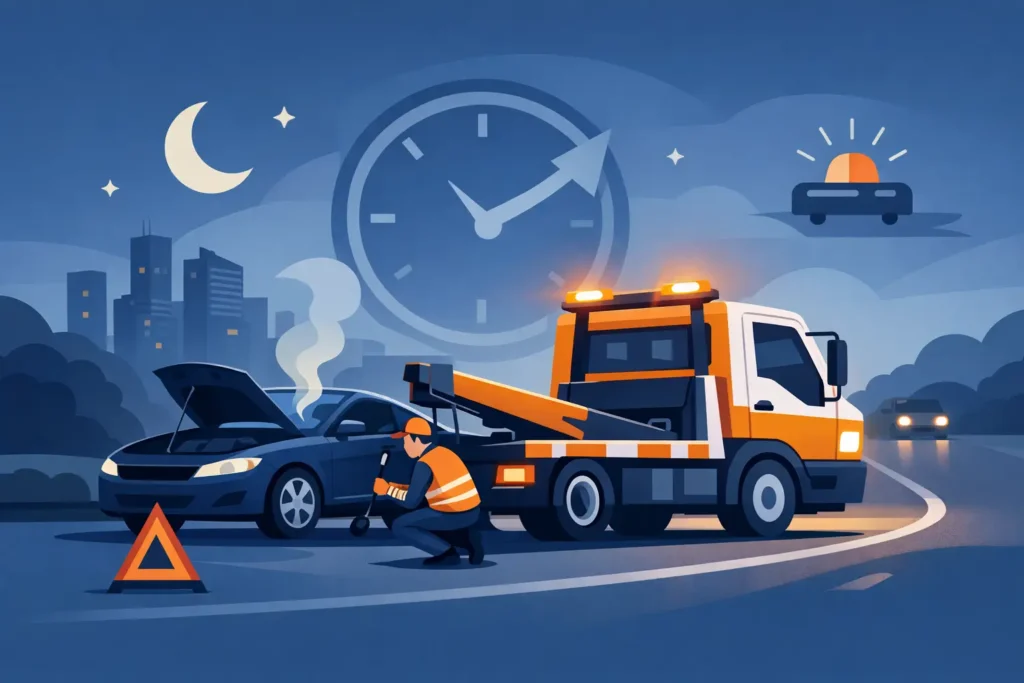
Your car never picks a good time to stop. It happens in the rain on the hard shoulder, outside a supermarket after a late shift, or halfway through a delivery when every minute matters. That is exactly why 24-hour breakdown recovery matters – not as a nice extra, but as the difference between being stranded for hours and getting moving again safely.
Why 24-hour breakdown recovery matters
When a vehicle fails, the problem is rarely just mechanical. You might be blocking traffic, stuck in an unsafe spot, missing work, trying to get children home, or facing lost time on a commercial route. Fast help changes the situation quickly. It reduces stress, cuts waiting around on exposed roads, and gets you clear of danger.
That is especially true on busy routes through Berkshire, South Oxfordshire and the surrounding motorway network. A breakdown on the M4, M3 or near the M25 is not the same as a flat battery on a quiet residential street. Traffic speed, limited stopping areas and poor visibility can all make things more urgent. In those moments, you need a recovery service that answers straight away, gives you a clear arrival time and knows how to handle the job properly.
Round-the-clock cover also matters because breakdowns do not follow business hours. Early starts, late finishes, night shifts and weekend travel are normal for many drivers. If your van will not start at 4am or your car fails at 11pm, waiting until morning is not realistic.
What a good recovery service should actually do
A dependable recovery provider does more than tow a vehicle from A to B. First, they should assess what has happened and decide whether the vehicle can be safely repaired at the roadside or needs transporting. A flat battery, minor electrical fault or simple starting issue may be sorted there and then. A collision, axle damage, steering problem or serious mechanical fault usually means full recovery is the safer option.
Communication is just as important as equipment. When you are stuck, you do not want vague updates or long periods of silence. You want to know someone is on the way, how long they will be, and what happens next. Clear communication calms the situation and helps you make practical decisions, especially if passengers are involved or you have work commitments waiting.
The right team should also have the proper vehicles and tools for different jobs. Recovering a motorcycle is not the same as loading a van. Electric vehicle recovery needs correct handling. Non-runners and accident-damaged vehicles need extra care. If a company treats every job the same, that is usually where delays and damage risk start.
24-hour breakdown recovery for more than just cars
Many drivers hear the phrase and assume it only applies to standard car breakdowns. In reality, a proper 24-hour breakdown recovery service should cover a much wider range of vehicles and situations.
Private motorists often need help with dead batteries, punctures, warning lights, overheating, key issues or vehicles that simply refuse to start. Motorcyclists need secure transport that protects the bike during loading and transit. Van drivers and light commercial operators need quick action because a vehicle off the road often means missed jobs and lost income. Businesses with fleets need confidence that one breakdown will not disrupt the whole day.
There is also a growing need for EV recovery. Electric vehicles come with different practical considerations, and not every operator is prepared for that. The same applies to specialist cases such as non-runners, accident recovery or vehicles with wheel and axle damage. Those are not jobs for guesswork. They need the right approach from the start.
Speed matters, but so does handling
Fast response is a major part of any recovery promise, and rightly so. When you are waiting at the roadside, every extra half hour feels longer than it should. But speed on its own is not enough. The job still has to be done safely and professionally.
A rushed operator who turns up quickly but mishandles your vehicle is not saving you trouble. Proper loading, securing and transport matter just as much as arrival time. That is why experienced recovery teams stand out. They know how to assess the scene, position safely, protect the vehicle and get it moved without turning one problem into two.
This is where local coverage makes a real difference. A company already working across Berkshire, Reading, South Oxfordshire, Hampshire, Surrey and the nearby motorway routes will usually respond more efficiently than someone travelling in from much farther away. Local knowledge helps with route planning, live traffic conditions and knowing how to reach awkward locations quickly.
When roadside repair is enough and when recovery is the better choice
Not every breakdown ends with a tow. Sometimes the quickest solution is a roadside fix. A jump start is the obvious example, but there are other cases where a trained operator can help you get moving without taking the vehicle away.
That said, there are times when trying to continue your journey is the wrong call. If the vehicle has been in an accident, is making serious noises, has steering or braking issues, or has visible damage underneath, recovery is usually the safer option. The same goes for repeated warning lights, sudden loss of power or anything that makes the vehicle unpredictable.
It depends on the fault, the location and the condition of the vehicle. A sensible recovery team will not push a roadside fix just to save time. They will tell you plainly what is safe and what is not. That honesty matters, especially when you are under pressure to get somewhere.
What to expect when you call for help
In an emergency, people want the process to be simple. That means giving your location, vehicle details, the issue if known, and whether you are in a particularly risky position. From there, the recovery team should confirm the callout, provide a realistic ETA and explain the next step.
If you are on a motorway or fast road, safety comes first. Move to a safe place if possible, keep well away from traffic and follow current breakdown guidance. If the vehicle cannot be moved, make yourself visible and wait in the safest available area. Once help is on the way, staying contactable is useful in case the driver needs to confirm access or exact position.
For business users, it helps if the service can also support planned onward transport when needed. Sometimes the job is not just picking up a broken-down vehicle – it is getting that vehicle to a garage, depot or another location with minimal disruption.
Choosing a recovery service before you need one
The worst time to compare providers is when you are already stranded. By then, you are likely to choose the first number you see. A better approach is to know who covers your area before anything goes wrong.
Look for a service that is genuinely available 24/7, not one that only says so in theory. Response time matters, but so does whether they cover your type of vehicle and your usual routes. If you drive a van for work, own a motorcycle, use an EV or travel regularly on the M4, M3 or around the M25, those details are worth checking in advance.
It is also worth paying attention to how a company speaks. Straight answers, clear service details and realistic promises usually point to an operator that understands roadside work properly. If the messaging feels vague, the service often is too.
For drivers across Berkshire and the surrounding areas, that is why a local provider like Ozzy’s Breakdown Recovery is built around speed, availability and proper vehicle handling rather than empty claims. The aim is simple – get to you fast, recover the vehicle safely and take some pressure off a difficult moment.
The real value of dependable recovery
Most people do not think much about recovery until they need it. Then it becomes one of the few services where response, communication and trust all matter at once. You are handing over your vehicle in a stressful situation, often at the roadside, often at an awkward hour, and you need to feel confident that the job is in safe hands.
That is why 24-hour breakdown recovery is not just about towing. It is about having a reliable answer when plans fall apart. Whether it is a dead battery on your drive, a van off the road before the working day starts or a breakdown on a busy route late at night, the right support makes a bad situation more manageable.
If your vehicle stops, the best next step is the one that gets you safe, informed and moving towards a solution without delay.