


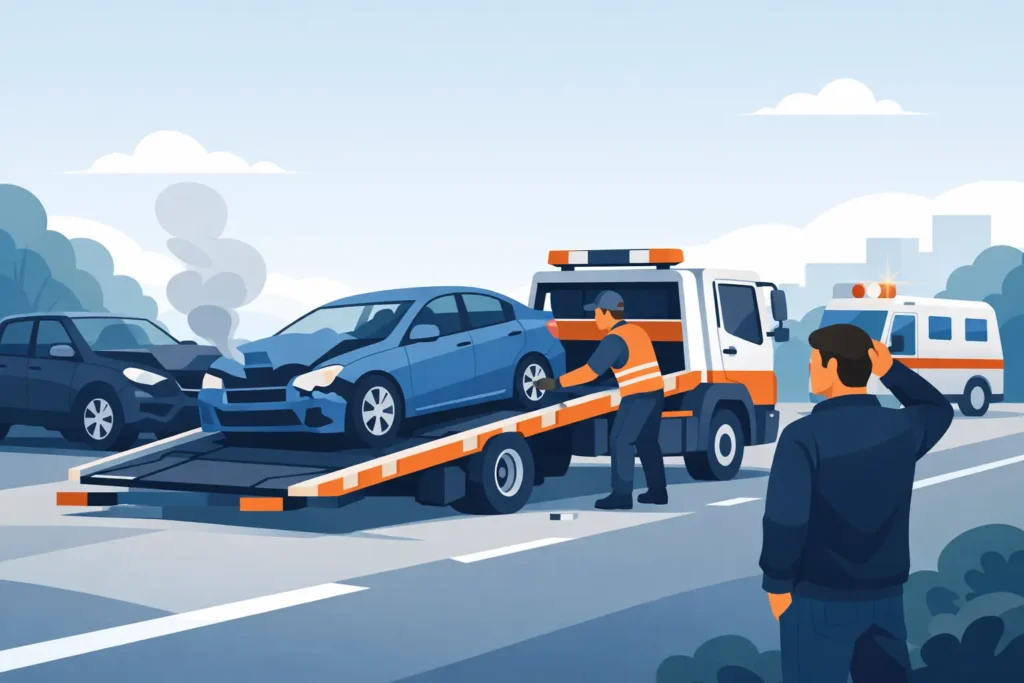
A crash can leave a vehicle unsafe to drive even when the damage looks minor. A cracked wheel, leaking fluid, damaged steering or a fault warning can turn a short journey into a bigger problem. After crash vehicle transport gives you a safe way to move your car, van, motorcycle or EV away from the roadside and on to the right destination without taking risks.
If anyone is injured, if there is danger from traffic, fuel or fire, or if the road is blocked, call the emergency services first. Once the scene is safe and any police instructions have been followed, a professional recovery vehicle can take over the transport side of the job.
What to Do Straight After a Collision
Your first priority is people, not the vehicle. Switch on your hazard lights if it is safe to do so, move away from live traffic and use a safe place behind a barrier where possible. On a motorway, do not attempt repairs beside the carriageway. Follow the advice of the emergency services or motorway officers.
Do not assume your vehicle is roadworthy because the engine still starts. Damage after a collision is not always visible. A knock to the underside can affect suspension components, steering, brakes, tyres, wheel alignment or battery protection in an electric vehicle. Driving it onwards may cause more damage, invalidate an insurance position or put you and other road users at risk.
Once you are in a safe place, note your location as accurately as you can. A road name, nearby junction, motorway marker, direction of travel and recognisable landmark all help speed up recovery. On the M4, M25 and M3, knowing which side of the carriageway you are on matters just as much as the junction number.
When After Crash Vehicle Transport Is the Right Choice
Recovery transport is the sensible option whenever there is doubt about whether a vehicle can be driven safely. It is often needed after front or rear impact damage, a side collision, wheel or axle damage, airbag deployment, a broken windscreen, fluid leaks or a vehicle that will not restart.
It is also the right call when a vehicle is stranded somewhere awkward. A car may be in a car park, on a narrow residential street, outside a workplace or at the side of a busy A-road. The recovery method should suit both the vehicle condition and the access available. Forcing a damaged vehicle to roll, steering it with a compromised wheel or using the wrong towing arrangement can make a difficult situation worse.
For drivers in Berkshire, South Oxfordshire, Hampshire and Surrey, the destination is your choice where circumstances allow. That may be your home, a garage, an approved repairer, a bodyshop or another safe location. Clear communication before loading helps avoid uncertainty when you are already dealing with insurers, repairs and the disruption of an accident.
The Recovery Method Must Match the Damage
Not every post-accident vehicle can be recovered in the same way. A professional team will assess whether it can be safely rolled, winched or transported with its wheels off the ground. This is especially important where there is suspension, steering, wheel or axle damage.
A vehicle with a damaged axle may need specialist handling and secure loading rather than a basic tow. The same applies to non-runners, cars with locked wheels and vehicles that have come to rest in a position that limits access. The aim is to protect the vehicle from further harm while getting it away from the roadside efficiently.
Motorcycles need their own approach too. They must be secured correctly to prevent movement during transport and to avoid unnecessary damage to fairings, forks or controls. Vans and light commercial vehicles may require a recovery plan that takes account of their weight, load and operating condition. For a business, every hour a vehicle is off the road can affect customers, deliveries and staff, so a prompt, properly equipped response matters.
Electric Vehicle Recovery After a Crash
Electric vehicles should never be treated as an ordinary tow job after an impact. Damage around the battery area, warning messages, exposed cables or signs of heat require particular care. The vehicle may need to be isolated and moved using suitable equipment, following safe handling procedures.
If you drive an EV, tell the recovery operator that it is electric when you call. Mention any dashboard warnings, whether the vehicle is charging, whether it has struck the underside and whether you can see smoke, leaking fluid or damaged battery components. Never touch damaged high-voltage cables or try to reconnect a charging lead after a collision.
Information That Helps Us Send the Right Vehicle
In an emergency, you do not need a perfect report. A few useful details let the recovery team prepare properly and reduce delays at the roadside. When you call, explain where you are, what vehicle you have, the type of collision and whether it can move under its own power.
It also helps to mention whether the wheels turn, whether the steering appears damaged, whether airbags have deployed and whether there are leaks. If you are on a motorway or a fast road, say which direction you were travelling and the nearest junction or marker post. If your vehicle is carrying tools, stock, passengers’ belongings or any unusual load, say so early.
You should also have a destination in mind. If you are waiting for an insurer or repairer to confirm where the vehicle should go, ask about your options before it is loaded. A dependable recovery service will explain the practical choices clearly rather than leaving you guessing at the roadside.
Why Trying to Drive Away Can Cost More
After a crash, the temptation is understandable. You may want to get home, keep an appointment or avoid the immediate cost of recovery. Yet a vehicle that appears to be driving normally can still have serious defects. A tyre can fail after contact with a kerb, a bent suspension arm can affect control, and a small coolant or oil leak can become major engine damage within a few miles.
There is also the question of responsibility. If the car is visibly damaged, has unsafe lights, loose panels or a compromised windscreen, continuing to drive may not be lawful or safe. It is usually far better to arrange transport, have the vehicle checked properly and make decisions once you are out of danger.
Fast, Calm Support on Busy Local Roads
Accidents rarely happen at a convenient time. They happen on the school run, during a late shift, on the way to a delivery, or on a wet evening when traffic is moving quickly. That is why 24/7 recovery matters. You need a clear answer, an appropriate recovery vehicle and realistic updates – not a vague promise that leaves you waiting by the roadside.
Ozzy’s Breakdown Recovery provides accident and breakdown recovery across Berkshire, South Oxfordshire and surrounding routes, including the M4, M25 and M3 corridors. With a professional certified team and dedicated recovery equipment, we handle cars, motorcycles, vans, non-runners, axle-damage recoveries and electric vehicles with care. Where conditions allow, our typical response target is 30-45 minutes, with safety and traffic conditions always taking priority.
If the vehicle has been involved in a collision, tell us exactly what has happened and where you are. We will focus on getting the right help to you, securing the vehicle correctly and transporting it to the location you need. Keep yourself somewhere safe, keep your phone available, and let a professional recovery team take the weight of the next step.