


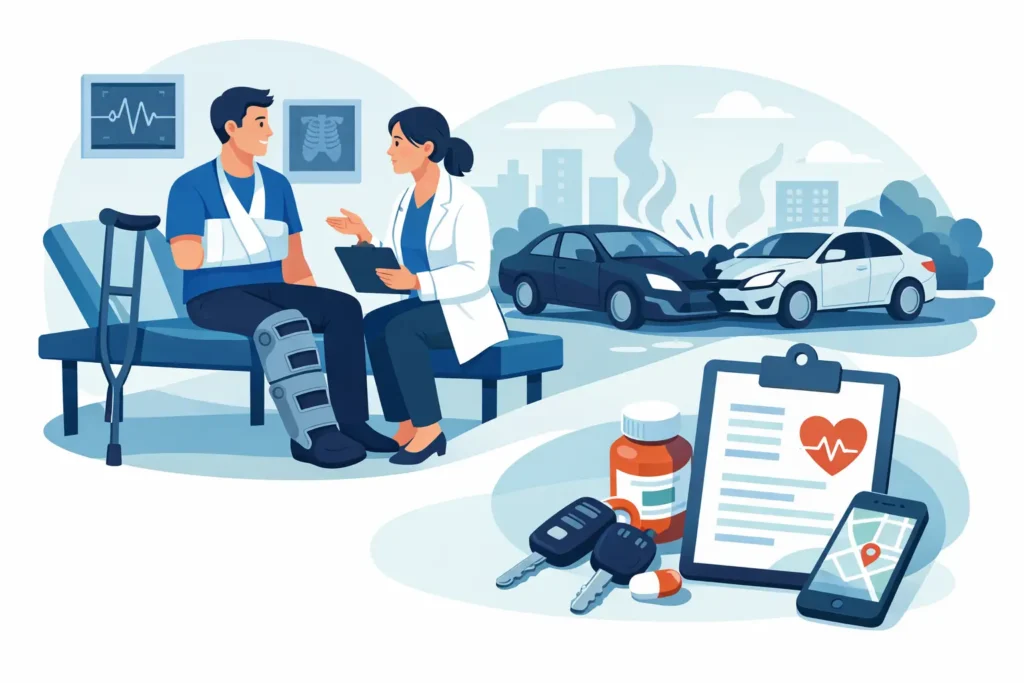
The first few minutes after a collision can feel confused and rushed. This guide to post accident recovery gives drivers a clear order of priority: protect people first, make the scene as safe as possible, then arrange professional recovery for a vehicle that may no longer be safe to drive.
Whether the accident happens on a Berkshire town road, outside Reading, or on the M4, M25 or M3, do not let pressure from other traffic push you into a poor decision. A quick, calm response can prevent a difficult situation becoming worse.
Put safety before the vehicle
Stop as soon as it is safe to do so, switch on your hazard lights and turn off the engine. Check yourself, passengers and anyone else involved for injuries. If someone is hurt, there is danger from traffic, fuel is leaking, the road is blocked, or you are on a live motorway lane, call 999 immediately.
On a motorway, your safest option is to get behind a safety barrier if you can do so without putting yourself at risk. If the vehicle is driveable and there is a safe place to leave the carriageway, move there carefully. Do not attempt repairs at the roadside on a motorway, and never stand between vehicles or remain in a live lane.
If the vehicle has stopped under a red X lane signal, treat it as an emergency. Contact the emergency services and follow their instructions. Your car, van or motorcycle can be recovered later. Your safety cannot wait.
Make the accident scene safer
Once everyone is out of immediate danger, take sensible steps to warn other road users. Hazard lights are usually enough in busy or high-speed locations. Only use a warning triangle where it is legal and genuinely safe to place it – never walk back along a motorway to do this.
Keep clear of moving traffic, broken glass and damaged bodywork. A crash can leave sharp edges, loose panels, leaking fluids or damaged wheels that are not obvious at first glance. If there is smoke, a burning smell or any sign of a fire risk, move people well away from the vehicle and wait for emergency services.
It can be tempting to move a damaged car onto a kerb or side road to clear traffic. That depends on the condition of the vehicle. Do not move it if a wheel is misaligned, a tyre is damaged, steering feels wrong, airbags have deployed, fluid is leaking, or there is visible damage underneath. Driving even a short distance can cause more damage and create a further hazard.
Exchange details and record what happened
When it is safe, exchange names, addresses, mobile phone numbers, vehicle registration numbers and insurance details with the other driver. If they are unwilling to provide details, or leave the scene, make a note of anything you can and contact the police.
Take clear photographs of the vehicles, their positions, number plates, road markings, traffic signs, the wider road layout and visible damage. Photographing the scene before vehicles are moved can be useful, but never put yourself in danger to get a better picture. If there are witnesses, ask for their names and contact details.
Write down the time, location, weather, direction of travel and a short account of what happened while it is fresh in your mind. Keep the facts simple. Avoid accepting blame at the roadside or arguing over fault. Insurers and, where necessary, the police will assess the circumstances later.
Choose recovery instead of taking chances
A vehicle can look almost normal after a low-speed impact yet be unsafe to continue driving. Damage to a tyre, suspension arm, steering rack, axle, brakes, lights or battery system may not be visible from the driver’s seat. This is particularly relevant after impact with a kerb, pothole, central reservation or another vehicle.
Professional accident recovery is the right call when the vehicle will not start, has wheel or axle damage, has deployed airbags, has suffered significant body damage, or simply does not feel right to drive. It is also sensible when you are shaken up and do not feel confident continuing your journey.
A recovery operator should ask where you are, the vehicle type, the damage you can see and whether the vehicle rolls or steers. Give the road name, nearest junction, motorway marker or a landmark where possible. Let them know if the vehicle is a motorcycle, van, commercial vehicle, electric vehicle or non-runner, as the right equipment matters.
Ozzy’s Breakdown Recovery provides 24/7 accident and roadside recovery across Berkshire, South Oxfordshire and surrounding motorway routes, with professional handling for cars, motorcycles, vans, non-runners and EVs. For an urgent situation, call for recovery rather than attempting to nurse a damaged vehicle home.
A guide to post accident recovery for different vehicles
Cars and vans
Cars and light commercial vans often sustain hidden suspension or steering damage after an impact. A van carrying tools, stock or equipment may also need careful loading to prevent contents shifting during transport. Tell the recovery team if doors will not close, a wheel is jammed, or the vehicle is loaded.
If your vehicle is automatic, four-wheel drive or has an electronic parking brake, avoid letting an unqualified person tow it with a rope. Incorrect towing can damage the transmission or drivetrain. A proper recovery vehicle is usually the safer option.
Motorcycles
After a motorcycle accident, do not ride away merely because the engine starts. Bent handlebars, damaged forks, cracked levers, loose foot pegs and a misaligned wheel can affect control without being immediately clear. A motorcycle should be secured with suitable equipment and transported upright, not improvised onto a car trailer or tied loosely in a van.
Electric vehicles
Electric vehicles need additional care after a collision. If there is damage near the battery pack, warning messages, smoke, heat, hissing sounds or a chemical smell, move away from the vehicle and call emergency services. Do not touch exposed cables or attempt to charge the vehicle.
Even where there is no obvious battery damage, an EV should be recovered using methods suitable for its drivetrain and manufacturer guidance. A recovery team needs to know it is an electric vehicle before attending so they can plan safe handling and transport.
Decide where the vehicle should go
Before recovery arrives, think about the destination. You may choose your home, a trusted garage, a body repairer or another secure location. If your insurer is arranging repairs, check whether they require the vehicle to go to an approved repairer. If it is outside normal business hours, taking it to a safe address first may be more practical than leaving it at a closed garage.
Ask the recovery operator what will happen at collection, whether you can travel with the vehicle, and what access is needed at the drop-off point. Remove valuables, work equipment, medication, documents and personal belongings if it is safe to do so. Take your keys and do not leave vehicle paperwork in the glovebox.
For fleet vehicles, notify the relevant manager as soon as possible. They may need to arrange a replacement vehicle, inform customers about delays or report the incident through company procedures. Fast recovery limits downtime, but clear communication is what keeps a single accident from disrupting an entire working day.
Report the incident and look after yourself
Tell your insurer about the accident as soon as you can, even if you do not plan to make a claim. Give an accurate account, provide photographs and keep receipts for recovery, taxis, storage or other reasonable costs. If police attended, retain any incident reference number.
Pay attention to how you feel in the hours after a collision. Adrenaline can hide pain, stiffness, dizziness or shock. Seek medical advice if you have symptoms, particularly after a head impact or a more serious crash. Do not drive again until you are physically and mentally ready.
The best next step after an accident is rarely the fastest-looking one. Get yourself to safety, let trained professionals move the damaged vehicle, and give yourself the time to make the next decision with a clear head.