


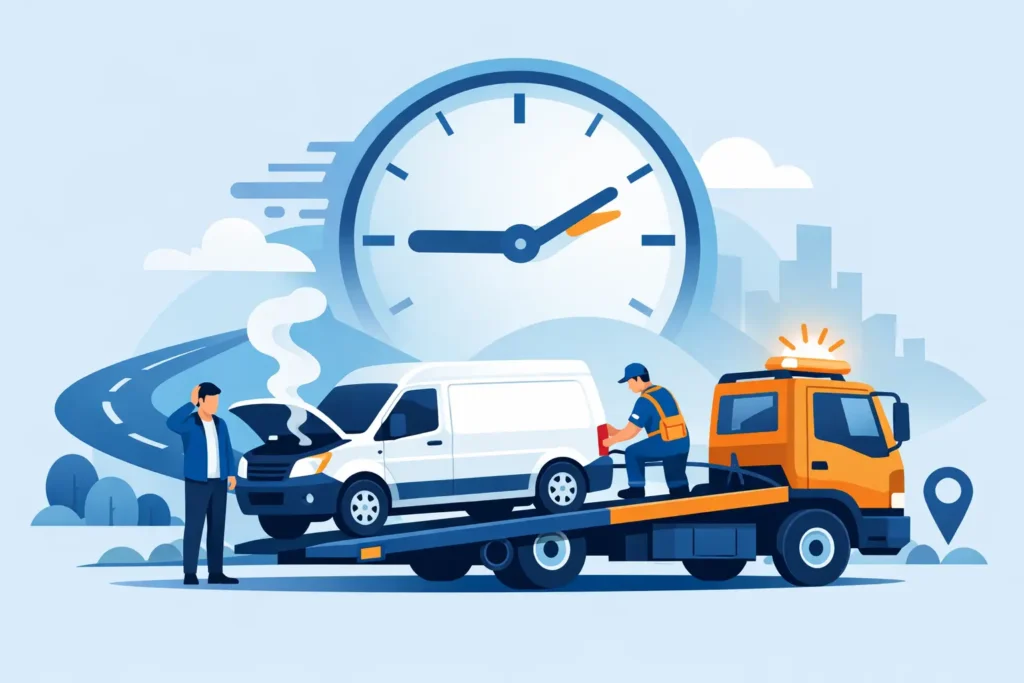
A van losing power on the M4, refusing to start outside a customer’s premises, or suffering tyre damage on a busy A-road can stop more than one journey. It can put jobs behind schedule, leave tools stranded and create a safety risk at the roadside. A dependable van breakdown recovery service gets you, your vehicle and your workday moving again with as little disruption as possible.
For van drivers and light commercial fleets across Berkshire, South Oxfordshire, Hampshire, Surrey and the surrounding motorway network, the priority is straightforward: help needs to arrive quickly, the vehicle needs to be handled properly, and you need clear communication from the first call.
When a van needs recovery rather than a quick fix
Some faults can be resolved where you are. A flat battery may only need a jump start. A puncture may be manageable if you have a safe place to stop and a usable spare. But vans are often carrying loads, equipment or passengers, and roadside repairs are not always the safest or most practical answer.
Recovery is usually the right call when the vehicle will not start, has lost drive, overheated, developed a serious warning light, or has been involved in a collision. It is also the sensible option if there is wheel, axle, suspension or body damage. Trying to nurse a damaged van to a garage can turn a repairable problem into a larger bill, especially if a tyre is rubbing, a wheel is misaligned or fluids are leaking.
The location matters too. A breakdown on the M25, M4 or M3 needs a calm, safety-led response. Busy motorway corridors leave little room for improvisation. A professional recovery operator can assess the situation, arrange safe loading and transport the van to a garage, depot, home address or other agreed destination.
What to do while you wait for van recovery
Your first decision should be about safety, not the fault itself. Move the van away from live traffic if it can be done safely. On a motorway, use the hard shoulder, emergency area or a place of relative safety where possible. Switch on your hazard lights, keep passengers away from traffic and avoid standing between the vehicle and the carriageway.
When you call for help, give the recovery team a clear location. A road name is useful, but motorway junction numbers, travel direction, nearby landmarks, postcode, or a what3words reference can make a real difference to response time. Let the operator know whether the van is loaded, whether it is a high-roof or long-wheelbase model, and if there is visible damage or a wheel that will not turn.
You should also explain what happened before the breakdown. Did the engine cut out? Is there smoke, a warning message, a puncture, or a collision? These details help the right recovery vehicle and equipment arrive prepared. If the vehicle is carrying valuable tools, goods or sensitive equipment, say so at the start. Careful loading and secure transport matter just as much as getting there quickly.
Van breakdown recovery service for working vehicles
A van is rarely just transport. For a plumber, electrician, delivery driver, builder or mobile service business, it is part workshop, part storage space and often the reason the day’s work can happen at all. Every hour off the road can mean missed appointments, unhappy customers and lost income.
That is why commercial recovery should be organised around downtime. A good service gives you a realistic arrival estimate, confirms where the van will be taken and keeps you informed if circumstances change. Fast attendance is valuable, but so is getting the vehicle to the right place. Taking a van to the nearest garage may not be ideal if your preferred repairer, fleet workshop or depot is elsewhere.
There are trade-offs. A short tow can be suitable for a simple mechanical issue, while a fully loaded recovery vehicle is the safer choice for non-runners, accident damage or vans with axle problems. The right method depends on the vehicle’s condition, access at the scene, weight, load and destination. An experienced operator will not take shortcuts that risk further damage.
The recovery equipment makes a difference
Not every recovery job is the same. A small car and a loaded long-wheelbase van place very different demands on recovery equipment. The recovery vehicle needs the capacity to transport the van safely, while the operator needs the tools and experience to deal with difficult positions, damaged wheels and inaccessible locations.
This is particularly important after an accident. A van with front-end damage, a broken axle or locked wheels may not roll onto standard equipment in the usual way. It needs specialist handling to avoid stressing damaged components or causing extra bodywork damage. The same is true of non-running vehicles that have been left on a driveway, in a car park or at a work site.
Electric vans also require a more considered approach. They cannot always be treated like a conventional diesel van, especially if there is damage, an electrical fault or a depleted battery. EV-compatible recovery equipment and correct loading procedures protect the vehicle’s drivetrain and battery systems during transport.
Local support across busy routes and work areas
Breakdowns do not wait for a convenient time or location. They happen early before a first job, late after a delivery round, or in the middle of a weekend shift. A 24/7 local recovery service gives van owners a practical answer when a garage is closed or a fleet manager needs a vehicle moved outside normal hours.
Ozzy’s Breakdown Recovery provides emergency van recovery and roadside assistance across Berkshire, South Oxfordshire and nearby areas, including key routes around Reading and the M25, M4 and M3. The focus is on getting to stranded drivers promptly, with typical response times of 30 to 45 minutes depending on traffic, location and current callout demand.
Local knowledge helps when access is awkward or traffic is building. It also helps when you need a practical destination rather than a vague promise of transport. Whether the van is at a customer site, on a rural road, outside a depot or stopped close to a major junction, the recovery plan should fit the actual situation.
Choosing the right recovery provider
When your van is stranded, the cheapest quote is not always the best value. A low price means little if the provider cannot attend promptly, lacks suitable equipment or cannot safely recover a vehicle with damage. Ask whether they cover your location, operate around the clock and can transport your type of van.
It is worth confirming the destination and likely costs before recovery begins. Be clear about whether you need roadside assistance, onward transport, accident recovery or a planned move to a garage. If the van is carrying tools or goods, make sure the provider understands that the vehicle must be secured and treated with care.
For businesses, consistency matters. A reliable recovery partner can support one-off emergencies as well as regular fleet needs, reducing the pressure on drivers who may not know what to do when a warning light appears or a vehicle fails at the roadside.
Fast help is about more than the arrival time
A quick response brings immediate reassurance, but professional service continues through loading, transport and handover. You should know who is attending, what will happen to the van and where it is going. Clear, straightforward communication takes some of the pressure out of an already difficult situation.
If your van cannot safely continue, do not risk a longer journey or attempt a repair beside fast-moving traffic. Get yourself to a safe place, keep the details of your location ready and call for professional recovery. The sooner the right help is on its way, the sooner you can protect your vehicle, your schedule and the work that depends on it.