


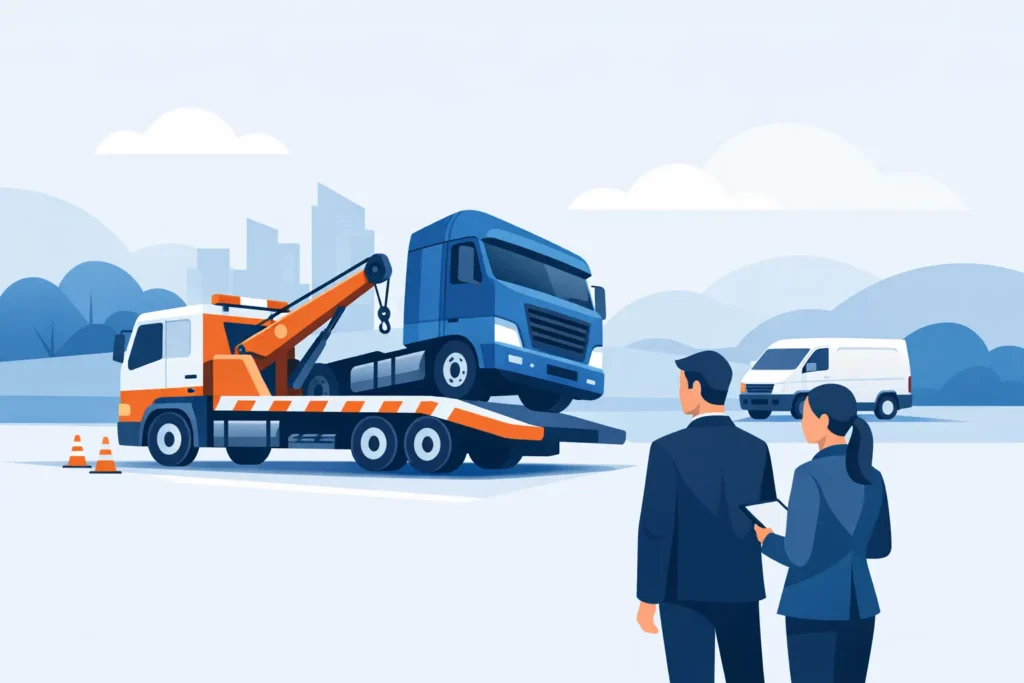
A failed van at the roadside does more than delay one journey. It can leave a driver exposed, hold up a delivery, miss a booked job and put pressure on everyone waiting for the vehicle. This guide to commercial vehicle recovery explains what to do first, what information a recovery operator needs and how to get your vehicle moved safely with as little downtime as possible.
For businesses across Berkshire, South Oxfordshire and the M4, M25 and M3 corridors, the priority is clear: keep people safe, protect the vehicle and get a dependable recovery plan in place quickly.
What to do when a commercial vehicle breaks down
Your driver’s safety comes before the schedule. If the vehicle can be moved safely, get it out of live traffic and into a suitable safe place. On a motorway, follow motorway safety guidance and do not attempt roadside repairs in a dangerous position. Put hazard warning lights on where appropriate, keep clear of moving traffic and make sure the driver is somewhere as safe as possible.
A breakdown can be anything from a flat battery or puncture to overheating, a clutch fault, engine warning light, collision damage or a vehicle that simply will not start. Trying to force the vehicle onward can turn a manageable issue into a more expensive repair. A van carrying tools, stock or time-sensitive goods may be tempting to push through, but the right decision depends on the fault, road conditions and the vehicle’s location.
Once the driver is safe, arrange professional recovery. A 24/7 provider can assess the situation over the phone, send the right recovery vehicle and keep you updated while help is on the way.
Information that speeds up commercial vehicle recovery
A clear call saves valuable time, particularly on busy routes or when your vehicle is blocking access to a customer site. Tell the recovery operator the registration, make and model, the exact location and the nature of the fault if known. If you are on a motorway, provide the junction number, carriageway direction and any marker post details.
It also helps to explain whether the vehicle is loaded, whether it can roll freely and whether there is visible damage. For example, axle damage, a seized wheel, collision damage or a non-running vehicle may require specialist loading equipment rather than a standard tow. Be upfront about vehicle size, roof racks, ladders, tool storage and any unusual load so the correct recovery vehicle arrives first time.
When calling, have these details ready:
- Your exact location, including road name, junction or postcode where available
- The vehicle registration, make, model and approximate size
- Whether the vehicle is loaded and if it carries tools, stock or equipment
- The fault, warning lights or damage you can see
- Where the vehicle needs to be taken, whether that is a garage, depot, home address or secure location
You do not need to diagnose the problem yourself. A short, accurate description of what happened is enough to help the recovery team prepare.
Choosing the right recovery method
Commercial vehicles are not all recovered in the same way. A small van with a flat battery may only need a jump start, while a damaged van with a locked wheel may need to be loaded onto a flatbed. The method should protect the vehicle, the load and other road users.
Flatbed recovery is often the safest option for non-runners, accident-damaged vehicles and vans with drivetrain, steering or axle problems. It keeps the vehicle fully off the road during transport and avoids adding stress to damaged components. For a vehicle that can be moved safely, a different method may be appropriate, but the recovery technician should make that judgement after assessing the scene.
This matters even more for electric vans. EV recovery requires care around the high-voltage system, battery condition and manufacturer guidance. If an electric commercial vehicle has suffered impact damage, warning messages or battery concerns, tell the recovery provider before they arrive. The job may require a different handling plan than a conventional diesel or petrol van.
A professional operator will also consider access at the collection point. Tight industrial estates, underground car parks, narrow rural roads and motorway hard shoulders all affect how a recovery can be carried out safely. Fast service is valuable, but using the correct equipment is what prevents further damage and avoids a second callout.
Accident recovery: protect the vehicle and your business
After a collision, take a breath before making decisions about transport. Check everyone is safe, contact emergency services if required and do not move the vehicle if doing so could create further risk or interfere with the scene. Take photographs when it is safe, record the other party’s details and notify the relevant fleet manager or insurer in line with your company process.
Then arrange recovery to a suitable destination. That may be a repairer, a secure depot or another agreed location. Do not assume a van that starts after an impact is safe to drive. Damage can affect steering, suspension, wheels, lights and underbody components without being obvious at the roadside.
For businesses, secure handling matters as much as transport. Tools, stock and paperwork should be accounted for before the vehicle leaves. If the van cannot be driven or locked normally, tell the recovery team so appropriate precautions can be taken. Good communication helps your office plan the next job, update customers and organise a replacement vehicle if necessary.
Reducing downtime after the recovery
Recovery is the first step, not the whole solution. Once the vehicle is safely delivered, confirm where it has gone, who will inspect it and what the driver should do next. A simple handover process prevents vehicles being left at the wrong garage or keys being separated from the van.
For fleets, it is worth keeping a short breakdown procedure in every vehicle and on the driver’s phone. It should include the business contact, preferred repair arrangements, insurance or leasing details and instructions for securing equipment. This does not need to be complicated. The aim is to make a stressful callout straightforward, especially for a driver who is working alone or unfamiliar with the area.
Planned maintenance also has a part to play. Regular checks of tyres, batteries, lights, coolant levels and warning messages can reduce avoidable roadside stops. But even well-maintained vans fail without warning. The practical safeguard is knowing who to call and having a recovery provider that can respond when the vehicle is stranded outside normal working hours.
Commercial recovery across busy local routes
Breakdowns rarely happen at convenient times or convenient places. A van may fail outside a customer address in Reading, on a rural route in South Oxfordshire or during heavy traffic on the M4, M25 or M3. Local knowledge helps a recovery operator reach the vehicle efficiently and choose a sensible route to the repairer or depot.
Ozzy’s Breakdown Recovery provides 24/7 assistance for vans and light commercial vehicles, including breakdown recovery, accident recovery, non-runner transport and specialist recovery for axle-damage situations. The focus is on getting help to you promptly, handling the vehicle professionally and giving you clear information while the job is under way.
If your business relies on one van, a breakdown can stop the day. If you run several vehicles, it can disrupt appointments, staff and customer commitments. Either way, do not leave a driver waiting without a plan. Make the call, share the right details and let a properly equipped recovery team take the pressure off. The quickest route back to work starts with getting the vehicle and driver safely out of trouble.