


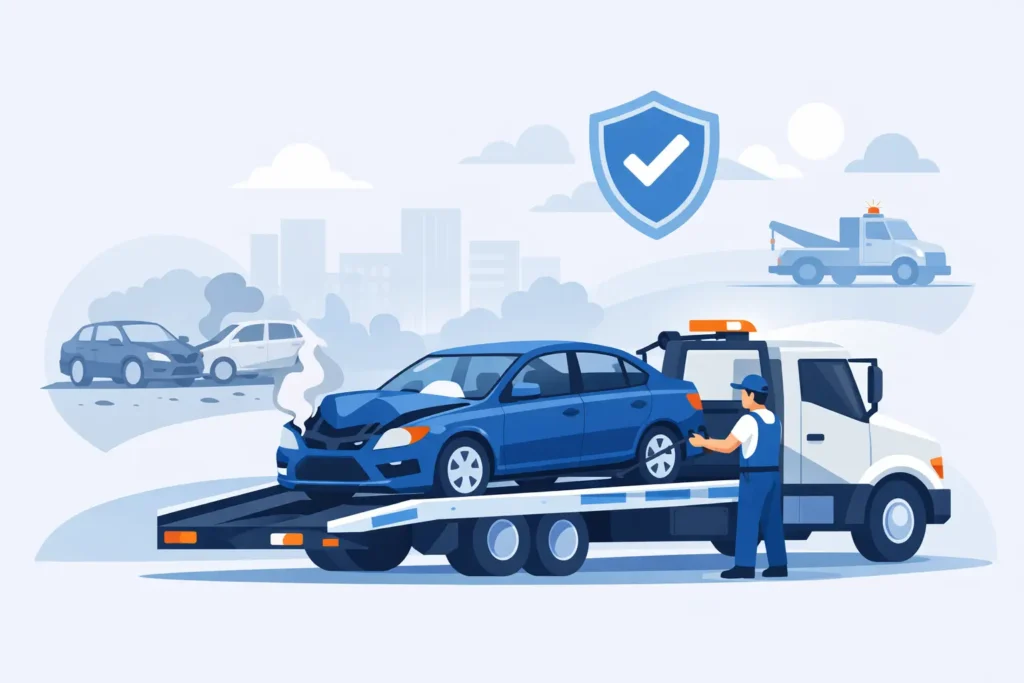
A collision can leave you stuck in a live lane, stranded on a hard shoulder, or parked up in shock on a side road with no clear next step. In that moment, an accident recovery service is not just about moving a damaged vehicle – it is about getting you to safety quickly, protecting your vehicle from further damage, and making a bad situation easier to manage.
When drivers call for help after an accident, they usually need three things straight away. They need a fast response, clear communication, and confidence that the vehicle will be handled properly. That applies whether it is a family car with front-end damage, a van that will not steer correctly, a motorbike that cannot be ridden, or an electric vehicle that needs the right recovery method.
What an accident recovery service should do
A proper accident recovery service does more than turn up with a recovery lorry. The job starts with making the scene safer and assessing how the vehicle can be moved without causing extra problems. Some vehicles can be winched and transported in the usual way. Others need more careful handling because of axle damage, wheel damage, steering issues, or bodywork that is dragging on the road.
This is where experience matters. If a damaged vehicle is recovered the wrong way, a manageable repair can become a more expensive one. A service-led recovery team will look at the condition of the vehicle, the road position, traffic risks, and the safest loading method before moving anything.
For drivers, the difference is simple. You want a team that arrives ready to take control of the practical side of the situation so you are not left guessing what happens next.
Fast accident recovery service matters more than people think
After an accident, time matters for more than convenience. A vehicle left in the wrong place can become a hazard to other drivers. If you are on the M4, M25, M3 or a busy A-road, delays can quickly increase the risk around you. Even on quieter local roads in Berkshire or South Oxfordshire, a damaged vehicle can obstruct traffic, create stress, and leave you exposed.
A fast response also helps reduce secondary damage. If a car has fluid leaks, suspension damage, or a wheel sitting at an angle, moving it carelessly or leaving it in a poor position for too long can make things worse. Quick attendance means the vehicle can be secured and transported before avoidable damage sets in.
It also helps on the personal side. Most motorists are not calm after a collision. They are worried about safety, insurance, repair costs, getting home, getting to work, or explaining delays to customers. A recovery operator who answers promptly, gives a realistic arrival time, and turns up prepared takes a lot of pressure out of the situation.
Not every damaged vehicle can be recovered the same way
This is one area where drivers are right to be cautious. Different accident scenarios need different recovery methods, and it is not always obvious from the roadside which one is suitable.
A straightforward rear-end bump may leave the car able to roll freely onto a recovery vehicle. But if the steering is compromised, a wheel is locked, the axle is bent, or the car has come off a kerb, standard loading may not be enough. Vans and commercial vehicles bring extra considerations because of their size, weight, and load condition. Motorcycles need secure transport that avoids further cosmetic or structural damage. Electric vehicles may require specialist handling depending on the nature of the impact and whether the vehicle can be safely moved in the normal way.
That is why a serious accident recovery service should ask the right questions when you call. They should want to know the vehicle type, location, visible damage, whether the wheels turn, and whether the vehicle is in a safe place. Those details are not box-ticking. They help send the right equipment first time.
What to expect when you call for recovery
In a stressful moment, vague answers are no use. Good recovery support is direct and practical.
You should expect the call to focus on where you are, whether you are safe, what vehicle is involved, and what condition it is in. If you are on a motorway or major route, that location detail needs to be precise. If the vehicle is off the road, in a car park, or blocked in after a collision, that matters too.
You should also expect honesty about timing. No one benefits from empty promises. A reliable local operator will give you a realistic response window and update you if road conditions affect arrival. For urgent roadside incidents, speed is a major part of the service, but so is clear communication.
Once on scene, the recovery process should feel organised. The vehicle is assessed, loaded safely, secured correctly, and taken to the agreed destination. That might be your home, a garage, a body shop, a dealership, or another safe location. The best services keep it straightforward because that is what stressed motorists need.
Local coverage makes a real difference
There is a big difference between calling a distant national call centre and dealing with a local team that knows the roads. Fast, reliable recovery often comes down to local coverage and familiarity with the area.
Drivers in Reading, Berkshire, South Oxfordshire, Hampshire and Surrey do not need a long chain of handovers when they are stranded. They need a company that understands local routes, busy junctions, and key motorway corridors, and can reach them quickly. On roads like the M25, M4 and M3, local knowledge helps with access, timing, and route planning after recovery as well.
For businesses running vans or light commercial fleets, this matters even more. Downtime costs money. If one vehicle is off the road after an accident, the priority is not just removal from the roadside. It is getting that vehicle transported efficiently so the next decision can be made without delay.
Professional handling builds trust
Trust is a big part of accident recovery because most customers call when they are under pressure. They are making a quick decision and relying on the recovery team to get it right.
Professionalism shows up in simple ways. Turning up when promised. Speaking clearly. Treating the customer with respect. Handling the vehicle carefully. Using the right equipment. Keeping the process calm and efficient.
It also means understanding that not every customer has the same needs. A private motorist may simply want the car home or taken to a repairer. A business may need a van recovered in a way that protects tools, stock, or urgent deliveries. An EV owner may want reassurance that the vehicle will be transported using the correct approach. A good recovery team adapts without making the customer work for basic answers.
Ozzy’s Breakdown Recovery is built around that kind of response – quick, professional, and available 24/7 for drivers who need help without delay.
When roadside help becomes full vehicle recovery
Some accident callouts start as a quick check and turn into full recovery once the vehicle is assessed. That is normal. A car may appear driveable after a minor impact, but warning lights, steering pull, tyre damage, fluid loss, or hidden suspension issues can make it unsafe to continue.
This is one of those situations where trying to save time can backfire. Driving a damaged vehicle a short distance might feel easier in the moment, but it can create bigger repair costs or put you back in danger. A proper recovery service will be guided by safety first, not guesswork.
The same applies to non-runners and technically awkward jobs. If the vehicle will not start after impact, will not come out of gear, or cannot roll cleanly, specialist recovery becomes the right option. Better to have it handled properly once than risk more damage with the wrong approach.
Choosing the right service under pressure
Most people do not research recovery providers until they need one, which means the decision is made in a hurry. In practice, the right choice usually comes down to a few basics. Can they attend quickly? Are they available 24/7? Do they recover the type of vehicle you have? Can they deal with accident damage, not just standard breakdowns? And do they sound like a team that knows exactly what they are doing?
Price still matters, of course, but the cheapest option is not always the right one after a collision. If the vehicle is damaged, the quality of the recovery matters just as much as the collection itself. Safe loading, secure transport, and proper handling can save money further down the line.
If you ever need an accident recovery service, the main thing is to act quickly, stay safe, and get the right help on the way. A fast, capable recovery team will not undo the accident, but it will get you out of a difficult situation with less stress, less risk, and a clear next step.