


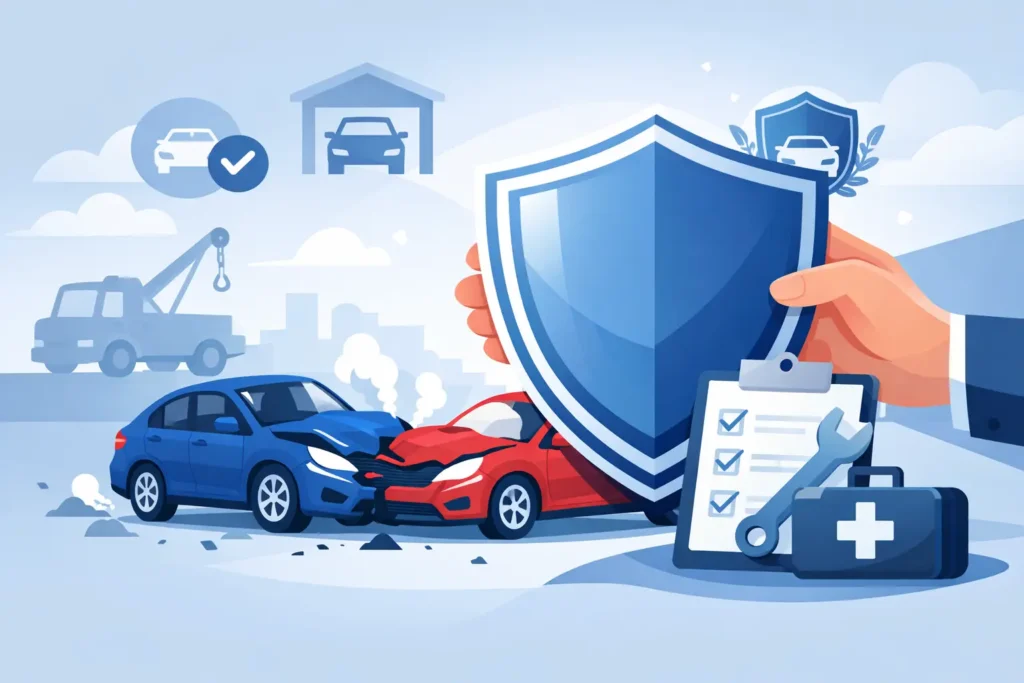
The minutes after a crash can feel confused and rushed, especially on the M4, M25, M3 or a busy local road. Knowing how to protect your vehicle after a collision is not just about avoiding a repair bill getting worse. It is about keeping people safe, preserving evidence and making sure your car, van, motorcycle or EV is recovered without further damage.
Your first job is not to inspect the bumper or call your insurer. It is to get yourself, passengers and other road users out of immediate danger. Once that is under control, a professional recovery service can take care of the vehicle properly.
Make the scene safe before dealing with the vehicle
Stop as soon as it is safe and legal to do so. Switch on your hazard warning lights, turn off the engine and check whether anyone is hurt. If there are injuries, a fire risk, leaking fuel, a dangerous obstruction or vehicles in a live lane, call 999 straight away.
On a motorway, do not remain in the vehicle if it is stopped in a live lane and there is a safe way to leave it. Get behind the barrier where possible, keeping well clear of traffic. If you have reached the hard shoulder or an emergency area, leave the vehicle by the left-hand side when safe and wait behind the barrier.
On a quieter road, use sensible judgement. Moving a vehicle a short distance out of traffic may prevent a second collision, but do not move it if it has serious damage, fluid leaks, a wheel hanging loose, deployed airbags, or you are unsure whether it is safe to drive. A damaged vehicle may look mobile while having compromised steering, brakes or suspension.
Protect your vehicle after a collision without causing more damage
Once everyone is safe, avoid trying to force the car back into use. Starting the engine, driving on a damaged wheel or dragging a vehicle with the wrong equipment can turn a recoverable repair into a far larger problem.
If the vehicle can be left safely where it is, lock it and take the keys with you. Remove valuables, paperwork containing personal details and any work equipment you can safely access. Do not leave handbags, laptops, tools or stock visible through the windows. This protects your belongings while you wait for recovery or while the vehicle is held at a garage.
Take clear photographs before anything is moved, if conditions allow. Photograph the overall scene, the position of the vehicles, number plates, visible damage, road markings and any debris. Make a note of the time, exact location, weather and direction of travel. If there are witnesses, ask politely for their names and contact details.
Exchange details with the other driver, including names, registration numbers, insurer information and contact details. Keep the conversation calm and factual. You do not need to decide who was at fault at the roadside. The priority is recording accurate information and arranging safe onward transport.
Do not drive when damage is uncertain
A vehicle can sometimes travel after a minor bump, but that does not mean it should. Damage to an axle, tyre, wheel, steering arm, radiator or undertray can be hidden from view. Continuing to drive may cause a loss of control, overheating or more extensive mechanical damage.
There are clear signs that recovery is the safer choice: warning lights that remain on, fluid under the vehicle, rubbing or grinding noises, a steering wheel that sits off-centre, a flat or damaged tyre, loose body panels, smoke, or a vehicle that pulls sharply to one side. If any of these apply, stop and call for help.
The same applies after a rear impact. A boot that will not latch, damaged lights or a distorted bumper can make the vehicle unsafe and insecure. It may also leave you unable to protect tools, shopping or personal belongings stored inside.
Special care for EVs, motorcycles and commercial vehicles
Every vehicle needs the right recovery method after an accident. This matters even more for electric vehicles, motorcycles and vans carrying equipment or goods.
An EV with potential battery damage must be treated carefully. Do not attempt to inspect orange high-voltage cables, touch damaged components or reconnect a charging cable. If the vehicle shows smoke, heat, hissing sounds or a strong chemical smell, move away from it and call the emergency services. Tell the recovery provider that it is an electric vehicle and explain where it has been damaged so suitable equipment can be sent.
Motorcycles should not be pulled upright with improvised straps or towed by a car. Even a low-speed collision can damage forks, handlebars, brakes or the frame. Proper motorcycle recovery secures the bike for transport and helps prevent fresh cosmetic or mechanical damage.
For vans and light commercial vehicles, consider what is inside before recovery arrives. Secure loads where it is safe to do so, and tell the recovery operator about heavy tools, racking, ladders, refrigeration units or hazardous materials. The right vehicle and loading plan can reduce delay and protect your business equipment.
Choose recovery that matches the damage
The cheapest-looking option is not always the safest option after a collision. A vehicle with wheel, axle, suspension or underbody damage may need lifting rather than being towed with its wheels on the road. The wrong approach can damage tyres, drivetrain components or bodywork further.
When you call for assistance, give a straightforward description: your location, vehicle make and model, whether it starts, the type of impact, visible damage and whether any wheels are damaged or locked. Mention if the vehicle is an EV, motorcycle, van or carrying a load. This helps the operator send the correct recovery vehicle first time.
Ozzy’s Breakdown Recovery provides 24/7 accident recovery across Berkshire, South Oxfordshire and surrounding routes, with trained operators and dedicated equipment for standard and more complex recoveries. Whether your vehicle needs transport to your home, a garage, a body shop or another agreed destination, clear information at the first call helps keep the recovery quick and safe.
Protect your claim and your personal information
After the vehicle is collected, report the incident to your insurer as soon as reasonably possible, even if you do not plan to make a claim. Give a factual account and keep copies of photographs, witness details, recovery paperwork and any repair estimates.
Check the vehicle before it is handed over to a repairer or storage site. Take a final set of photographs showing its condition and note any personal items left inside. If you have dashcam footage, save it promptly. Many cameras overwrite recordings after a short period of driving or when the memory card fills up.
Avoid posting detailed blame, images of other people or registration numbers on social media. It can complicate an insurance claim and may expose personal information. Keep your evidence for the people who need it: your insurer, police where relevant, and the recovery or repair team.
What to do while waiting for recovery
Stay somewhere safe, keep your mobile phone charged if possible and listen for calls from the recovery operator. If you are on a motorway or fast road, do not return to the vehicle to collect non-essential items. No possession is worth stepping into moving traffic for.
If the car is safe to approach and you are waiting nearby, keep an eye out for further leaks, smoke or changes in its condition from a safe distance. Let the recovery team know immediately if anything changes. They can adjust the response and bring suitable equipment.
A collision is stressful enough without worrying that the vehicle will suffer more damage on the roadside. Put people first, keep the vehicle secure, record what happened and choose recovery that is suited to the damage. A calm, early call for professional help can protect far more than the vehicle – it can get you safely moving again.