


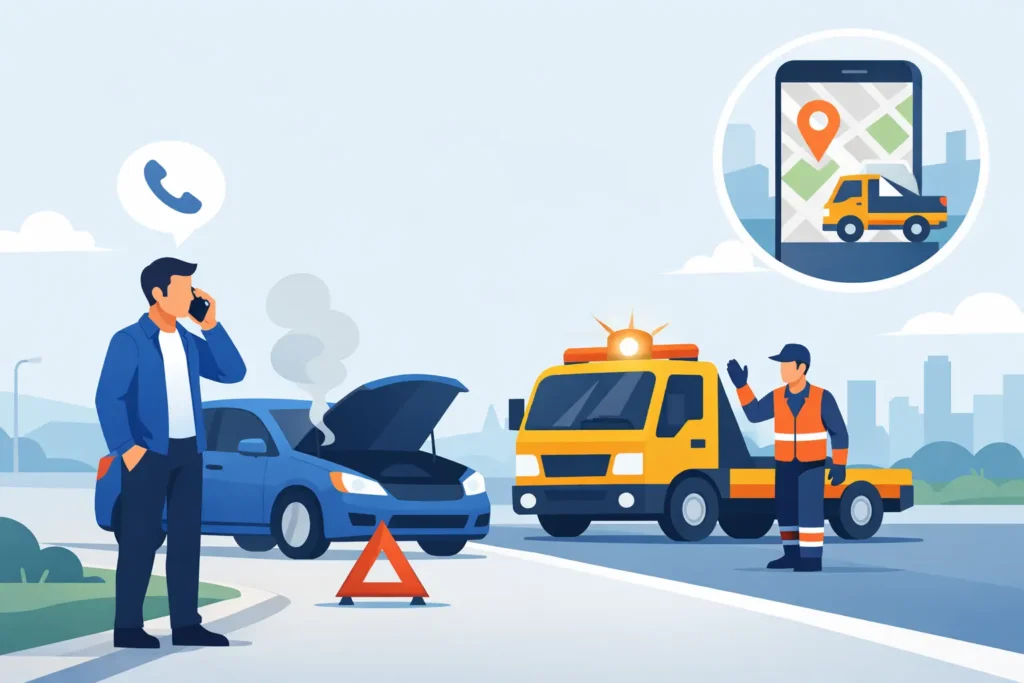
A flat battery outside Reading, a blown tyre on the M4 or a vehicle that simply will not restart can turn an ordinary journey into a stressful stop. Knowing how to call breakdown recovery means you can get the right help moving quickly, without guessing what information a recovery driver needs.
The first priority is always you and your passengers. Once everybody is safe, make the call with a clear location, a brief description of the problem and the vehicle details to hand. That helps the recovery team send suitable equipment and avoid delays when every minute matters.
Get safe before you make the call
If your vehicle is still moving, do not stop suddenly unless there is an immediate danger. Indicate, reduce speed steadily and pull into the safest available place. On a normal road, this may be a lay-by, car park or quiet side road. Switch on your hazard warning lights and, where safe to do so, position the vehicle away from moving traffic.
Motorway breakdowns need extra care. If you can reach a motorway service area or leave at the next exit safely, that is usually preferable. If you have to stop on the hard shoulder or in an emergency refuge area, stop as far left as possible, keep hazards on and leave the vehicle by the left-hand door if it is safe. Stand behind the barrier, well away from traffic. Do not remain in the vehicle on a live motorway unless leaving it would put you in greater danger.
For a collision, fire, fuel leak, serious injury or an unsafe road position, call 999 first. Breakdown recovery can then deal with moving and transporting the vehicle once the emergency services have made the scene safe.
How to call breakdown recovery: details to give
When you call, start with your location. Do not worry if you cannot name the exact road – recovery operators are used to helping drivers pinpoint where they are. Give the road name or number, the direction you are travelling, the nearest junction, landmark, village or service station, and any motorway marker details you can see. On a motorway, say whether you are on the northbound, southbound, eastbound or westbound carriageway.
Your phone’s map can help identify your location, but never walk near traffic to get a better signal or read a sign. If you are using an emergency refuge area, provide its reference number. This gives the recovery team a precise place to find you.
Next, explain what has happened in plain terms. For example, say whether the car will not start, has a puncture, is overheating, has warning lights on, has been involved in an accident or has run out of charge. Mention if there is visible damage, a wheel or axle problem, smoke, fluid on the road, locked steering or a vehicle that cannot be put into neutral. These details affect the type of recovery vehicle and equipment required.
You will also be asked for the vehicle registration, make, model and colour. Tell the operator whether it is a car, motorcycle, van, electric vehicle or light commercial vehicle. If you are carrying passengers, have a child seat, a pet or need to retrieve essential belongings, say so at the start. Clear information lets the team plan the safest solution rather than arriving with unsuitable equipment.
Finally, provide a working contact number and confirm where you would like the vehicle taken. You may only need roadside assistance, such as a jump start, tyre change or safe tow to a nearby garage. In other cases, you may need transport home, to a garage of your choice or to another address. It depends on the fault, the vehicle’s condition and whether a repair can realistically be completed at the roadside.
What happens after you request recovery
Once the call is logged, keep your phone nearby and charged if possible. A professional recovery service should confirm the key details, give you a realistic indication of attendance and update you if traffic, weather or a major incident affects the journey. Around Berkshire, South Oxfordshire and the M4, M25 and M3 corridors, traffic conditions can change quickly, so an honest update is more useful than a promise that cannot be kept.
At Ozzy’s Breakdown Recovery, urgent local callouts are handled 24/7, with a typical response target of 30 to 45 minutes where conditions allow. The recovery driver will assess the vehicle on arrival, make the area as safe as possible and explain whether a roadside fix or recovery is the right option.
Do not agree to a repair or recovery you do not understand. Ask where the vehicle is being taken, whether you can travel with it where appropriate, and what will happen if the garage is closed. A good operator will give you straightforward answers and take care when loading, securing and transporting the vehicle.
Calling from a motorway or after an accident
A motorway call requires more location detail than a call from outside your home. Tell the operator the motorway number, carriageway direction, nearest junction and whether you are on the hard shoulder, in a refuge area or at services. If you have passed a marker post, share the information on it. Do not cross a carriageway or attempt to repair the vehicle yourself beside fast-moving traffic.
After an accident, describe the damage honestly. A car with wheel, steering, suspension or axle damage may need specialist loading rather than a standard tow. The same applies if the vehicle is stuck in park, has deployed airbags or cannot be rolled safely. Asking for the right type of accident recovery protects the vehicle from further damage and prevents delays at the roadside.
If police, highways officers or another authority are at the scene, follow their instructions. They may need the vehicle moved from a dangerous position before normal recovery arrangements can continue. Keep your insurer informed if your policy requires it, but do not delay an urgent safety call while searching through paperwork.
Recovery for EVs, motorcycles, vans and non-runners
Not every breakdown is a standard car tow. Electric vehicles need careful handling, particularly if the high-voltage system is damaged or the battery is fully depleted. Tell the operator that the vehicle is electric or hybrid and mention any warning messages displayed. Do not attempt makeshift charging or towing methods that are not approved for the vehicle.
Motorcycles need secure, purpose-built transport to avoid damage in transit. Vans and light commercial vehicles may require extra capacity, especially when carrying tools, stock or equipment. If a van is loaded, explain this when you call so the recovery team can allow for its size and weight.
A non-runner, a car with missing wheels or a vehicle with axle damage often needs specialist recovery rather than a simple tow rope. The more accurate you are about the condition of the vehicle, the more likely it is that the correct recovery vehicle arrives first time.
When the recovery is planned, not urgent
You can also call breakdown recovery when the vehicle is not stranded at the roadside. Perhaps it has failed its MOT, will not start on the driveway, needs moving to a specialist garage or has been bought as a non-runner. For planned transport, give the collection and delivery postcodes, vehicle condition, access restrictions and preferred time.
This is usually easier to schedule than an emergency callout, but honesty still matters. Narrow driveways, underground car parks, locked wheels and inaccessible keys can all affect how the vehicle is collected.
A breakdown is frustrating, but the call does not need to be complicated. Get yourself safe, share your exact location and vehicle condition, then let a properly equipped recovery team take the pressure off. Fast, clear communication is the quickest route from being stranded to being on your way again.