


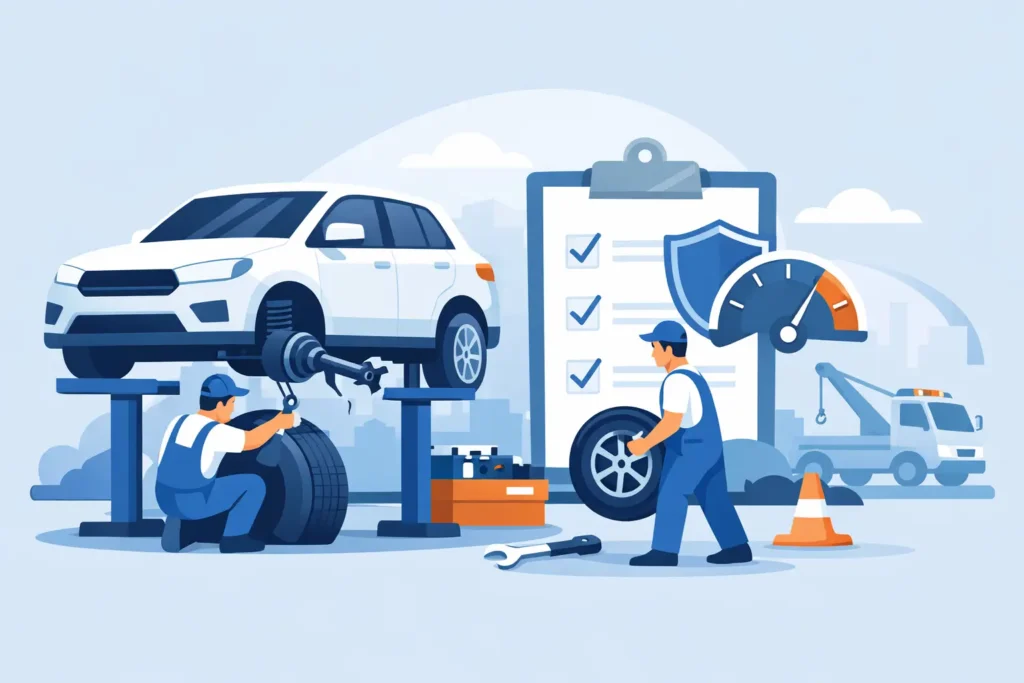
One hard knock from a pothole, kerb, debris strike or collision can leave your vehicle sitting at the wrong angle, refusing to move, or making it obvious that something underneath is badly wrong. When that happens, axle damage recovery is not a job for guesswork. A vehicle with axle damage can become more unstable with every metre it rolls, which is why the safest next step is usually professional recovery rather than trying to limp it home.
What axle damage actually means on the roadside
Drivers often use the word axle to describe any serious wheel or suspension problem, and in an emergency that is understandable. What matters most is this: if the wheel position looks wrong, the car will not track properly, or there is visible damage underneath, the vehicle may no longer be safe to drive or even to tow in the usual way.
True axle damage can involve a bent rear beam, damage to the axle assembly itself, broken mountings, failed wheel bearings, suspension damage around the axle line, or impact damage that affects how the wheel sits and turns. On vans and light commercial vehicles, the risks can be higher because of load weight. On motorways and fast A-roads, even a small movement from the wrong component can turn into a dangerous situation very quickly.
That is why axle damage recovery is really about two things – keeping you safe at the roadside and preventing further harm to the vehicle during transport.
Signs you may need axle damage recovery
Sometimes the damage is obvious. Sometimes it starts with a noise, a pull through the steering wheel, or a tyre sitting at an odd angle after impact. If you have hit something and notice scraping, grinding, wheel misalignment, or the vehicle feels as though it is dragging, stop as soon as it is safe to do so.
Other warning signs include a collapsed corner, fluid loss near the wheel area, a wheel rubbing against the bodywork, or a vehicle that will move but feels unstable. In those cases, trying to drive further can worsen the original damage. A bent or broken component can shift more under load, and what might have been repairable can become a much larger workshop job.
For drivers on routes such as the M4, M25 or M3, the pressure to get moving again is understandable. But with axle-related damage, speed is not the same as safety. Getting the vehicle off the live road properly matters more than forcing it to travel under its own power.
Why driving it further can make things worse
A lot depends on the type and extent of the damage. A minor impact that only affects alignment is very different from a fractured suspension arm or a displaced axle component. The problem is that roadside conditions rarely allow a clear inspection. What looks like a manageable issue can in fact be structural enough to make driving unsafe.
When a damaged wheel assembly continues to roll, the load is transferred unevenly. Tyres can scrub rapidly, wheel hubs can suffer extra strain, and damaged suspension parts can move in ways they were never designed to. On heavier vehicles, this can also affect braking stability. If the vehicle has been involved in an accident, there may be hidden damage that is not visible until it is lifted.
This is where a proper recovery operator earns their keep. The job is not just to move the vehicle. It is to move it in a way that avoids dragging a damaged corner, stressing broken parts, or creating a second incident on the roadside.
How professional axle damage recovery works
The right recovery method depends on the vehicle, the location and the damage. In many cases, a standard tow is not suitable because the affected wheel or axle line cannot safely rotate or support weight. The vehicle may need to be lifted clear, winched carefully, or loaded with specialist equipment that keeps the damaged section protected.
A professional recovery team will first assess whether the vehicle can roll at all, whether any wheel is seized or collapsed, and whether loading needs skates, dollies or a full lift. This is especially important for low vehicles, vans, and non-runners with accident damage. The aim is simple: get the vehicle onto the recovery lorry without adding impact, strain or scrape damage during the process.
Good axle damage recovery also includes clear communication. If you are stranded at the roadside, you need to know what is happening, how long help will take, and what type of transport is being sent. In a stressful situation, that clarity matters just as much as the equipment.
What to do if you suspect axle damage
If you think the axle or surrounding running gear has been damaged, pull over as safely as possible and switch on your hazard lights. If you are on a motorway or a high-speed road, put your safety first. Exit the vehicle only if it is safe to do so and follow standard roadside safety guidance.
Do not keep testing the vehicle to see if it will drive normally. One short attempt to move may be enough to tell you there is a serious issue. After that, it is usually better to stop. If the wheel is leaning, the tyre is fouling the arch, or the car is making harsh metallic noises, leave it where it is and arrange recovery.
When you call for help, give a clear description of what happened. Mention any collision, kerb strike or pothole impact. Say whether the vehicle can move, whether a wheel is locked, and whether there is visible damage. The more accurate the information, the easier it is to send the right recovery vehicle first time.
Axle damage recovery for cars, vans and motorcycles
Not every axle-related callout looks the same. A family car with rear beam damage needs different handling from a loaded van with front suspension collapse. Commercial vehicles often need more careful weight management during loading, particularly if tools, stock or equipment are still onboard. Keeping downtime low is a priority, but so is preventing further damage that could put the vehicle out of action for even longer.
Motorcycles are slightly different, but the same principle applies. If the wheel line, forks, swingarm or rear assembly has been compromised, pushing on is a risk. Specialist transport is the safer option.
Electric vehicles add another layer. Recovery must take account of manufacturer guidance, lifting points and safe transport procedures. If an EV has suffered impact damage around the wheel or underside, the recovery process needs to be handled properly from the start.
Why local response matters
When you are stuck with possible axle damage, waiting around is not just inconvenient. It can leave you exposed on a dangerous stretch of road or stranded somewhere awkward with a vehicle that cannot be moved safely without the right kit. That is why local coverage and a genuine 24/7 response matter.
For drivers across Berkshire, South Oxfordshire and the surrounding motorway corridors, a recovery company that already works these roads can often reach you faster and with a clearer idea of the access issues involved. Fast attendance helps reduce stress, but it also reduces the temptation to take risks by trying to nurse a damaged vehicle along.
Ozzy’s Breakdown Recovery handles specialist recoveries including non-runners and axle-damaged vehicles, with the equipment and approach needed to move them safely rather than simply quickly.
Choosing the right help in an emergency
If you need axle damage recovery, look for a service that understands more than basic towing. Ask whether they handle damaged vehicles regularly, whether they can recover non-runners, and whether they cover your type of vehicle. A cheap option is not always the right one if it means the wrong loading method or unnecessary extra damage.
It also helps to choose a provider that communicates clearly. In a breakdown or accident situation, you want straightforward answers about response time, transport method and destination. Whether the vehicle is going home, to a garage or to a bodyshop, the process should feel controlled from the first call.
Axle damage is one of those problems where doing less is often the smart move. Stop safely, avoid forcing the vehicle onwards, and get proper recovery arranged. A careful lift and transport now can save you from a much larger repair bill later – and more importantly, it helps keep you safe when the road has already gone wrong.